
Filter
1385
Text search:
neglected
tropical
diseases
Featured
127
246
Language
Document type
421
393
154
100
79
66
57
38
18
17
16
10
7
7
2
Countries
216
33
25
24
23
22
21
20
20
18
14
14
13
13
12
11
10
10
10
10
9
9
8
8
8
8
7
7
7
7
6
6
5
5
4
4
3
3
3
3
3
3
3
2
2
2
2
2
2
2
2
2
2
2
2
2
2
2
2
2
1
1
1
1
1
1
1
1
1
1
1
1
1
1
1
1
1
1
1
1
1
1
1
1
1
1
1
1
1
1
1
1
1
1
1
1
Authors & Publishers
Publication Years
Category
287
136
88
52
27
26
15
1
Toolboxes
693
60
45
33
27
27
24
23
22
21
16
15
15
12
12
12
10
8
7
6
4
4
3
2
Cutaneous Leishmaniasis (CL) is a painful disease that exerts a serious toll on societies around the world that are afflicted by it. Although not life-threatening, the skin ulcers and scars it causes can lead to isolation and psychosocial pathologies due to social stigma, and its occurrence is often
...

Schistosomiasis and soil-transmitted helminths (STH) infections are major public health problems. We aimed to study the 6-mo impact of mass drug administration with praziquantel and albendazole on urinary schistosomiasis and STH.We examined children (aged 2–15 y) from one hamlet, who provided urin
...

Infections by the soil-transmitted helminths (STH), including Ascaris lumbricoides, Trichuris trichiura, Ancylostoma duodenale/Necator americanus (hookworms), and Strongyloides stercoralis, disproportionately affect children around the world. Because of their transmission associated with poor sanita
...

Scabies is an itchy skin condition caused by a tiny burrowing mite. This eight-legged bug is so small which makes it hard to see on the skin. Approximately 300 million cases of scabies are reported worldwide each year.

Chagas disease is a tropical disease caused by a parasite called Trypansoma cruzi and is primarily spread by Triatomine bugs. It is estimated to affect 6-7 million people, mostly in Latin America, and can cause devastating chronic illness. In this v
...
Rabies is a neglected zoonotic disease with a global burden of approximately 59,000 human deaths a year. Once clinical symptoms appear, rabies is almost invariably fatal; however, with timely and appropriate post-exposure prophylaxis (PEP) consistin
...
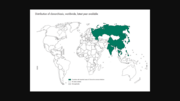
Map of Distribution of clonorchiasis, worldwide.
Foodborne trematodes are a group of diseases that include the parasites Clonorchis, Opisthorchis, Fasciola and Paragonimus. These parasitic flukes have a complex life cycle involving diverse definit
...
High prevalence of target diseases in rural and developing nations, increased prevalence of malnutrition across the globe, lack of hygiene and poor sanitation facilities, Migratory patterns of population, introduction of new chemical entity in the f
...
Rabies is a neglected zoonotic disease responsible for an estimated 59,000 human deaths annually. Rural populations in Africa and Asia are predominantly affected, and approximately
40% of cases occur in children under the age of 15 years. Transmitt
...
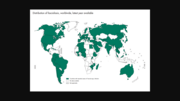
Map of Distribution of fascioliasis, worldwide, latest year available.
Foodborne trematodes are a group of diseases that include the parasites Clonorchis, Opisthorchis, Fasciola and Paragonimus. These parasitic flukes have a complex life cycle invo
...
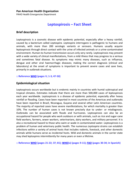
Leptospirosis is a zoonotic disease with epidemic potential, especially after a heavy rainfall,
caused by a bacterium called Leptospira. Leptospira interrogans is pathogenic to humans and
animals, with more than 200 serologic variants or serovars. Humans usually acquire
leptospirosis through dire
...
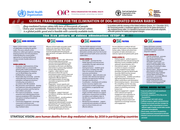
Rabies remains an under-reported neglected zoonosis with a case-fatality rate of almost 100% in humans and animals. Dog-mediated human rabies causes tens of thousands of human deaths annually despite being 100% preventable. More than 95% of human ca
...
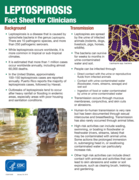
• Leptospirosis is a disease that is caused by
spirochete bacteria in the genus Leptospira.
There are 10 pathogenic species, and more
than 250 pathogenic serovars.
• While leptospirosis occurs worldwide, it is
more common in tropical or sub
...
Website last accessed on 14.05.2023
Leishmaniasis A group of diseases, caused by the Leishmania parasites and transmitted by the sandfly
Schistosomiasis, also known as bilharzia, is an infection caused by a parasitic worm that lives in fresh water in subtropical and tropical regions.
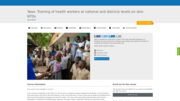
Course information
Yaws is targeted for eradication by WHO in the 2021-2030 NTD Roadmap. It is therefore crucial to know how to identify cases, design and implement activities to eradicate the disease at the community level.
In the context of integration of skin NTDs it is vital to learn to recogn
...

Yaws is a non-venereal endemic treponemal infection caused by Treponema pallidum sub-species pertenue, a bacterium closely related to Treponema pallidum ssp. pallidum, the agent of venereal syphilis. Yaws predominantly affects children living in tropical
...
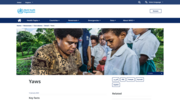
Yaws forms part of a group of chronic bacterial infections commonly known as the endemic treponematoses. These diseases are caused by spiral bacteria of the genus Treponema, which also includes endemic syphilis (bejel) and pinta. Yaws is the most co
...
Course information
Yaws is targeted for eradication by WHO in the 2021-2030 NTD Roadmap. It is therefore crucial to know how to identify cases, design and implement activities to eradicate the disease at the community level.
In the context of integration of skin NTDs it is vital to learn to recogn
...

In 2018, we are celebrating 20 years of progress in eliminating trachoma, the world’s leading infectious cause of blindness. Set up in 1998 by Pfizer Inc. and the Edna McConnell Clark Foundation, the International Trachoma Initiative (ITI) supports Ministries of Health in over 30 countries around
...
