
Filter
2641
Text search:
infants
and
children
Featured
289
838
Language
2502
71
65
47
27
11
10
9
6
5
5
4
3
3
3
2
2
2
2
2
2
1
1
1
1
1
1
1
1
1
1
1
1
1
1
1
1
1
1
1
1
1
1
1
1
1
Document type
1611
381
298
116
74
69
46
19
12
7
5
1
Countries
157
93
82
76
72
68
60
59
59
56
49
47
46
42
40
37
37
35
26
23
22
21
21
21
20
20
18
16
16
16
14
14
13
13
12
10
10
9
9
9
9
8
7
7
6
6
6
6
6
6
5
5
5
4
4
4
4
4
3
3
3
3
3
3
2
2
2
2
2
2
2
2
1
1
1
1
1
1
1
1
1
1
1
1
1
1
1
1
1
1
1
1
1
1
1
1
1
1
Authors & Publishers
332
137
104
89
76
61
57
43
39
27
27
23
22
17
17
16
16
15
15
15
15
14
14
13
12
12
11
11
10
10
10
10
10
10
9
9
9
9
8
8
8
8
7
7
7
7
7
7
7
7
7
6
6
6
6
6
6
6
5
5
5
5
5
5
5
5
5
5
5
5
5
5
5
5
5
5
4
4
4
4
4
4
4
4
4
4
4
4
4
4
4
4
4
4
4
4
4
4
4
4
3
3
3
3
3
3
3
3
3
3
3
3
3
3
3
3
3
3
3
3
3
3
3
3
3
3
3
3
3
3
3
3
3
3
3
3
3
3
3
3
3
3
3
3
3
3
3
3
3
3
3
3
3
3
3
3
3
3
3
3
3
3
3
3
3
2
2
2
2
2
2
2
2
2
2
2
2
2
2
2
2
2
2
2
2
2
2
2
2
2
2
2
2
2
2
2
2
2
2
2
2
2
2
2
2
2
2
2
2
2
2
2
2
2
2
2
2
2
2
2
2
2
2
2
2
2
2
2
2
2
2
2
2
2
2
2
2
2
2
2
2
2
2
2
2
2
2
2
2
2
2
2
2
2
2
2
2
2
2
2
2
2
2
2
2
2
2
2
2
2
2
2
2
2
2
2
2
2
2
2
2
2
2
2
2
2
2
2
2
2
2
2
2
2
2
2
2
2
2
2
2
2
2
2
2
2
2
2
2
2
2
2
2
2
2
2
2
2
2
2
2
2
2
2
2
2
2
2
2
2
2
2
2
2
2
2
2
2
2
2
2
2
2
2
2
2
2
2
2
2
2
2
2
1
1
1
1
1
1
1
1
1
1
1
1
1
1
1
1
1
1
1
1
1
1
1
1
1
1
1
1
1
1
1
1
1
1
1
1
1
1
1
1
1
1
1
1
1
1
1
1
1
1
1
1
1
1
1
1
1
1
1
1
1
1
1
1
1
1
1
1
1
1
1
1
1
1
1
1
1
1
1
1
1
1
1
1
1
1
1
1
1
1
1
1
1
1
1
1
1
1
1
1
1
1
1
1
1
1
1
1
1
1
1
1
1
1
1
1
1
1
1
1
1
1
1
1
1
1
1
1
1
1
1
1
1
1
1
1
1
1
1
1
1
1
1
1
1
1
1
1
1
1
1
1
1
1
1
1
1
1
1
1
1
1
1
1
1
1
1
1
1
1
1
1
1
1
1
1
1
1
1
1
1
1
1
1
1
1
1
1
1
1
1
1
1
1
1
1
1
1
1
1
1
1
1
1
1
1
1
1
1
1
1
1
1
1
1
1
1
1
1
1
1
1
1
1
1
1
1
1
1
1
1
1
1
1
1
1
1
1
1
1
1
1
1
1
1
1
1
1
1
1
1
1
1
1
1
1
1
1
1
1
1
1
1
1
1
1
1
1
1
1
1
1
1
1
1
1
1
1
1
1
1
1
1
1
1
1
1
1
1
1
1
1
1
1
1
1
1
1
1
1
1
1
1
1
1
1
1
1
1
1
1
1
1
1
1
1
1
1
1
1
1
1
1
1
1
1
1
1
1
1
1
1
1
1
1
1
1
1
1
1
1
1
1
1
1
1
1
1
1
1
1
1
1
1
1
1
1
1
1
1
1
1
1
1
1
1
1
1
1
1
1
1
1
1
1
1
1
1
1
1
1
1
1
1
1
1
1
1
1
1
1
1
1
1
1
1
1
1
1
1
1
1
1
1
1
1
1
1
1
1
1
1
1
1
1
1
1
1
1
1
1
1
1
1
1
1
1
1
1
1
1
1
1
1
1
1
1
1
1
1
1
1
1
1
1
1
1
1
1
1
1
1
1
1
1
1
1
1
1
1
1
1
1
1
1
1
1
1
1
1
1
1
1
1
1
1
1
1
1
1
1
1
1
1
1
1
1
1
1
1
1
1
1
1
1
1
1
1
1
1
1
1
1
1
1
1
1
1
1
1
1
1
1
1
1
1
1
1
1
1
1
1
1
1
1
1
1
1
1
1
1
1
1
1
1
1
1
1
1
1
1
1
1
1
1
1
1
1
1
1
1
1
1
1
1
1
1
1
1
1
1
1
1
1
1
1
1
1
1
1
1
1
1
1
1
1
1
1
1
1
1
1
1
1
1
1
1
1
1
1
1
1
1
1
1
1
1
1
1
1
1
1
1
1
1
1
1
1
1
1
1
1
1
1
1
1
1
1
1
1
1
1
1
1
1
1
1
1
1
1
1
1
1
1
1
1
1
1
1
1
1
1
1
1
1
1
1
1
1
1
1
1
1
1
1
1
1
1
1
1
1
1
1
1
1
1
1
1
1
1
1
1
1
1
1
1
1
1
1
1
1
1
1
1
1
1
1
1
1
1
1
1
1
1
1
1
1
1
1
1
1
1
1
1
1
1
1
1
1
1
1
1
1
1
1
1
1
1
1
1
1
1
1
1
1
1
1
1
1
1
1
1
1
1
1
1
1
1
1
1
1
1
1
1
1
1
1
1
1
1
1
1
1
1
1
1
1
1
1
1
1
1
1
1
1
1
1
1
1
1
1
1
1
1
1
1
1
1
1
1
1
1
1
1
1
1
1
1
1
1
1
1
1
1
1
1
1
1
1
1
1
1
1
1
1
1
1
1
1
1
1
1
1
1
1
1
1
1
1
1
1
1
1
1
1
1
1
1
1
1
1
1
1
1
1
1
1
1
1
1
1
1
1
1
1
1
1
1
1
1
1
1
1
1
1
1
1
1
1
1
1
1
1
1
1
1
1
1
1
1
1
1
1
1
1
1
1
1
1
1
1
1
1
1
1
1
1
1
1
1
1
1
1
1
1
1
1
1
1
1
1
1
1
1
1
1
1
1
1
1
1
1
1
1
1
1
1
1
1
1
1
1
1
1
1
1
1
1
1
1
1
1
1
1
1
1
1
1
1
1
1
1
1
1
1
1
1
1
1
1
1
1
1
1
1
1
1
1
1
1
1
1
1
1
1
1
1
1
1
1
1
1
1
1
1
1
1
1
1
1
1
1
1
1
1
1
1
1
1
1
1
1
1
1
1
1
1
1
1
1
1
1
1
1
1
1
1
1
1
1
1
1
1
1
1
1
1
1
1
1
1
1
1
1
1
1
1
1
1
1
1
1
1
1
1
1
1
1
1
1
1
1
1
1
1
1
1
1
1
1
1
1
1
1
1
1
1
1
1
1
1
1
1
1
1
1
1
1
1
1
1
1
1
1
1
1
1
1
1
1
1
1
1
1
1
1
1
1
1
1
1
1
1
1
1
1
1
1
1
1
1
1
1
1
1
1
1
1
1
1
1
1
1
1
1
1
1
1
1
1
1
1
1
1
1
1
1
1
1
1
1
1
1
1
1
1
1
1
1
1
1
1
1
1
1
1
1
1
1
1
1
1
1
1
1
1
1
1
1
1
1
1
1
1
1
1
1
1
1
1
1
1
1
1
1
1
1
1
1
1
1
1
1
1
1
1
1
1
1
1
1
1
1
1
1
1
1
1
1
1
1
1
1
1
1
1
1
1
1
1
1
1
1
1
1
1
1
1
1
1
1
1
1
1
1
1
1
1
1
1
1
1
1
1
1
1
1
1
1
1
1
1
1
1
1
1
1
1
1
1
1
1
1
1
1
1
1
1
1
1
1
1
1
1
1
1
1
1
1
1
1
1
1
1
1
1
1
1
1
1
1
1
1
1
1
1
1
1
1
1
1
1
1
1
1
1
1
1
1
1
1
1
1
1
1
1
1
1
1
1
1
1
1
1
1
1
1
1
1
1
1
1
1
1
1
1
1
1
1
1
1
1
1
1
1
1
1
1
1
1
1
1
1
1
1
1
1
1
1
1
1
1
1
1
1
1
1
1
1
1
1
1
1
1
1
1
1
1
1
1
1
1
1
1
1
1
1
1
1
1
1
1
1
1
1
1
1
1
1
1
1
1
1
1
1
1
1
1
1
1
1
1
1
1
1
1
1
1
1
1
1
1
1
1
1
1
1
1
1
1
1
1
1
1
1
1
1
1
1
1
1
1
1
1
1
1
1
1
1
1
1
1
1
1
1
1
1
1
1
1
1
1
1
1
1
1
1
1
1
1
1
1
1
1
1
1
1
1
1
1
1
1
1
1
1
1
1
1
1
1
1
1
1
1
1
1
1
1
1
1
1
1
1
1
1
1
1
1
1
1
1
1
1
1
1
1
1
1
1
1
1
1
1
1
1
1
1
1
1
1
1
1
1
1
1
1
1
1
1
1
1
1
1
1
1
1
1
1
1
1
1
1
1
1
1
1
1
1
1
1
1
1
1
1
1
1
1
1
1
1
1
1
1
1
1
1
1
1
1
1
1
1
1
1
1
1
1
1
1
1
1
1
1
1
1
1
1
1
1
1
1
1
1
1
1
1
1
1
1
1
1
1
1
1
1
1
1
1
1
1
1
1
1
1
1
1
1
1
1
1
Publication Years
608
1717
299
15
2
Category
1230
311
300
104
103
69
16
Toolboxes
149
128
124
108
78
78
58
56
51
47
43
42
39
38
32
31
30
29
24
23
17
16
10
9
3
1
A Joint Statement by the World Health Organization, the World Food Programme, the United Nations System Standing Committee on Nutrition and the United Nations Children’s Fund
Clinical management standard operating procedures.
Ebola virus disease (EVD) is a life-threatening multisystem illness associated with fever and gastrointestinal (GI) symptoms that frequently leads to hypovolaemia, metabolic acidosis, hypoglycaemia
...
, and multi-organ failure. The prolonged 2013–2016 EVD outbreak in West Africa allowed for an evolution of care such that by outbreak end many patients received individualized and optimized supportive care (oSoC), including volume resuscitation, symptom control, laboratory and bedside monitoring of glucose, electrolyte levels and organ dysfunction, as well as rapid detection and treatment of co-infections, potentially contributing to the downward trend in the case fatality rate (CFR).
This guidance should serve as a foundation for oSoC that should be followed to ensure both the best possible chance for survival and allow for reliable comparison of investigational therapeutic interventions as part of a randomized controlled trial. This guideline provides recommendations for the management of adults and children.
more
Integrated management of childhood illness. The last update was in the IMCI chart booklet in 2014, but since then there have been significant updates on the management of sick young infant (SYI) aged up to 2 months. This 2019 update of the sick young infant section Management of the sick young infan
...
t age up to 2 months: IMCI chart booklet. supersedes the 2014 IMCI chart booklet. The new updates reflect the recent guidelines on Managing possible serious bacterial infection (PSBI) in young infants when referral is not feasible published in 2015. It includes assessment, classification and referral of SYI with PSBI; and outpatient treatment of SYI with local infection or fast breathing (pneumonia) in infants 7-59 days old. Other updates include: a new section on how to reassess, classify and treat SYI with PSBI when referral is not feasible in outpatient health facilities by IMNCI trained health workers; changes in assessment and management of young infants for HIV infection; and identification of infants less than 7 days of who need Kangaroo Care.
more
Integrated management of childhood illness. The last update was in the IMCI chart booklet in 2014, but since then there have been significant updates on the management of sick young infant (SYI) aged up to 2 months. This 2019 update of the sick young infant section Management of the sick young infan
...
t age up to 2 months: IMCI chart booklet. supersedes the 2014 IMCI chart booklet. The new updates reflect the recent guidelines on Managing possible serious bacterial infection (PSBI) in young infants when referral is not feasible published in 2015. It includes assessment, classification and referral of SYI with PSBI; and outpatient treatment of SYI with local infection or fast breathing (pneumonia) in infants 7-59 days old. Other updates include: a new section on how to reassess, classify and treat SYI with PSBI when referral is not feasible in outpatient health facilities by IMNCI trained health workers; changes in assessment and management of young infants for HIV infection; and identification of infants less than 7 days of who need Kangaroo Care.
more
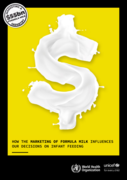
This report - the largest of its kind to date - draws on the experiences of over 8,500 women and 300 health professionals across eight countries. It exposes the aggressive marketing practices used by the formula milk industry,
...
and highlights impacts on families’ decisions about how to feed their babies and young children.
more

The goal of producing these Standard Operating Procedures (SOPs) was therefore targeted at fostering standardization across all levels of care to ensure HIV viral load monitoring remains a basic right offered to all people living with HIV (PLHIV) on lifelong antiretroviral therapy (ART) regardless o
...
f their location and place where they are accessing care.
These SOPs are designed to provide practical information to healthcare providers. They must be considered as supplementary and secondary to all guidelines issued by the MOH, including the Malawi Clinical Management of HIV in Children and Adults Guidelines and the Malawi HIV Testing Services (HTS) Guidelines.
more
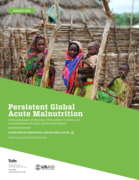
A discussion paper on the scope of the problem, its drivers, and strategies for moving forward for policy, practice, and research
In many protracted emergencies, the prevalence rates of global acut
...
e malnutrition (GAM) regularly exceed the emergency threshold of > 15% of children with acute malnutrition (< -2 weight-for-height z-scores (WHZ) or with nutritional edema), despite ongoing humanitarian interventions. The widespread scale and long-lasting nature of “persistent GAM” means that it is a policy and programming priority.
more
This handbook is intended primarily for front-line health care providers who are likely to see children (among other clients) in their day-to-day practice. These may include general practitioners, nurses, midwives, gynaecologists,
paediatricians, m
...
ental health professionals, first responders and staff in emergency care.
Other professionals who may find it useful include social workers, those working in social welfare institutions, providers of psychosocial support, and those working in child care facilities and the education system.
Further, the content will benefit the work of policy-makers and managers to enable and support provision of clinical care to children experiencing, or who have experienced, child maltreatment.
more
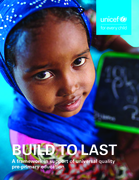
Today, the world is facing a learning crisis: While millions of children have entered education systems for the first time, many of them cannot read, write or do basic mathematics, even after several years of primary school.1 This global learning cr
...
isis has its roots in children’s earliest years, when failure to invest in quality early childhood education (ECE)results in children starting school already behind in a host of critical skills they need to succeed in primary school.2Investing in the foundations of learning during the child’s early years benefits children,3 families, education systems and societies at large.4 Participation in quality ECE sets in motion a positive learning cycle and is a proven strategy to address the global learning crisis at its roots by closing early learning gaps, strengthening the efficiency of education systems and providing a solid foundation for human capital development and economic grow
more
Integrated management of childhood illness. The last update was in the IMCI chart booklet in 2014, but since then there have been significant updates on the management of sick young infant (SYI) aged up to 2 months. This 2019 update of the sick young infant section Management of the sick young infan
...
t age up to 2 months: IMCI chart booklet. supersedes the 2014 IMCI chart booklet. The new updates reflect the recent guidelines on Managing possible serious bacterial infection (PSBI) in young infants when referral is not feasible published in 2015. It includes assessment, classification and referral of SYI with PSBI; and outpatient treatment of SYI with local infection or fast breathing (pneumonia) in infants 7-59 days old. Other updates include: a new section on how to reassess, classify and treat SYI with PSBI when referral is not feasible in outpatient health facilities by IMNCI trained health workers; changes in assessment and management of young infants for HIV infection; and identification of infants less than 7 days of who need Kangaroo Care.
more
The current guidelines on Integrated Management of Acute Malnutrition (IMAM), addresses the issue of improved management of severe acute malnutrition (SAM), particularly in children under 5 years of age. In the absence of standard protocols, mortali
...
ty in children admitted to hospital with SAM can range between 20 -30% with the highest levels of 50-60% among those with oedematous malnutrition. With modern treatment regimens and improved access to treatment, case-fatality rates can be reduced to less than 5%. These provincial guidelines on IMAM in KZN, includes inpatient care protocols on the management of SAM, and outpatient and community outreach components to manage moderate acute malnutrition (MAM) and prevent deterioration to SAM.
more
This document provides a generic model that can be used for risk assessment of exposure to insecticide products applied as indoor residual sprays. It aims to harmonize the risk assessment of such insecticides for public health use in order to generate comparable data for their registering
...
and labelling by national regulatory authorities. The assessment considers both adults and children (all age groups) as well as people in the following specific categories:
- those preparing the spray;
- those applying the spray;
- residents living in the treated houses;
- residents who participate in preparing and applying insecticides. more
- those preparing the spray;
- those applying the spray;
- residents living in the treated houses;
- residents who participate in preparing and applying insecticides. more
Policy Research Working Paper 6100 | Impact Evaluation Series No. 60 | This study examines the effect of performance incentives for health care providers to provide more and higher quality care in Rwanda on child health outcomes. The authors find th
...
at the incentives had a large and significant effect on the weight-for-age of children 0–11 months and on the height-for-age of children 24–49 months. They attribute this improvement to increases in the use and quality of prenatal and postnatal care. Consistent with theory, They find larger effects of incentives on services where monetary rewards and the marginal return to effort are higher. The also find that incentives reduced the gap between provider knowledge and practice of appropriate clinical procedures by 20 percent, implying a large gain in efficiency. Finally, they find evidence of a strong complementarity between performance incentives and provider skill .
more

WHO updated recommendations on HIV clinical management: recommendations for a public health approach
recommended
This document provides an overview of the updated World Health Organization recommendations for HIV clinical management, which focus on optimizing antiretroviral therapy, preventing vertical transmission, and enhancing tuberculosis prevention among
...
individuals with HIV. These updates are intended to support global initiatives aimed at ending AIDS as a public health threat by 2030. Key changes include the introduction of new antiretroviral drugs and regimens, revised postnatal prophylaxis and breastfeeding guidelines for managing infants at risk of vertical transmission, and the endorsement of shorter tuberculosis preventive treatments to improve efficacy and adherence.
more

The Zambia Population Based HIV impact assessment of 2016, reported the prevalence of viral hepatitis in Zambia as ranging between 5.6% among adults aged 15 to 59% in the general population, and 7.1% among HIV infected individuals. It is estimated t
...
hat the majority of persons with chronic hepatitis B and/ or hepatitis C are unware of their infection and do not benefit from promotive, preventive and curative services designed to reduce onward transmission. Zambia introduced hepatitis B virus vaccine to the routine Under 5 vaccination schedule in 2005. Preliminary results from the ZAMPHIA indicate that hundreds of infections have been abated in children since then. However, its also clear that we continue to miss key opportunities to prevent transmission, diagnose and treat infections, prevent serious disease, and in many cases cure people. In addition, high risk groups inter alia health care workers still have limited access to the vaccine.
more
The document “Malaria Prophylaxis for Travellers: Guideline for Healthcare Workers” (2019) from Sri Lanka provides guidance for healthcare providers on preventing malaria among travelers to endemic areas.
It explains that since Sri Lanka was certified malaria-free in 2016, the main risk comes f
...
rom imported cases, mostly Sri Lankan travelers. The document emphasizes assessing travelers’ risk, advising on mosquito bite prevention, and prescribing appropriate chemoprophylaxis like chloroquine, mefloquine, atovaquone-proguanil, or doxycycline depending on destination and traveler profile.
It highlights that children, pregnant women, and immunocompromised individuals are particularly at risk, and stresses adherence to medications and protective measures. Special instructions are given on handling missed doses, long-term prophylaxis, and managing side effects. Overall, the guideline aims to maintain Sri Lanka’s malaria-free status by preventing reintroduction through well-informed traveler care.
more
Accessed: 08.10.2019


Adolescence, defined as the period between 10 and 19 years of age, is a developmental stage during which many psychosocial and mental health challenges emerge. There is a well-established link betwe
...
en mental health and HIV outcomes. Adolescents and young adults living with HIV typically have additional mental health needs linked to their experiences of living with and managing a chronic illness, along with prevailing stigma and discrimination. Mental health promotion and prevention is thus a critical priority for this group.
more
Cystic fibrosis (CF) was earlier thought to be a disease prevalent in the West among Caucasians. However, quite a number of recent studies have uncovered CF cases outside of this region, and reported hundreds of unique
...
and novel variant forms of CFTR. Here, we discuss the evidence of CF in parts of the world earlier considered to be rare; Africa, and Asia. This review also highlighted the CFTR mutation variations and new mutations discovered in these regions. This discovery implies that the CF data from these regions were earlier underestimated. The inadequate awareness of the disease in these regions might have contributed towards the poor diagnostic facilities, under-diagnosis or/and under-reporting, and the lack of CF associated health policies. Overall, these regions have a high rate of infant, childhood and early adulthood mortality due to CF. Therefore, there is a need for a thorough investigation of CF prevalence and to identify unique and novel variant mutations within these regions in order to formulate intervention plans, create awareness, develop mutation specific screening kits and therapies to keep CF mortality at bay.
more
