
Filter
569
Text search:
health
assets
Featured
Recommendations
39
New Publications
182
Language
Document type
No document type
344
Studies & Reports
113
Guidelines
39
Strategic & Response Plan
37
Manuals
21
Fact sheets
6
Training Material
4
Situation Updates
3
Resource Platforms
1
Infographics
1
Countries / Regions
Global
35
India
23
Kenya
20
Syria
18
Myanmar / Burma
16
Sierra Leone
15
Liberia
14
Nepal
13
Malawi
13
Nigeria
10
South Sudan
10
South Africa
10
Uganda
9
Africa
9
Congo, Democratic Republic of
8
Philippines
8
Tanzania
8
Yemen
8
Western and Central Europe
8
Pakistan
7
Indonesia
7
Guinea
6
Ethiopia
6
Bangladesh
6
Namibia
6
Ukraine
6
Venezuela
6
Zimbabwe
5
Afghanistan
5
Lebanon
5
Cambodia
5
Rwanda
5
Cameroon
4
Ghana
4
Haiti
4
Zambia
4
South–East Asia Region
4
Asia
4
Senegal
3
Thailand
3
Brazil
3
Botswana
3
Jordan
2
China
2
Mozambique
2
Sudan
2
Eswatini/ Swaziland
2
Lesotho
2
Latin America and the Carribbean
2
Palestine
2
Tajikistan
2
Iran
2
Iraq
1
Turkey
1
Chad
1
Singapore
1
Benin
1
Central African Republic
1
North Macedonia
1
Croatia
1
Colombia
1
Libya
1
Madagascar
1
Sri Lanka
1
Other region
1
Fiji
1
Bhutan
1
Eastern Europe
1
Mongolia
1
Canada
1
Estonia
1
Authors & Publishers
Publication Years
Category
Countries
233
Key Resources
79
Public Health
22
Women & Child Health
21
Clinical Guidelines
12
Capacity Building
8
Toolboxes
COVID-19
56
Conflict
44
Planetary Health
33
Natural Hazards
32
Disability
24
Mental Health
22
HIV
20
Ebola & Marburg
18
Global Health Education
18
Health Financing Toolbox
16
Refugee
14
Rapid Response
10
Caregiver
9
TB
8
2.0 Rapid Response
8
Polio
7
Pharmacy
7
Social Ethics
6
Specific Hazards
5
AMR
4
NCDs
4
Typhoon
3
Zika
3
Cholera
2
NTDs
2
Camps is intended to help address the absence of public and standardized training resources for those seeking to use high resolution satellite imagery in support of refugee/IDP assistance operations. Students, general audiences, and volunteers studying and analyzing satellite imagery of displaced po
...

How to respond to, mitigate, and prevent risks to children’s protection and well-being is a profound, if unanswered, question. Practitioners agree that it is necessary to develop or strengthen protective factors at multiple levels, such as the family, community, and national levels.
Social Mobilization in the Freetown Peninsula during the Ebola Epidemic 2014-2015

This policy paper underscores that, although children do not represent a high-risk group for direct COVID-19 fatality, the pandemic posts far-reaching secondary impacts that heighten risks to African children’s rights and wellbeing.
The report covers possible developments in Indonesia over the next 10 months (to end 2016). Four scenarios are outlined:
Delayed Second Crop Harvest
Delayed and Reduced Second Crop Harvest
La Niña disrupts main rural sources of income
Soaring rice prices
The scenarios wer
...
Development finance institutions owned by European governments and the World Bank Group are spending hundreds of millions of dollars on expensive for-profit hospitals in the Global South that block patients from getting care, or bankrupt them, with some even imprisoning patients who cannot afford th
...
ARC resource pack - Study material
UNHCR, the UN Refuge Agency, and NGO partners are launching an appeal for US$2.7 billion to address the live-saving humanitarian needs of South Sudanese refugees in 2019 and 2020.
Five years on since the onset of a brutal civil war, over 2.2 million South Sudanese refugees have sought safety in six
...
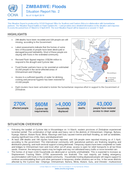
299 deaths have been recorded and 329 people are still missing, according to the Government.
• Latest assessments indicate that the homes of some tens of thousands of people have been destroyed or damaged beyond habitability. Most of these people are staying with hosts in the extended community.
...
Reducing the humanitarian impact of the use of explosive weapons in populated areas is a key priority for the United
Nations, the International Committee of the Red Cross (ICRC), civil society and an increasing number of Member States.
The United Nations Secretary-General has expressly called on
...
Strengthening resilient agricultural livelihoods
Level 3 responses are activated in the most complex and challenging humanitarian emergencies, when the highest level of mobilization is required across the humanitarian system. Even before the conflict escalated, the country suffered high levels of p
...

Country Strategic Plan Evaluations (CSPEs) encompass the WFP strategy and entirety of WFP activities during a specific period. Their purpose is twofold: 1) to provide evaluation evidence and learning on WFP's performance for country-level strategic decisions, specifically for developing the next Cou
...
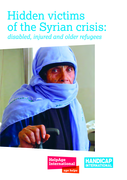
New research published today shows that older, disabled and injured Syrian refugees are paying a double toll as a result of the conflict. The report, released by Handicap International and HelpAge International, provides new data showing how much these vulnerable refugees are struggling to meet thei
...
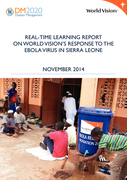
This real-time learning process was carried out in order to identify the gaps and needs within World Vision’s current Ebola Virus Disease (EVD) response in Sierra Leone and to inform World Vision on how other surrounding countries (specifically those with national offices such as Mali, Ghana, Nig
...
A statement by the Catholic Bishops' Conference of England and Wales
1996
