
Filter
513
Text search:
World
Health
Organization
(WHO),
Country
Office
for
Myanmar
Featured
Recommendations
51
New Publications
187
Language
Document type
No document type
301
Studies & Reports
100
Guidelines
54
Manuals
31
Strategic & Response Plan
14
Situation Updates
5
Fact sheets
3
Infographics
2
Training Material
1
Brochures
1
Online Courses
1
Countries / Regions
Myanmar / Burma
89
Global
37
South–East Asia Region
32
Asia
32
Bangladesh
26
India
11
Indonesia
8
Thailand
7
Nepal
5
Syria
5
Nigeria
4
Philippines
4
Cambodia
4
Yemen
4
Western and Central Europe
4
Africa
4
Laos
4
Congo, Democratic Republic of
3
Ethiopia
3
Kenya
3
Ukraine
3
Vietnam
3
Burkina Faso
2
Somalia
2
Pakistan
2
South Sudan
2
Afghanistan
2
Tanzania
2
Malaysia
2
Malawi
2
Mozambique
2
Central African Republic
2
Sri Lanka
2
Sierra Leone
1
Liberia
1
Mali
1
Cameroon
1
Uganda
1
Haiti
1
Jordan
1
China
1
South Africa
1
Sudan
1
Colombia
1
Ecuador
1
Libya
1
Madagascar
1
Mexico
1
Western Pacific Region
1
Latin America and the Carribbean
1
Other region
1
Bhutan
1
Venezuela
1
Palestine
1
North Korea
1
Armenia
1
Timor Leste/ East Timor
1
Tajikistan
1
Turkmenistan
1
Authors & Publishers
Publication Years
Category
Countries
151
Key Resources
47
Clinical Guidelines
41
Public Health
30
Women & Child Health
27
Capacity Building
6
Pharmacy & Technologies
6
Toolboxes
HIV
78
Mental Health
46
TB
42
COVID-19
24
Conflict
19
Planetary Health
16
NTDs
16
Disability
14
Global Health Education
14
Malaria
12
Refugee
11
Rapid Response
10
AMR
10
Natural Hazards
9
2.0 Rapid Response
5
Pharmacy
4
Polio
3
NCDs
3
Cholera
2
Typhoon
2
Specific Hazards
2
Health Financing Toolbox
2
Ebola & Marburg
1
Zika
1
Caregiver
1
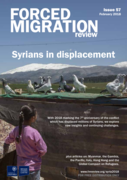
This important issue of Forced Migration Review draws our attention to the current challenges facing displaced Syrians and the continuing search for solutions. The statistics of Syrian displacement are staggering – and the numbers continue to rise
...
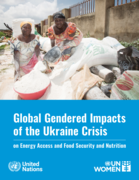
The war in Ukraine has had devasting impact on women and girls
worldwide, widening gender gaps and increasing rates of food insecurity, malnutrition and energy poverty. This brief reviews the available evidence of that impact, recommending urgent attention to its consequences
...
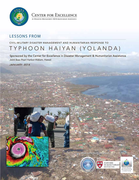
n Autumn 2013, HHI Executive Director, Vincenzo Bollettino, traveled to the Philippines to participate in an assessment of civil-military engagement in the humanitarian response to Typhoon Haiyan. The report was sponsored by the Center for Excellenc
...
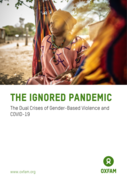
24 Nov. 2021
Action against gender-based violence being pushed to the outlying margins of the global COVID-19 response
A new Oxfam report shows an undeniable increase in gender-based violence (GBV) during the COVID-19 pandemic around the world t
...

Women have less access to the development services and support – such as adequate healthcare, education and
modern technology – that make people more resilient to climate change and other shocks and stressors.2
Women’s unequal access to resources, their disproportionate responsibility
...

Progress towards targets of the Global action plan on dementia
Report of the Global Thematic Consultation on Population Dynamics
Eur Respir J 2014; 43: 24–35 | DOI: 10.1183/09031936.00113413

4th edition, Reference Manual
China and Eurasia Forum Quarterly, Volume 6, No. 3 (2008) p. 101-128 © Central Asia-Caucasus Institute & Silk Road Studies Program
ISSN: 1653-4212
EVALUATION REPORT | The purpose of the evaluation is to strengthen child protection programming in the context of emergencies by assessing UNICEF’s performance and drawing lessons and recommendations that will influence ongoing and future programmes, in both preparedness and response. Apart from g
...
The equation is simple: we cannot effectively respond to a global pandemic when millions of people are still caught in warzones. We cannot treat sick people when hospitals are being bombed, or prevent the spread of coronavirus when tens of millions are forced to flee from violence. We must have a gl
...

A survey of prevention, testing and treatment policies and practices
The UNAIDS 2020 global report is a call to action. It highlights the scale of the HIV epidemic and how it runs along the fault lines of inequalities.
TB policies in 29 Countries
A survey of prevention, testing and treatment policies and practices
