
Filter
1014
Filtered Results: 1014
Text search:
World
Health
Organization,
Western
Pacific
Office
Featured
Recommendations
124
New Publications
238
Language
Document type
No document type
443
Studies & Reports
239
Guidelines
178
Manuals
69
Strategic & Response Plan
45
Training Material
12
Situation Updates
9
Fact sheets
8
Resource Platforms
6
Infographics
4
Online Courses
1
Countries / Regions
Global
92
Philippines
40
Western Pacific Region
25
South–East Asia Region
21
Asia
20
Nepal
17
India
17
Cambodia
16
Myanmar / Burma
16
Western and Central Europe
15
Africa
13
Bangladesh
12
Latin America and the Carribbean
10
Kenya
9
China
8
Liberia
8
Sierra Leone
7
Russia
7
Thailand
6
Syria
6
Ethiopia
6
Indonesia
6
Nigeria
5
Afghanistan
5
Eastern Europe and Central Asia
5
Papua New Guinea
5
Pakistan
5
Ukraine
4
Rwanda
4
Middle East and North Africa
4
South Africa
4
Vietnam
4
Eastern Europe
4
Ghana
3
Laos
3
Mozambique
3
Congo, Democratic Republic of
3
Sri Lanka
3
Yemen
3
South Sudan
3
Somalia
3
Madagascar
3
Iran
2
Malawi
2
Zimbabwe
2
Mongolia
2
Guinea
2
USA
2
Venezuela
2
West and Central Africa
2
East and Southern Africa
2
North Korea
1
Timor Leste/ East Timor
1
Mexico
1
Benin
1
Fiji
1
Burkina Faso
1
Peru
1
Vanuatu
1
Haiti
1
Tanzania
1
Jordan
1
Japan
1
Moldova
1
Sudan
1
Palestine
1
Central African Republic
1
Bhutan
1
Zambia
1
Iraq
1
Ecuador
1
Solomon Islands
1
Eswatini/ Swaziland
1
Authors & Publishers
Publication Years
Category
Countries
182
Clinical Guidelines
123
Key Resources
78
Public Health
73
Women & Child Health
62
Pharmacy & Technologies
19
Capacity Building
18
Toolboxes
HIV
104
Mental Health
95
COVID-19
81
Planetary Health
64
TB
54
Rapid Response
40
NTDs
39
Global Health Education
38
Disability
33
AMR
31
Malaria
28
Caregiver
27
Pharmacy
26
NCDs
24
2.0 Rapid Response
22
Zika
20
Natural Hazards
19
Health Financing Toolbox
17
Conflict
17
Refugee
16
Ebola & Marburg
9
Polio
7
Specific Hazards
4
Typhoon
4
Cholera
3
Social Ethics
1
The primary audience for these recommendations includes health professionals who are responsible for developing national and local health-care guidelines and protocols and health workers involved in the provision of care to women and their newborns during pregnancy, labour and childbirth; this inclu...
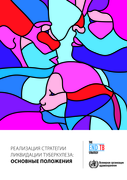
Цель настоящего документа («Основные положения») заключается в подготовке рекомендаций относительно необходимых на национальном уровне мер по адаптации стратегÐ...
Evidence for technical update of pocket book recommendations. Newborn conditions, dysentery, pneumonia, oxygen use and delivery, common causes of fever, severe acute malnutrition and supportive care
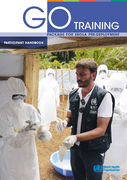
GO pre-deployment training: participant handbook
recommended
This is a pre-deployment training, tailored specially to the Ebola outbreak in West Africa, offered to WHO personnel, consultants, and key partners. The material covered in modules 1-4 is applicable and useful to frontline response workers, national and international. Only Module 5, which focuses on...
Validation of elimination of mother-to-child transmission, or vertical transmission, of HIV, syphilis and hepatitis B virus (HBV), is an attestation that a country has successfully met standard criteria for elimination, or for being at 1 of the 3 levels of achievement on the ‘Path to Eliminationâ€...
23 December 2020 This document summarizes WHO recommendations for the rational use of personal protective equipment (PPE) in health care settings and temporary strategies during acute supply shortages. This document also contains 2 Annex sections describing updated PPE use recommendations for health...
Trachoma is the leading infectious cause of blindness (2). It is characterized by repeated
conjunctival infection with particular strains of Chlamydia trachomatis. This scars the conjunctivae and,
in some cases, leads to trichiasis with or without entropion. The abrasive action of eyelashes can
d...
Recommendations for a Public Health approach and considerations for policy-makers and managers
This document is part of the process for improving the quality of care in family planning. Medical eligibility criteria for contraceptive use (MEC), the first edition of which was published in 1996, prsents current World Health Organization (WHO) guidance on the safety of various contraceptive e-
m...
Interim Guidance
23 décembre 2020 Ce document résume les recommandations de l'OMS concernant l'utilisation rationnelle des équipements de protection individuelle (EPI) dans les établissements de soins de santé et les stratégies temporaires en cas de pénurie aiguë d'approvisionnement. Ce document contient ég...
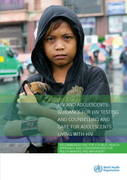
These guidelines provide specific recommendations and expert suggestions — for national policy-makers and programme managers and their partners and stakeholders— on prioritizing, planning and providing HIV testing, counselling, treatment and care services for adolescents
This second edition of the Basic Malaria Microscopy package is a stand-alone product,
providing all that is needed to conduct a complete training course

Download (7.4 MB)
Overview
Epilepsy is one of the most common neurological disorders globally. The WHO epilepsy technical brief aims to strengthen action for epilepsy and complements the Intersectoral global action plan on epilepsy and other neurological disorders 2022–2031.
The technical bri...
