
Filter
4494
Text search:
economic
burden
Featured
Recommendations
324
New Publications
1102
Language
Document type
No document type
2337
Studies & Reports
1097
Guidelines
433
Strategic & Response Plan
243
Manuals
188
Fact sheets
97
Training Material
43
Situation Updates
21
Resource Platforms
14
Infographics
11
Brochures
4
Online Courses
2
Countries / Regions
Global
297
India
168
Kenya
143
Western and Central Europe
114
South Africa
101
Ethiopia
95
Uganda
86
Africa
84
Nigeria
82
Latin America and the Carribbean
81
Tanzania
77
Nepal
75
Sierra Leone
70
Zambia
69
Liberia
67
Malawi
61
Bangladesh
58
Myanmar / Burma
58
Rwanda
54
Ghana
53
Syria
50
Ukraine
50
Namibia
48
Eastern Europe
46
Asia
41
South–East Asia Region
38
Philippines
35
Zimbabwe
29
Cambodia
28
South Sudan
27
Lesotho
27
East and Southern Africa
27
Indonesia
26
Mozambique
24
Congo, Democratic Republic of
23
Botswana
20
West and Central Africa
20
Guinea
19
Brazil
19
Eastern Europe and Central Asia
19
Pakistan
18
Russia
18
Haiti
16
Germany
16
Cameroon
14
Yemen
14
Venezuela
14
Middle East and North Africa
13
Jordan
12
Afghanistan
11
Thailand
11
Sudan
11
Burkina Faso
10
Lebanon
10
Eswatini/ Swaziland
10
Colombia
10
Vietnam
10
Senegal
9
USA
9
North America
9
Western Pacific Region
8
Moldova
8
China
7
Peru
7
Somalia
6
Sri Lanka
6
Albania
6
Laos
6
Iraq
5
Turkey
5
Egypt
5
Central African Republic
5
Tajikistan
5
Benin
4
Argentina
4
Burundi
4
Palestine
4
Romania
4
Kyrgyzstan
4
Jamaica
4
North Macedonia
3
Guatemala
3
Poland
3
Iran
3
Turkmenistan
3
Mauritius
3
Mali
2
Guinea-Bissau
2
Côte d’Ivoire / Ivory Coast
2
Saudi Arabia
2
Papua New Guinea
2
Hungary
2
Ecuador
2
El Salvador
2
Libya
2
Madagascar
2
Chile
2
Other region
2
Paraguay
2
Armenia
2
Southern Africa
2
Canada
2
Timor Leste/ East Timor
2
Qatar
2
Kazakhstan
2
Georgia
2
Bosnia and Herzegovina
2
Chad
1
Gambia
1
Ireland
1
Dominican Republic
1
Honduras
1
Bolivia
1
Angola
1
Mexico
1
Nicaragua
1
Bhutan
1
Djibouti
1
Mongolia
1
Bulgaria
1
Lithuania
1
Slovakia
1
Gabon
1
Japan
1
Denmark
1
France
1
Maldives
1
Tunisia
1
United Kingdom
1
Portugal
1
Spain
1
Morocco
1
Azerbaijan
1
Belarus
1
Israel
1
Belize
1
Costa Rica
1
Panama
1
Authors & Publishers
Publication Years
Category
Countries
1681
Public Health
335
Clinical Guidelines
250
Key Resources
205
Women & Child Health
159
Capacity Building
47
Pharmacy & Technologies
18
Annual Report MEDBOX
1
Toolboxes
Mental Health
379
HIV
362
COVID-19
288
TB
278
Planetary Health
260
Disability
180
AMR
175
NTDs
147
NCDs
145
Global Health Education
131
Conflict
122
Health Financing Toolbox
107
Refugee
81
Caregiver
81
Malaria
72
Rapid Response
44
Ebola & Marburg
43
2.0 Rapid Response
32
Natural Hazards
31
Pharmacy
31
Polio
23
Social Ethics
22
Cholera
20
Specific Hazards
12
Zika
9
South Sudan
1

Despite being a preventable and curable infectious disease, tuberculosis (TB) has continued to elude global controll efforts. In 2023, 8.2 milion people with TB were diagnosed and notified to the WHO, the hightest number ever reported since WHO began tracking.
Exposure to air pollution has significant adverse health effects, leading to nearly 1 in every 8 deaths globally. Air pollution affects all age groups, from unborn children to older people, in both high- and low-income nations.
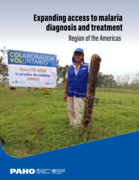
The overall objective of this approach is to accelerate efforts toward malaria elimination by increasing
access to early diagnosis and treatment. The specific objectives are to: Minimize the barriers that the population faces in accessing timely, quality diagnosis and treatment. Reduce the time bet
...

The objective of this guideline is to present the complete set of all WHO recommendations and best practice statements relating to abortion. While legal, regulatory, policy and service-delivery contexts may vary from country to country, the recommendations and best practices described in this docume
...

The annual bulletin of the Mekong Malaria Elimination (MME) programme is a yearly report that reviews ongoing efforts to combat multidrug resistance and eliminate malaria in the 6 countries of the Greater Mekong subregion (GMS): Cambodia, China (Yunnan province), Lao People's Democratic Republic, My
...

This guidance synthesizes current evidence on dengue laboratory testing and diagnostics and provides practical recommendations for laboratories, clinicians, public health officials, and programme managers involved in dengue diagnosis, surveillance, and control, in the context of the global emergency
...

This resulting toolkit is a practical guide intended to assist users to become advocates for palliative care in a practical and effective
way. It is not necessarily a resource to read from cover to cover; rather, it can also be used selectively to each reader’s needs to engage audiences and
...

In the absence of a such a measure, and building on the success of developing the APCA African
Palliative Outcome Scale (POS) for adults, the African Palliative Care Association has developed the
APCA African Children’s POS. The tool has been validated across diseases, countries, settings and
...
In this guide, the African Palliative Care Association (APCA) has put together evidence‑based information on the use of specific opioids commonly used in the management of moderate‑to‑severe pain to manage both cancer and non‑cancer pain. APCA hopes that this guide will be a useful tool i
...

WHO guideline on balanced national controlled medicines policies to ensure medical access and safety
Access to medicines is essential for attainment of universal health coverage, which is central to achievement of the health-related Sustainable Development Goals. Controlled medicines include those such as opioids, benzodiazepines, barbiturates, amphetamines and others with identified or emergent cl
...

WHO guideline on HIV service delivery
recommended
Updated guidance on the integration of diabetes, hypertension and mental health services, and interventions to support adherence to antiretroviral therapy. The guideline offers practical implementation guidance for countries and key stakeholders as well as outlining key research gaps. As life expec
...

The health impacts of climate change are no longer a distant threat. They are being felt here and now and becoming more extreme.
To address these threats, the WHO Asia-Pacific Centre for Environment and Health in the Western Pacific Region (ACE) was established in 2019 through a partnership with
...

PHSM are vital in reducing the risk and scale of infectious disease transmission and lowering hospitalization and deaths. Examples include contact tracing, quarantine and isolation, mask use, ventilation, school or workplace measures, mobility restrictions and travel requirements.
While these mea
...

Epidemics and pandemics are some of the biggest threats to a safe and healthy world. But with effective preparedness and response measures, we can reduce their impacts and even stop them in their tracks.
Through the Programmatic Partnership with the European Union, 24 local Red Cross and Red Cres
...

In an era of constrained resources and tightening budgets, strategic prioritization in tuberculosis (TB) programming is more critical than ever. Countries must make informed decisions to allocate limited resources effectively - maximizing impact, preventing avoidable deaths, and sustaining progress
...

The ILO has joined forces with Gallup to carry out a groundbreaking global survey covering 50 countries that sheds further light on the causes of the persistence of HIV-related stigma and discrimination in the world of work.

Building true health security in a global age. Findings and recommendations of the Global Council. In landmark findings based on two years of research and convenings around the world, the new report shows that high levels of inequality are linked to outbreaks becoming pandemics and that inequality i
...

The findings of the report are both urgent and devastating. At the current rate of progress, by 2040 we would still have 1.9 million new HIV infections and 990,000 AIDS-related deaths in children. But if funding for HIV prevention and treatment continues to fall as current trends suggest, the world
...

Operational Guidance. This operational guidance provides a structured approach to support countries in sustaining priority services for HIV, viral hepatitis and sexually transmitted infections in the context of reduced external funding. The guidance is intended for national governments, public healt
...
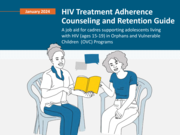
A job aid for cadres supporting adolescents living with HIV (ages 15-19) in Orphans and Vulnerable
Children (OVC) Programs
