
Filter
2920
Text search:
household
survey
Featured
185
1014
Language
2842
53
38
21
20
15
6
5
5
3
3
2
2
2
1
1
1
1
1
1
1
1
1
1
1
1
1
1
1
1
1
1
1
1
Document type
1866
565
174
117
95
37
30
26
5
3
2
Countries
136
125
108
107
101
95
87
84
83
81
70
67
65
63
62
61
58
55
41
36
34
34
34
34
34
30
29
29
29
29
25
23
22
20
20
19
18
15
15
15
14
13
12
12
12
12
11
11
10
9
9
9
9
9
8
8
7
7
6
6
6
6
6
5
5
5
5
4
4
4
4
4
3
3
3
3
3
2
2
2
2
2
2
2
2
2
2
2
2
2
2
2
2
1
1
1
1
1
1
1
1
1
1
1
1
1
1
1
1
1
1
1
1
1
1
1
1
1
1
1
1
1
1
1
Authors & Publishers
235
94
94
72
58
58
56
46
38
34
24
22
20
19
17
17
14
14
14
13
13
12
12
11
11
11
11
11
11
10
10
10
10
10
10
10
10
9
9
9
9
9
8
8
8
8
7
7
7
7
7
7
7
7
7
7
7
7
7
6
6
6
6
6
6
6
6
6
6
6
6
5
5
5
5
5
5
5
5
5
5
5
5
5
5
5
5
5
5
5
5
5
5
5
5
5
5
5
4
4
4
4
4
4
4
4
4
4
4
4
4
4
4
4
4
4
4
4
4
4
4
4
4
4
4
4
4
4
4
4
3
3
3
3
3
3
3
3
3
3
3
3
3
3
3
3
3
3
3
3
3
3
3
3
3
3
3
3
3
3
3
3
3
3
3
3
3
3
3
3
3
3
3
3
3
3
3
3
3
3
3
3
3
3
3
3
3
3
3
3
3
3
3
3
3
3
3
3
3
3
3
3
3
2
2
2
2
2
2
2
2
2
2
2
2
2
2
2
2
2
2
2
2
2
2
2
2
2
2
2
2
2
2
2
2
2
2
2
2
2
2
2
2
2
2
2
2
2
2
2
2
2
2
2
2
2
2
2
2
2
2
2
2
2
2
2
2
2
2
2
2
2
2
2
2
2
2
2
2
2
2
2
2
2
2
2
2
2
2
2
2
2
2
2
2
2
2
2
2
2
2
2
2
2
2
2
2
2
2
2
2
2
2
2
2
2
2
2
2
2
2
2
2
2
2
2
2
2
2
2
2
2
2
2
2
2
2
2
2
2
2
2
2
2
2
2
2
2
2
2
2
2
2
2
2
2
2
2
2
2
2
2
2
2
2
2
2
2
2
2
2
2
2
2
2
2
2
2
2
2
2
2
2
2
2
2
2
2
2
2
2
2
2
2
2
2
2
2
2
2
2
2
2
2
1
1
1
1
1
1
1
1
1
1
1
1
1
1
1
1
1
1
1
1
1
1
1
1
1
1
1
1
1
1
1
1
1
1
1
1
1
1
1
1
1
1
1
1
1
1
1
1
1
1
1
1
1
1
1
1
1
1
1
1
1
1
1
1
1
1
1
1
1
1
1
1
1
1
1
1
1
1
1
1
1
1
1
1
1
1
1
1
1
1
1
1
1
1
1
1
1
1
1
1
1
1
1
1
1
1
1
1
1
1
1
1
1
1
1
1
1
1
1
1
1
1
1
1
1
1
1
1
1
1
1
1
1
1
1
1
1
1
1
1
1
1
1
1
1
1
1
1
1
1
1
1
1
1
1
1
1
1
1
1
1
1
1
1
1
1
1
1
1
1
1
1
1
1
1
1
1
1
1
1
1
1
1
1
1
1
1
1
1
1
1
1
1
1
1
1
1
1
1
1
1
1
1
1
1
1
1
1
1
1
1
1
1
1
1
1
1
1
1
1
1
1
1
1
1
1
1
1
1
1
1
1
1
1
1
1
1
1
1
1
1
1
1
1
1
1
1
1
1
1
1
1
1
1
1
1
1
1
1
1
1
1
1
1
1
1
1
1
1
1
1
1
1
1
1
1
1
1
1
1
1
1
1
1
1
1
1
1
1
1
1
1
1
1
1
1
1
1
1
1
1
1
1
1
1
1
1
1
1
1
1
1
1
1
1
1
1
1
1
1
1
1
1
1
1
1
1
1
1
1
1
1
1
1
1
1
1
1
1
1
1
1
1
1
1
1
1
1
1
1
1
1
1
1
1
1
1
1
1
1
1
1
1
1
1
1
1
1
1
1
1
1
1
1
1
1
1
1
1
1
1
1
1
1
1
1
1
1
1
1
1
1
1
1
1
1
1
1
1
1
1
1
1
1
1
1
1
1
1
1
1
1
1
1
1
1
1
1
1
1
1
1
1
1
1
1
1
1
1
1
1
1
1
1
1
1
1
1
1
1
1
1
1
1
1
1
1
1
1
1
1
1
1
1
1
1
1
1
1
1
1
1
1
1
1
1
1
1
1
1
1
1
1
1
1
1
1
1
1
1
1
1
1
1
1
1
1
1
1
1
1
1
1
1
1
1
1
1
1
1
1
1
1
1
1
1
1
1
1
1
1
1
1
1
1
1
1
1
1
1
1
1
1
1
1
1
1
1
1
1
1
1
1
1
1
1
1
1
1
1
1
1
1
1
1
1
1
1
1
1
1
1
1
1
1
1
1
1
1
1
1
1
1
1
1
1
1
1
1
1
1
1
1
1
1
1
1
1
1
1
1
1
1
1
1
1
1
1
1
1
1
1
1
1
1
1
1
1
1
1
1
1
1
1
1
1
1
1
1
1
1
1
1
1
1
1
1
1
1
1
1
1
1
1
1
1
1
1
1
1
1
1
1
1
1
1
1
1
1
1
1
1
1
1
1
1
1
1
1
1
1
1
1
1
1
1
1
1
1
1
1
1
1
1
1
1
1
1
1
1
1
1
1
1
1
1
1
1
1
1
1
1
1
1
1
1
1
1
1
1
1
1
1
1
1
1
1
1
1
1
1
1
1
1
1
1
1
1
1
1
1
1
1
1
1
1
1
1
1
1
1
1
1
1
1
1
1
1
1
1
1
1
1
1
1
1
1
1
1
1
1
1
1
1
1
1
1
1
1
1
1
1
1
1
1
1
1
1
1
1
1
1
1
1
1
1
1
1
1
1
1
1
1
1
1
1
1
1
1
1
1
1
1
1
1
1
1
1
1
1
1
1
1
1
1
1
1
1
1
1
1
1
1
1
1
1
1
1
1
1
1
1
1
1
1
1
1
1
1
1
1
1
1
1
1
1
1
1
1
1
1
1
1
1
1
1
1
1
1
1
1
1
1
1
1
1
1
1
1
1
1
1
1
1
1
1
1
1
1
1
1
1
1
1
1
1
1
1
1
1
1
1
1
1
1
1
1
1
1
1
1
1
1
1
1
1
1
1
1
1
1
1
1
1
1
1
1
1
1
1
1
1
1
1
1
1
1
1
1
1
1
1
1
1
1
1
1
1
1
1
1
1
1
1
1
1
1
1
1
1
1
1
1
1
1
1
1
1
1
1
1
1
1
1
1
1
1
1
1
1
1
1
1
1
1
1
1
1
1
1
1
1
1
1
1
1
1
1
1
1
1
1
1
1
1
1
1
1
1
1
1
1
1
1
1
1
1
1
1
1
1
1
1
1
1
1
1
1
1
1
1
1
1
1
1
1
1
1
1
1
1
1
1
1
1
1
1
1
1
1
1
1
1
1
1
1
1
1
1
1
1
1
1
1
1
1
1
1
1
1
1
1
1
1
1
1
1
1
1
1
1
1
1
1
1
1
1
1
1
1
1
1
1
1
1
1
1
1
1
1
1
1
1
1
1
1
1
1
1
1
1
1
1
1
1
1
1
1
1
1
1
1
1
1
1
1
1
1
1
1
1
1
1
1
1
1
1
1
1
1
1
1
1
1
1
1
1
1
1
1
1
1
1
1
1
1
1
1
1
1
1
1
1
1
1
1
1
1
1
1
1
1
1
1
1
1
1
1
1
1
1
1
1
1
1
1
1
1
1
1
1
1
1
1
1
1
1
1
1
1
1
1
1
1
1
1
1
1
1
1
1
1
1
1
1
1
1
1
1
1
1
1
1
1
1
1
1
1
1
1
1
1
1
1
1
1
1
1
1
1
1
1
1
1
1
1
1
1
1
1
1
1
1
1
1
1
1
1
1
1
1
1
1
1
1
1
1
1
1
1
1
1
1
1
1
1
1
1
1
1
1
1
1
1
1
1
1
1
1
1
1
1
1
1
1
1
1
1
1
1
1
1
1
1
1
1
1
1
1
1
1
1
1
1
1
1
1
1
1
1
1
1
1
1
1
1
1
1
1
1
1
1
1
1
1
1
1
1
1
1
1
1
1
1
1
1
1
1
1
1
1
1
1
1
1
1
1
1
1
1
1
1
1
1
1
1
1
1
1
1
1
1
1
1
1
1
1
1
1
1
1
1
1
1
1
1
1
1
1
1
1
1
1
1
1
1
1
1
1
1
1
1
1
1
1
1
1
1
1
1
1
1
1
1
1
1
1
1
1
1
1
1
1
1
1
1
1
1
1
1
1
1
1
1
1
1
1
1
1
1
1
1
1
1
1
1
1
1
1
1
1
1
1
1
1
1
1
1
1
1
1
1
1
1
1
1
1
1
1
1
1
1
1
1
1
1
1
1
1
1
1
1
1
1
1
1
1
1
1
1
1
1
1
1
1
1
1
1
1
1
1
1
1
1
1
1
1
1
1
1
1
1
1
1
1
1
1
1
1
1
1
1
1
1
1
1
1
1
1
1
1
1
1
1
1
1
1
1
1
1
1
1
1
1
1
1
1
1
1
1
1
1
1
1
1
1
1
1
1
1
1
1
1
1
1
1
1
1
1
1
1
1
1
1
1
1
1
1
1
1
1
1
1
1
1
1
1
1
1
1
1
1
1
1
1
1
1
1
1
1
1
1
1
1
1
1
1
1
1
1
1
1
1
1
1
1
1
1
1
1
1
1
1
1
1
1
1
1
1
1
1
1
1
1
1
1
1
1
1
1
1
1
1
1
1
1
1
1
1
1
1
1
1
1
1
1
1
1
1
1
1
1
1
1
1
1
1
1
1
1
1
1
1
1
1
1
1
1
1
1
1
1
1
1
1
1
1
1
1
1
1
1
1
1
1
1
1
1
1
1
1
1
1
1
1
1
1
1
1
1
1
1
1
1
1
1
1
1
1
1
1
1
1
1
1
1
1
1
1
1
1
1
1
1
1
1
1
1
1
1
1
1
1
1
1
1
1
1
1
1
1
1
1
1
1
1
1
1
1
1
1
1
1
1
1
1
1
1
1
1
1
1
1
1
1
1
1
1
1
1
1
1
1
1
1
1
1
1
1
1
1
1
1
1
1
1
1
1
1
1
1
1
1
1
1
1
1
1
1
1
1
1
1
1
1
1
1
1
1
1
1
1
1
1
1
1
1
1
1
1
1
1
1
1
1
1
1
1
1
1
1
1
1
1
1
1
1
1
1
1
1
1
1
1
1
1
1
1
1
1
1
1
1
1
1
1
1
1
1
1
1
1
1
1
1
1
1
1
1
1
1
1
1
1
1
1
1
1
1
1
1
1
1
1
1
1
1
1
1
1
1
1
1
1
1
1
1
1
1
1
1
1
1
1
1
1
1
1
1
1
1
1
1
1
1
1
1
1
1
1
1
1
1
1
1
1
1
1
1
1
1
1
1
1
1
1
1
1
1
1
1
1
1
1
1
1
1
1
1
1
1
1
1
1
1
1
1
1
1
1
1
1
1
1
1
1
1
1
1
1
1
1
1
1
1
1
1
1
1
1
1
1
1
1
1
1
1
1
1
1
1
1
1
1
1
1
1
1
1
1
1
1
1
1
1
1
1
1
1
1
1
1
1
1
1
1
1
1
1
1
1
1
1
1
1
1
1
1
1
1
1
1
1
1
1
1
1
1
1
1
1
1
1
1
1
1
1
1
1
1
1
1
1
1
1
1
1
1
1
1
1
1
1
1
1
1
1
1
1
1
1
1
1
1
1
1
1
1
1
1
1
1
1
1
1
1
1
1
1
1
1
1
1
1
1
1
1
1
1
1
1
1
1
1
1
1
1
1
1
1
1
1
1
1
1
1
1
1
1
1
1
1
1
1
1
1
1
1
1
1
1
1
1
1
1
1
1
1
1
1
1
1
1
1
1
1
1
1
1
1
1
1
1
1
1
1
1
1
1
1
1
1
1
1
1
1
1
1
1
1
1
1
1
1
1
1
1
1
1
1
1
1
1
1
1
1
1
1
1
1
1
1
1
1
1
1
1
1
1
1
1
1
1
1
1
1
1
1
1
1
1
1
1
1
1
1
Publication Years
709
1978
227
5
1
Category
1638
185
137
122
89
31
6
Toolboxes
186
180
153
119
108
101
78
66
49
47
45
41
37
35
33
33
24
19
18
16
15
11
11
2
2
2

Each humanitarian setting provides distinct opportunities and challenges for actors to coordinate and collaborate at strategic and operational levels. The Health and Protection Joint Operational Framework has been developed to ensure that the health and protection response during humanitarian emerge
...
ncies can adapt to each environment and is adequately coordinated to ensure high-quality services to meet the needs of affected individuals and at-risk groups based on their situation or vulnerabilities.
The Health and Protection JOF was conceived in 2019 as a collaboration between the Global Health Cluster (GHC), the Global Protection Cluster (GPC) and its Areas of Responsibility (AoRs), the Inter-Agency Standing Committee Reference Group on Mental Health and Psychosocial Support in Emergency Settings (IASC MHPSS RG), and the Inter-Agency Working Group for Reproductive Health in Crisis (IAWG), in addition to key technical experts.
A Steering Group (SG) comprised of representatives from each of these entities guided the framework through a joint global analysis of good practices, gaps, and barriers to integrated and inter-sectoral response coordination. This included a mixed methods review of policy and practice, a survey of humanitarian experts, multiple case studies, structured stakeholder interviews, and field visits. This exercise produced a zero-draft which was then reviewed by field practitioners in three operational contexts to clarify and fully coordinate its operationally focused lens. Finally, the JOF was reviewed by the SG including via a series of consultations in early 2023 to consolidate the current framework.
more

The Democratic Republic of Timor-Leste has the highest TB incidence rate in the South East Asian Region - 498 per 100,000, which is the seventh highest in the world. In Timor-Leste TB is the eighth most common cause of death.
The salient observations are as follows:
In 2018, 487 (12.5%) of the
...
3906 notified TB patients were tested for RR-TB and only 12 lab confirmed RR-TB patients were initiated on standard MDR-TB treatment of 20-months duration, (a 3-fold increase in RR-TB detection compared with 2017). This amounts to treatment coverage of only 17% of 72 estimated MDR/RR-TB among notified TB patients (3906) and 5% of 240 estimated incident MDR-TB patients as compared to 62% treatment coverage of 6300 incident drug sensitive TB patients estimated in TLS. The treatment success in the 2016 annual cohort of 6 MDR-TB patients has been reported at 83%. 80% of TB patients know their HIV Status with around 1% TB-HIV co-infection, 37/ 77 (48%) TB-HIV Co-infection Detected. Of the 387 PLHIV currently alive on ART, exact status on TB screening and testing is unknown. % of PLHIV newly enrolled in HIV care who received IPT is not known.
In 2018, the mortality rate for TB was 94 deaths per 100,000 people (1200 per annum) in TL with an increasing mortality trend (Figure 1), despite TB services being available for nearly two decades.
A survey of catastrophic costs due to TB (2016) highlights that 83% of TB patients are reported to be facing catastrophic costs due to the disease. This is the highest rate in the world.
more
Air pollution is one of the leading causes of health complications and mortality worldwide, especially affecting lower-income groups, who tend to be more exposed and vulnerable. This study documents the relationship between ambient air pollution exposure and poverty in 211 countries and territories.
...
Using the World Health Organization’s (WHO) 2021 revised fine particulate matter (PM2.5) thresholds, we show that globally, 7.3 billion people are directly exposed to unsafe average annual PM2.5 concentrations, 80 percent of whom live in low- and middle-income countries. Moreover, 716 million of the world’s lowest income people (living on less than $1.90 per day) live in areas with unsafe levels of air pollution, especially in Sub-Saharan Africa. Air pollution levels are particularly high in lower-middle-income countries, where economies tend to rely more heavily on polluting industries and technologies. These findings are based on high-resolution air pollution and population maps with global coverage, as well as subnational poverty estimates based on harmonized household surveys.
more

National tuberculosis (TB) prevalence surveys provide a nationally representative measurement of the burden of TB disease in the population, at a given point in time. Repeat surveys allow assessment of trends and tracking of progress towards national and global targets for reductions in TB disease b
...
urden. Survey data also provide important insights that can help national TB programmes to identify ways to improve TB diagnosis and treatment.
National TB prevalence surveys are relevant in countries that do not yet have national disease notification and vital registration systems that are of sufficiently high quality and coverage to allow reliable tracking of TB disease burden.
more
More time or more money to improve nutrition in Benin Republic?
M. C. D. N. Vodouhe, L. Fakambi
Institut National des Recherches Agricoles du Bénin (INRAB)
(2015)
C2
Children malnutrition eradication in developing countries is a real challenge, especially among
vulnerable population. There are so many effort towards women (who are the main care providers)
socio-economic situation in order to improve their children nutrition. This article aims to identify the
...
impact of mothers’ activities on child nutrition and care. Interviews were used to collect data from
mothers of children less than 5 years old. Pearson correlation test and regression models were
performed to highlight relation and to identify the main factors that affect child nutrition and care. The
nutritional statuses of children show a high prevalence of underweight (38.46%), emaciation (25.17%)
and stunting (23.77%). Statistic results show that a child whose mother has food processing as main
activity has 2,322 more times to not suffer from emaciation malnutrition compared to a child whose
mother has trade as main activity. A child whose mother has high revenue has 1.463 more times to
not be suffering from stunting malnutrition compared to a child whose mother has lower revenue. A
child whose father has fishing as main activity has 8,4 more chance to not be suffering from stunting
malnutrition compared to a child whose father has another activity as main activity. A child whose
father is present in the household has 8.11 more chance to not suffer from stunting malnutrition
compared to a child whose father is absent. A child from mother who has food processing as main
activity is 2,464 more times preserved from fever compared to a child from mother whose main activity
is trade. Moreover child position, child feeding with porridge, child nursing are correlated with mother
activity. This situation is justified by the fact that mother need money to improve child nutrition and
health but they are also confronted to the fact that those activity that provide significant money are
sometime time consuming and not permit to take care of children in term of feeding practices, hygiene
control etc. Therefore it is important that intervention towards women take in consideration those
factors (money and time) but also the family in the whole.
more

Humanitarian crises exacerbate nutritional risks and often lead to an increase in acute malnutrition. Emergencies include both manmade (conflict) and natural disasters (floods, drought, cyclones, typhoons, earthquakes, volcanic eruptions, etc.). Complex emergencies are combinations of both manmade a
...
nd natural disasters, often of a protracted nature. Millions of people are affected by humanitarian crises every year. The increasing frequency and scale of emergencies requires nutrition to be addressed in all phases of a response.
Crisis situations, whether acute or protracted, impact on a range of factors that can increase the risk of undernutrition, morbidity, and mortality. They may involve: the large-scale destruction of property and infrastructure; the erosion of livelihood strategies and purchasing power; a breakdown of and reduced access to essential services, including health services, water supply, and sanitation; and the displacement of large numbers of people. Emergencies can also disrupt social systems and the quality of care/feeding practices. Household access to food may be negatively affected and people may find themselves in overcrowded settlements with their families divided. As a result, at the individual level, there is often an increased risk of deteriorating health and nutritional status, resulting in a greater likelihood of death.
more
This report presents further analysis of the 2015 Nepal Health Facility Survey. Data analysis is based on the Donabedian framework for assessing quality of care in health services, which divides the indicators into three groups: structure, process,
...
and outcome. The World Health Organization Service Availability and Readiness Assessment (SARA) indicator guideline was used to assess facility service readiness, service quality and client satisfaction with maternal health services. The study performed both bivariate and multivariate regression analysis to examine the association of maternal health service readiness and quality indicators with client satisfaction.
more
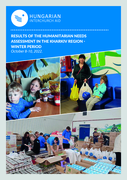
Results of the humanitarian needs assessment in the Kharkiv region - Winter period October 8-10, 2022
91 in-person surveys of heads of household, 91 households, 245 adult household members, 76 mino
...
r children (0-18 years)
more
Module on child functioning
recommended
The Washington Group/UNICEF Module on Child Functioning, finalized in 2016, covers children between 2 and 17 years of age and assesses functional difficulties in different domains including hearing, vision, communication/comprehension, learning, mobility and emotions. To better reflect the degree of
...
functional difficulty, each area is assessed against a rating scale. The purpose is to identify the subpopulation of children who are at greater risk than other children of the same age or who are experiencing limited participation in an unaccommodating environment. The set of questions is intended for use in national household surveys and censuses.
Available for ages 2-4 and 5-17 in English, French, Spanish, Vietnamese, Russian, Chinese, Arabic, Portuguese, Brazilian, Khmer
more
DHS Working Papers No. 101
Women’s empowerment, HIV testing, birth in past five years, Tanzania
Zambia Report for 2017
Data from the 2000, 2005, and 2011 Demographic and Health Surveys. DHS Trend Reports No. 7
DHS Analytical Studies No. 41
This first in a series of Washington Group Implementation Documents covers the tools developed by the Washington Group to collect
internationally comparable disability data on censuses and surveys. WG Implementation guideline Tool 1
