
Filter
3147
Text search:
Preference
Featured
420
670
Language
Document type
1311
623
611
308
144
82
30
15
7
7
5
1
1
1
Countries
210
131
82
50
49
45
40
40
39
39
39
35
34
34
32
26
26
26
25
24
18
18
17
17
17
17
16
16
15
13
13
12
12
11
8
8
8
7
7
7
7
7
7
7
6
6
6
6
6
6
5
5
5
5
5
5
4
4
4
4
4
4
4
4
4
3
3
3
3
3
3
3
3
3
3
3
3
3
3
2
2
2
2
2
2
2
2
2
2
2
2
2
2
2
2
2
2
1
1
1
1
1
1
1
1
1
1
1
1
1
1
1
1
1
1
1
1
1
1
1
1
1
1
1
1
1
Authors & Publishers
Publication Years
Category
701
428
291
290
233
92
77
Toolboxes
282
206
175
154
139
133
117
108
96
94
79
78
77
76
74
70
56
51
38
33
29
23
15
15
12
2
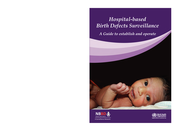
Birth defect has been an emerging major cause of child mortality in the region. Scarcity of the birth defects information hampers policy decisions and control measures at national level. In order to create evidence for action for birth defects prevention in the region, WHO-SEARO in collaboration wit
...
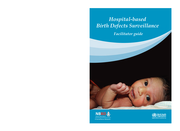
Birth defect has been an emerging major cause of child mortality in the region. Scarcity of the birth defects information hampers policy decisions and control measures at national level. In order to create evidence for action for birth defects prevention in the region, WHO-SEARO in collaboration wit
...
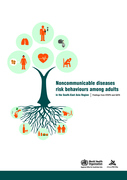
The publication conveys the most recent quantitative surveillance results focusing on noncommunicable disease (NCDs)-related risk behaviours among adults from the WHO STEPwise approach to NCD risk factor surveillance (STEPS) and tobacco use among adults from the Global Adult Tobacco Survey (GATS) in
...
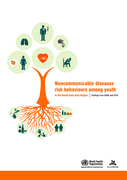
The publication conveys the quantitative surveillance results focusing on tobacco use and noncommunicable disease (NCD) related behaviours among youth (13–15 years) in Member States of the WHO South-East Asia Region, namely, the Global School-based Student Health Survey (GSHS) and the Global Youth
...
Oral diseases are among the most common chronic diseases worldwide and constitute a major public health problem due to the huge health and economic burden on individuals, families, societies, and health care systems. The recent emphasis on the role of determinants of health, common risk factors and
...
Report of a regional workshop, New Delhi, India, 29–30 September 2014
To reduce the burden of cardiovascular disease and its subsequent problems, the WHO Regional Office for South-East Asia organized a regional workshop on sodium intake and iodized salt for Member States in the South-East Asi ...
To reduce the burden of cardiovascular disease and its subsequent problems, the WHO Regional Office for South-East Asia organized a regional workshop on sodium intake and iodized salt for Member States in the South-East Asi ...

Guideline
Iron deficiency is one of the most common forms of nutritional deficiencies, particularly among vulnerable groups such as women, children and low-income populations. Iron deficiency often precedes anaemia, and anaemia during pregnancy is one of the strongest predictors of anaemia duri ...
Iron deficiency is one of the most common forms of nutritional deficiencies, particularly among vulnerable groups such as women, children and low-income populations. Iron deficiency often precedes anaemia, and anaemia during pregnancy is one of the strongest predictors of anaemia duri ...
Recent efforts to fight malaria in the Greater Mekong Subregion (GMS) have yielded impressive results. According to the latest WHO estimates, the six GMS countries cut their malaria case incidence by an estimated 54% between 2012 and 2015. Malaria death rates fell by 84% over the same period.
I ...
I ...

This toolkit for integrated vector management (IVM) is designed to help national and regional programme managers coordinate across sectors to design and run large IVM programmes.
The toolkit provides the technical detail required to plan, implement, monitor and evaluate an IVM approach. IVM can ...
The toolkit provides the technical detail required to plan, implement, monitor and evaluate an IVM approach. IVM can ...

These standard operating procedures are intended to be used when a Member State wishes to request validation of national elimination of trachoma as a public health problem following implementation of the SAFE strategy,1 which comprises: surgery for trachomatous trichiasis, antibiotics to clear infec
...
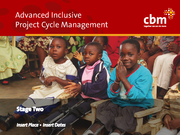
Advanced Inclusive Project Cycle Management
Inclusive Project Cycle Management
This manual summarizes the methodology used to develop WHODAS 2.0 and the findings obtained when the schedule was applied to certain areas of general health, including mental and neurological disorders.
The manual will be useful to any researcher or clinician wishing to use WHODAS 2.0 in their prac
...

This booklet presents key messages for action, summarized from a set of chapters on different environmental health issues, available at www.who.int/ ceh/publications/healthyenvironmentsforhealthychildren. The work is a result of an on-going partnership between WHO, UNEP and UNICEF in the area of chi
...
Rabies is a global public health problem with important socioeconomic impacts. Human rabies is preventable; almost all cases are transmitted through the bite of a rabid dog. Elimination of human rabies is possible. Technical support and tools are available. This report covers:
- Why investment ...
- Why investment ...

Technical report
This manual aims to provide information about the methods for investigating outbreaks of hepatitis E, and measures for their prevention and control. In addition, the manual gives information about the causative agent – known as the hepatitis E virus (HEV) – its epidemiology ...
This manual aims to provide information about the methods for investigating outbreaks of hepatitis E, and measures for their prevention and control. In addition, the manual gives information about the causative agent – known as the hepatitis E virus (HEV) – its epidemiology ...
External quality assessment (EQA) is an important component of quality systems for blood transfusion services. Establishing external quality assessment programmes for screening of donated blood for transfusion-transmissible infections (TTI): implementation guide aims to support WHO member States in
...

Every year, around 830 000 children die from unintentional or "accidental" injuries. The vast majority of these injuries occur in low-income and middle-income countries. However, dozens of prevention strategies and programmes exist. If they were integrated into other child survival programmes and im
...
The WHO/IWA document A practical guide to auditing water safety plans provides guidance on developing and implementing a WSP auditing scheme, covering such topics as the aim and role of auditing, auditor training and certification, audit criteria, audit timing and frequency and audit reportin
...
The training is targeted at all professionals involved in the management of drinking-water safety. The handbook is divided into three parts:
• Part 1 – Overview of the training approach, training structure and mode of training assessment
• Part 2 – Module learning material, which i ...
• Part 1 – Overview of the training approach, training structure and mode of training assessment
• Part 2 – Module learning material, which i ...
