In 2018, the WHO European Healthy Cities Network adopted the political vision of the Network until 2030 that is fully aligned with the United Nations 2030 Agenda for Sustainable Development: the Copenhagen Consensus of Mayors: Healthier and Happier Cities for All. The vision is built around six them...es. This compendium comprises tools, resources and networks that are related to one of the themes - place - from across the WHO European Healthy Cities Network and wider from 2010 to 2020. It is part of the support package for implementation of the place theme in Phase VII (2019–2024) of the WHO European Healthy Cities Network.
more
Fully functioning water, sanitation, hygiene (WASH) and health care waste management services are a critical aspect of infection prevention and control (IPC) practices, and ensuring patient safety and quality of care. Such services are also essential for creating an environment that supports the dig...nity and human rights of all care seekers, especially mothers, newborns, children and care providers.
WASH and waste services are also critical for preventing and effectively responding to disease outbreaks. The COVID-19 pandemic has exposed gaps in these basic services (Box 1). These gaps threaten the safety of patients and caregivers, and have environmental consequences, especially as a result of large increases in plastic health care waste. In short, WASH is a critical foundation for improving quality across the health system (1).
Many facilities lack plans and budgets for WASH, which has impacts on IPC. This lack of services, and of systems to improve them, compromises the ability to provide safe and quality care, and places health care providers and those seeking care at substantial risk of infection and loss of dignity. Unhygienic health care facilities without drinking water or functional toilets are also a disincentive to seeking care and undermine staff morale – these factors can have a critical impact on controlling infectious disease outbreaks.
Climate change and its impacts on WASH and health services, gender-specific needs, and equity in service provision and management all require rigorous attention, adaptable tools and regular monitoring.
more
Today, the world is facing a learning crisis: While millions of children have entered education systems for the first time, many of them cannot read, write or do basic mathematics, even after several years of primary school.1 This global learning crisis has its roots in children’s earliest years, ...when failure to invest in quality early childhood education (ECE)results in children starting school already behind in a host of critical skills they need to succeed in primary school.2Investing in the foundations of learning during the child’s early years benefits children,3 families, education systems and societies at large.4 Participation in quality ECE sets in motion a positive learning cycle and is a proven strategy to address the global learning crisis at its roots by closing early learning gaps, strengthening the efficiency of education systems and providing a solid foundation for human capital development and economic grow
more
Since 2000, concerted efforts by national programmes, supported by public–private partnerships, nongovernmental organizations, donors and academia under the auspices and coordination of the World Health Organization (WHO), have produced important achievements in the control of human African trypan...osomiasis (HAT). As a consequence, the disease was targeted for elimination as a public health problem by 2020. The Sixty-sixth World Health Assembly endorsed this goal in resolution WHA66.12 on neglected tropical diseases, adopted in 2013.
National sleeping sickness control programmes (NSSCPs) are core to progressing control of the disease and in adapting to the different epidemiological situations. The involvement of different partners, as well as the support and trust of long-term donors, has been crucial for the achievements.
more
This report is the first of its kind. It brings together various data sets to present the current status of hand hygiene, highlight lagging progress, and call governments and supporting agencies to action, offering numerous inspiring examples of change.
During the COVID-19 pandemic, hand hygiene ...received unprecedented attention and became a central pillar in national COVID prevention strategies. However, concern with hand hygiene should not only be as temporary public health measure in times of crisis, but as a vital everyday behaviour that contributes to health and economic resilience. Hand hygiene is a highly cost-effective investment, providing outsized health benefits for relatively little cost.
Despite efforts to promote hand hygiene, the rates of access to hand hygiene facilities remain stubbornly low. If current rates of progress continue, by the end of the SDG era in 2030, 1.9 billion people will still lack facilities to wash their hands at home.
This report presents a compelling case for investment in five key ‘accelerators’ as a pathway towards achieving hand hygiene for all – governance, financing, capacity development, data and information, and innovation. These accelerators are identified under the UN-Water SDG 6 Global Acceleration Framework.
more
'Ethical Issues in Obstetrics and Gynecology' represents the results of carefully researched and considered discussion. The guidelines are intended to provide material for consideration and debate about ethical aspects of our discipline for member organisations and their constituent membership.
As of September 2022, just over one million forced
migrants from Ukraine have entered Germany, making Germany the third largest recipient of migrants
(Ukraine Refugee Situation, 2022).
As early as March 2022, several news outlets reported that accommodation centers were at or near
capacity in ma...ny German states and lacked the resources to quickly register new arrivals (Süddeutsche
Zeitung, 2022; Herz, 2022). Consequently, some states asked for the use of the Königstein Key —
an algorithm used to redistribute forced migrants to different states based on each state’s capacity.5
Depending on which state forced migrants arrive in or where they relocate to, their first stop is typically
a reception facility where they are able to register, begin the asylum application procedure, and access
support services
more
After five consecutive below-average rains, the humanitarian crisis in the Horn of Africa is expanding and deepening.
Combined with insecurity and macroeconomic volatility, the impact of the drought on food and nutrition security has been devastating. Across Ethiopia, Kenya and Somalia, an estima...ted 22 million people are now acutely food insecure because of the drought. The malnutrition situation is also critical. Some 5.1 million children across drought-affected areas of the three countries are acutely malnourished in 2023, with dire implications for their health, growth and survival. Concerningly, the upcoming March-May 2023 rains are also forecast to be below-average. Should these rains fail, and humanitarian assistance not be delivered at scale, food insecurity will continue to deteriorate.
Regardless of how the 2023 rains perform, extremely high humanitarian needs will persist through 2023 while a full recovery from a drought of this magnitude will take years. To address the devastating drought-induced hunger and malnutrition across the region, WFP is pursuing an integrated dual track approach; meeting immediate life-saving food and nutritional needs while simultaneously building resilience to extreme climate variability.
more
Key messages include Effective communication skills should be used for everyone seeking health care,
including people with MNS conditions and their carers; Effective communication skills enable health-care providers to build rapport and trust with people as well as enabling health-care providers to... understand the health and social needs of people with MNS conditions; Health-care providers have a responsibility to promote the rights and dignity of
people with MNS conditions and more
more
Covid-19 Social Policy Response Series / No.14
This report examines Ecuador’s social policy response to mitigate the Covid-19 pandemic’s effects and protect
vulnerable populations. It chronologically traces containment, closure policies, social policies and programmes
put in place following t...he announcement of Covid-19 as a global pandemic. A combination of external con-
straints and domestic structures, i.e. informality and weak coordination, led to truncated efforts in the healthcare
response, while persistent inequalities in access to technology and high levels of informality led to fragmented
education, labour policies and social protection responses. The report zooms into the Family Protection Grant
(Bono de Protección Familiar or BPF), a new social protection programme that covers informal workers, which
captures the difficulties in reaching unregistered populations amid lockdown and containment measures.
more
Non-Communicable Diseases (NCDs), including mental disorders, currently pose one of the biggest threats to health and development globally, particularly in low and middle income countries2. It is predicted that unless proven interventions are rapidly implemented in countries, in the short to medium ...term, health care costs will increase exponentially and severe negative consequences will ensue not only to individuals and families but to whole societies and economies. NCDs are already a major burden in South Africa, but without added rigorous and timely action the health and development consequences may well become catastrophic. Immediate and additional, high quality, evidence based and focussed interventions are needed to promote health, prevent disease and provide more effective and equitable care and treatment for people living with NCDs at all levels of the health system. The problem is further compounded by the rising global prevalence of multi-morbidity (defined as the coexistence of two or more chronic diseases in one individual).
more
An applied approach to the training of trainers who, in turn,
train teams to implement psychosocial and mental health
interventions in developing countries affected by emergencies.
The film
On
the
Road
to
Peace
of
Mind,
used in conjunction with this guidebook, presents an applied Traini...ng of Trai-
ners
(TOT) approach. They are designed to educate trainers to prepare teams to provide psychosocial and mental
health assistance for populations in developing countries affected by wars, conflict, natural disasters and other emer-
gencies. The film and guidebook offer a practical framework for the training of trainers that enables psychosocial
and mental health workers to train others. Through modifications for local culture and context, the framework
presented can be used in training programmes on the road to peace of mind around the globe.
more
This module covers common Non-Communicable Diseases such as Hypertension, Diabetes and three common cancers (Cervical,
Breast and Oral cancer). The focus of this module is on building the knowledge and skills of the Multi-Purpose Workers (MPW) in
undertaking Population Based Screening, identifi ca...tion of cases for referral, follow up, recognition of complications, prevention
and health promotion. This module can be used by the female
or male MPW. However, while the content of the overall module
is the same for both some tasks will be different, particularly
those related to screening which the female MPW will have to
undertake. It is expected that the ANM/MPW will work closely
with the ASHA in her area. Together they form a front line worker
team to serve the needs of the community. The content of this
module will be covered in three days.
more
The United Nations Children's Fund (UNICEF), the International Organization for Migration (IOM), Georgetown University, and the United Nations University have today launched new guidelines to provide the first-ever global policy framework that will help protect, include, and empower children on the ...move in the context of climate change.
The Guiding Principles for Children on the Move in the Context of Climate Change provides a set of 9 principles that address the unique and layered vulnerabilities of children on the move both internally and across borders as a result of the adverse impacts of climate change. Currently, most child-related migration policies do not consider climate and environmental factors, while most climate change policies overlook the unique needs of children.
The guidelines note that climate change is intersecting with existing environmental, social, political, economic, and demographic conditions contributing to people’s decisions to move. In 2020 alone, nearly 10 million children were displaced in the aftermath of weather-related shocks. With around one billion children – nearly half of the world’s 2.2 billion children – living in 33 countries at high risk of the impacts of climate change, millions more children could be on the move in the coming years.
Developed in collaboration with young climate and migration activists, academics, experts, policymakers, practitioners, and UN agencies, the guiding principles are based on the globally ratified Convention on the Rights of the Child and are further informed by existing operational guidelines and frameworks.
Recommendations for safeguarding the rights and well-being of children regardless of their location or migration status.
The guiding principles provide national and local governments, international organizations and civil society groups with a foundation to build policies that protect children’s rights. The organizations and institutions are calling on governments, local and regional actors, international organizations, and civil society groups to embrace the guiding principles to help protect, include, and empower children on the move in the context of climate change.
more
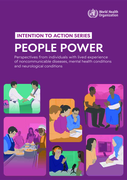
This report includes six case studies from 12 individuals with lived experience of diverse health conditions. These case studies explore the topics of power dynamics and power reorientation towards individuals with lived experience; informed decision-making and health literacy; community engagement ...across broader health networks and health systems; lived experience as evidence and expertise; exclusion and the importance of involving groups that are marginalized; and advocacy and human rights.
It is the first publication in the WHO Intention to action series, which aims to enhance the limited evidence base on the impact of meaningful engagement and address the lack of standardized approaches on how to operationalise meaningful engagement. The Intention to action series aims to do this by providing a platform from which individuals with lived experience, and organizational and institutional champions, can share solutions, challenges and promising practices related to this cross-cutting agenda. The Intention to action series also aims to provide powerful narratives,inspiration and evidence towards the Fourth United Nations High Level Meeting on NCDs in 2025 and achieving the 2030 United Nations Sustainable Development Goals (SDGs).
more
ثیوبری هی 19 ّبی يفًَی ًهیز وٍَیذ تَاًٌذ هختل وٌٌذُ هحیف ّبیی ثبضٌذ وِ وَدوبى در آًْب رضذ هی وٌٌذ. اختلال ّبیی وِ در ایي ضزایف در خبًَادُ، رٍاثف دٍستبًِ، فًبلیت ّبی رٍ...سهزُ ٍ در سكحی ٍسیى تز در اجتوبو ایجبد هی هی، ضَد تَاًذ پیبهذّبی هٌفی ثز ثْشیستی، رضذ، تَسًِ ٍ حوبیت اس وَدوبى اًجبم هی 19 داضتِ ثبضذ. يلاٍُ ثز آى الذاهبتی وِ ثِ هٌهَر پیطگیزی ٍ وٌتزل ضیَو ٍیزٍس وٍَیذ ضَد ًیش هی تَاًذ هخبقزاتی را در سهیٌِ حوبیت اس وَدوبى ثِ ّوزاُ داضتِ ثبضذ .ثِ يٌَاى ًوًَِ لزًكیٌِ خبًگی، لزًكیٌِ هجتٌی ثز هزاوش یب ًَاحی یب ایشٍلِ ضذى در یه هحیف هحذٍد اس جولِ هَاردی ّستٌذ وِ هی ذ تبحیزات هٌفی ثز وَدوبى ٍ خبًَادُ ٌ تَاً 2 ّبیطبى ثگذارد. ّذف اس هختػزی وِ در اداهِ هی آیذ پطتیجبًی اس وسبًی است وِ در سهیٌِ حوبیت اس وَدوبى فًبلیت هی وٌٌذ تب ثتَاًٌذ پبسخگَیی ثْتزی ًسجت ثِ هخبقزات حوبیت اس وَدوبى در سهبى ّوِ گیزی ٍیزٍس وزًٍب داضتِ ثبضٌذ. در ثخص اٍل ثِ خكزات ثبلمَُ ی حوبیت اس وَدوبى در دٍرُ ّوِ گیزی ٍیزٍس پزداختِ ضذُ ٍ در ثخص دٍم ثزًبهِ19وٍَیذ حوبیت اس ٍ )2019 ّبی پیطٌْبدی ثز اسبس حذالل استبًذاردّبی حوبیت اس وَدوبى در الذاهبت ثطزدٍستبًِ(
وَدوبى در سهبى ضیَو ثیوبری ّبی يفًَی آهذُ است.
more
Sexual and gender-based violence (SGBV) threatens displaced women and girls, as well as men and boys, in all regions of the world. Creating safe environments and mitigating the risk of SGBV can only be achieved by addressing gender inequality and discrimination. While the scourge of SGBV is receivin...g much more attention internationally – as illustrated by Security Council Resolutions 1820, 1888 and 1960 – preventing SGBV is a complex challenge. To assist operations in addressing this core protection concern, UNHCR is presenting the Action against Sexual- and Gender-Based Violence: An Updated Strategy. This strategy provides a structure to assist UNHCR operations in dealing with SGBV on the basis of a multi-sectoral and interagency approach. UNHCR policies and programmes have for many years helped operations to address SGBV in coordination with other actors. 80% of operations in urban settings and 93% in camp settings work with SGBV Standard Operating Procedures which strengthen cooperation between partners. Moreover, support to community-based organisations has given communities a greater sense of ownership in addressing SGBV.
more
Attention-Deficit/Hyperactivity Disorder
The Zimbabwe National Pharmacovigilance Policy Handbook, 2nd Edition updates the November 2013 version to indicate the Zimbabwe National Pharmacovigilance (PV) Centre’s compliance with the WHO Pharmacovigilance Indicators Handbook 2015.