
Filter
4363
Text search:
space
Featured
Recommendations
411
New Publications
1088
Language
Document type
No document type
2329
Studies & Reports
756
Guidelines
558
Manuals
287
Strategic & Response Plan
142
Training Material
116
Fact sheets
89
Situation Updates
42
Infographics
22
Resource Platforms
12
Brochures
7
Online Courses
3
Countries / Regions
India
236
Global
190
Kenya
110
South Africa
95
Ethiopia
93
Sierra Leone
92
Uganda
92
Myanmar / Burma
89
Liberia
88
Nepal
82
Bangladesh
75
Nigeria
74
Syria
72
Tanzania
67
Zambia
62
Malawi
62
Western and Central Europe
57
Latin America and the Carribbean
51
Ghana
45
Ukraine
45
Africa
41
South Sudan
39
Philippines
36
Rwanda
36
Namibia
34
Congo, Democratic Republic of
33
Zimbabwe
27
Guinea
24
Haiti
23
Lebanon
23
West and Central Africa
22
Germany
21
Indonesia
20
South–East Asia Region
20
Asia
20
Venezuela
20
Mozambique
19
Lesotho
19
Yemen
19
Cambodia
18
Botswana
18
East and Southern Africa
18
Middle East and North Africa
18
Brazil
17
Eastern Europe
17
Jordan
15
Afghanistan
15
Senegal
14
Cameroon
14
Central African Republic
14
Burkina Faso
13
USA
11
Sudan
11
Eastern Europe and Central Asia
11
Somalia
10
Pakistan
10
Western Pacific Region
10
Vietnam
10
Iraq
9
China
9
Colombia
9
Moldova
9
Mali
8
Thailand
8
Eswatini/ Swaziland
8
Benin
7
Sri Lanka
7
Russia
7
Greece
6
Laos
6
Iran
6
Côte d’Ivoire / Ivory Coast
5
Niger
5
Papua New Guinea
5
Poland
5
Palestine
5
Kyrgyzstan
5
Jamaica
5
Turkey
4
Chad
4
North Macedonia
4
Hungary
4
Burundi
4
Madagascar
4
Mexico
4
Albania
4
Romania
4
United Kingdom
4
Spain
4
Peru
3
Ecuador
3
Libya
3
Tajikistan
3
Turkmenistan
3
Portugal
3
Bosnia and Herzegovina
3
Morocco
2
Egypt
2
Gambia
2
Malaysia
2
Ireland
2
Singapore
2
Argentina
2
Croatia
2
Angola
2
Paraguay
2
Fiji
2
Armenia
2
Southern Africa
2
Timor Leste/ East Timor
2
Georgia
2
North America
2
Japan
2
Belarus
2
Saudi Arabia
1
Togo
1
Switzerland
1
Serbia
1
Honduras
1
El Salvador
1
Bolivia
1
Guatemala
1
Chile
1
Bhutan
1
Italy
1
Canada
1
Qatar
1
Bulgaria
1
Estonia
1
Lithuania
1
Slovakia
1
Kazakhstan
1
France
1
Tunisia
1
Norway
1
Azerbaijan
1
Authors & Publishers
Publication Years
Category
Countries
1593
Key Resources
323
Clinical Guidelines
257
Women & Child Health
250
Public Health
202
Capacity Building
150
Pharmacy & Technologies
46
Toolboxes
COVID-19
444
Mental Health
292
HIV
237
Planetary Health
227
Disability
187
Conflict
177
TB
154
Ebola & Marburg
132
Caregiver
124
Refugee
113
NTDs
109
Natural Hazards
89
Global Health Education
83
Rapid Response
76
Health Financing Toolbox
74
Pharmacy
60
2.0 Rapid Response
53
AMR
48
Malaria
46
Specific Hazards
44
NCDs
41
Social Ethics
40
Cholera
28
Zika
28
Polio
17
Typhoon
2
South Sudan
1

The health impacts of climate change are no longer a distant threat. They are being felt here and now and becoming more extreme.
To address these threats, the WHO Asia-Pacific Centre for Environment and Health in the Western Pacific Region (ACE) was established in 2019 through a partnership with
...

On Global Handwashing Day, WHO and UNICEF have released the first-ever global Guidelines on Hand Hygiene in Community Settings to support governments and practitioners in promoting effective hand hygiene outside health care – across households, public spaces and institutions. Framing hand hygiene
...

WHO consolidated guidelines on tuberculosis: Module 6: tuberculosis and comorbidities, 2nd ed
recommended
Addressing TB comorbidities and risk factors is central to the World Health Organization (WHO) End TB Strategy. These guidelines consolidate the latest WHO recommendations on TB and key comorbidities. The guidelines are a living document and will include dedicated sections for each key TB comorbidit
...

This Climate terminology bank provides key definitions and facts related to climate and resilience for Uganda’s refugee response. Its goal is to build a common understanding among stakeholders and support the integration of climate-smart practices in humanitarian efforts.

This Toolkit for ensuring rights-based and ethical use of digital technologies in HIV and health programmes is derived from the comprehensive UNDP Guidance on the rights-based and ethical use of digital technologies in HIV and health programmes document. The foundational UNDP Guidance document outli
...

These Frequently Asked Questions (FAQs) have been developed by the Infant Feeding in Emergencies (IFE) Core Group Infectious Disease Working Group based on the most recent recommendations, collective knowledge and evidence on cholera. The FAQs also draw on infant and young child feeding (IYCF) recom
...

Ces questions fréquemment posées (FAQs) ont été élaborées par le Groupe de travail sur les maladies infectieuses du Groupe l'alimentation central sur des nourrissons en situation d'urgence (IFE) en se basant sur les recommandations les plus récentes, les connaissances collectives et les donnÃ
...

This plan, approved by the Organization’s 62nd Directing Council, was shaped by extensive consultations with countries and stakeholders, and commits to transformative health outcomes over the next six years, tackling noncommunicable diseases (NCDs), mental health, health security, fragmented healt
...

Building on the WHO guidelines for disclosure to children up to age 12 in 2011, this implementation guidance provides evidence on existing interventions that support children and adolescents living with HIV in the process of disclosure. It includes interventions that focuses on safe disclosure, as w
...

Adolescents and young adults aged 10-24 remain underserved in the global response against HIV. Combination prevention, treatment and care programmes use a mix of evidence-based interventions to meet the current HIV prevention needs of adolescents and young adults. However, there needs to be a focus
...

This document, with a focus on the built environment and health care facilities, intends to guide the audience in preparing for and responding to SARI pandemics caused by existing and novel pathogens. It provides technical guidance on designing, establishing, and managing health care facilities for
...


Epidemics and pandemics are some of the biggest threats to a safe and healthy world. But with effective preparedness and response measures, we can reduce their impacts and even stop them in their tracks.
Through the Programmatic Partnership with the European Union, 24 local Red Cross and Red Cres
...

Building true health security in a global age. Findings and recommendations of the Global Council. In landmark findings based on two years of research and convenings around the world, the new report shows that high levels of inequality are linked to outbreaks becoming pandemics and that inequality i
...

Operational Guidance. This operational guidance provides a structured approach to support countries in sustaining priority services for HIV, viral hepatitis and sexually transmitted infections in the context of reduced external funding. The guidance is intended for national governments, public healt
...
ATIC Newsletter, Vol 15, Issue 1,
February 2022.
The window to 2030, the SDG target year, is closing. Without accelerated and sustained progress, hard-won UHC gains risk being lost. Using revised and improved UHC indicators the report presents the latest available UHC data and concludes with a call to shared action.
Technology and digital tools are transforming everyday life, opening new opportunities for women and girls—but they are also being weaponized to harass, threaten, and silence them online. Technology-facilitated violence against women and girls (TF VAWG) is now a defining challenge for gender equal
...
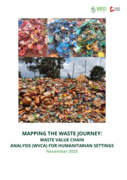
Why this document? The Waste Value Chain Analysis (WVCA) has been designed to help organizations understand local waste value chains, with the aim: To identify gaps and opportunities for improvement of local waste value chains (e.g. where shredding, baling can make recovery profitable) and much more
...
