
Filter
4346
Filtered Results: 4346
Text search:
household
environment
Featured
Recommendations
378
New Publications
1326
Language
Document type
No document type
2530
Studies & Reports
776
Guidelines
431
Strategic & Response Plan
218
Manuals
209
Training Material
63
Fact sheets
56
Situation Updates
36
Infographics
11
Resource Platforms
8
Brochures
5
Online Courses
2
Dashboards/Maps
1
Countries / Regions
Global
191
India
175
Kenya
167
Myanmar / Burma
118
Uganda
115
Nepal
107
Sierra Leone
107
Ethiopia
106
Liberia
103
Bangladesh
100
Malawi
90
South Africa
90
Nigeria
86
Tanzania
82
Rwanda
78
Zambia
74
Syria
72
Ghana
59
Latin America and the Carribbean
57
Western and Central Europe
57
Africa
55
Congo, Democratic Republic of
54
Philippines
50
Namibia
48
Zimbabwe
43
South Sudan
42
Indonesia
37
Ukraine
36
Mozambique
34
Lesotho
32
Yemen
32
Senegal
31
Cambodia
30
South–East Asia Region
30
Haiti
29
Guinea
26
Pakistan
24
Venezuela
22
Afghanistan
21
Asia
21
West and Central Africa
20
Burkina Faso
18
Jordan
18
Lebanon
16
Eastern Europe
16
Brazil
16
Botswana
16
Sudan
15
Somalia
14
Thailand
13
Eastern Europe and Central Asia
13
Vietnam
13
Central African Republic
13
Middle East and North Africa
12
East and Southern Africa
12
Mali
12
Cameroon
11
Germany
11
Colombia
10
China
10
Laos
9
Peru
9
Eswatini/ Swaziland
9
Sri Lanka
8
Turkey
7
Western Pacific Region
7
Russia
7
Madagascar
7
Niger
6
USA
6
Moldova
6
Palestine
6
Iraq
6
Benin
5
Iran
5
Portugal
5
Spain
5
Southern Africa
5
Timor Leste/ East Timor
4
Paraguay
4
Côte d’Ivoire / Ivory Coast
4
Egypt
4
Georgia
4
Honduras
4
Guatemala
4
Tajikistan
3
Mexico
3
Gambia
3
Albania
3
Singapore
3
Kyrgyzstan
3
Burundi
3
Dominican Republic
3
Jamaica
3
United Kingdom
3
Bosnia and Herzegovina
3
Argentina
3
Chad
3
North Macedonia
2
Serbia
2
Togo
2
Fiji
2
Malaysia
2
Armenia
2
Croatia
2
Hungary
2
North America
2
Turkmenistan
2
Japan
2
Azerbaijan
2
Belarus
2
Israel
2
Bolivia
2
Papua New Guinea
2
Djibouti
2
Romania
2
Poland
2
Libya
2
Ecuador
2
El Salvador
1
Kazakhstan
1
Chile
1
Morocco
1
Qatar
1
Bulgaria
1
Mauritania
1
Guinea-Bissau
1
Lithuania
1
Ireland
1
Saudi Arabia
1
France
1
Maldives
1
Mauritius
1
Norway
1
Nicaragua
1
Greece
1
Angola
1
Cuba
1
Authors & Publishers
Publication Years
Category
Countries
1931
Key Resources
382
Public Health
243
Women & Child Health
195
Clinical Guidelines
182
Capacity Building
89
Pharmacy & Technologies
13
Toolboxes
COVID-19
344
Planetary Health
252
Disability
250
Mental Health
241
HIV
173
Conflict
159
TB
157
Ebola & Marburg
118
NTDs
113
Natural Hazards
104
Global Health Education
101
Refugee
81
Caregiver
76
Rapid Response
72
NCDs
62
AMR
59
Malaria
57
Cholera
52
Health Financing Toolbox
41
Pharmacy
38
2.0 Rapid Response
37
Polio
33
Zika
23
Specific Hazards
12
Social Ethics
10
Typhoon
4
South Sudan
2

The National Strategic Plan on Malaria Prevention and Elimination Period 2021 – 2025 seeks to build on the previous national successes of the National Institute of Malariology, Parasitology, and Entomology (NIMPE) while addressing current challenges to reduce the overall burden of malaria in the S...

This guide aims to provide an overview of successful practice from the field for the disaster risk reduction/management practitioner interested in EWS. It presents guiding principles that will build a strong foundation for the design or strengthening of EWS at any level. It is not an operational, bu...
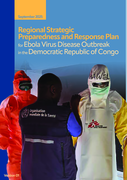
On 4 September 2025, the Ministry of Health of the Democratic Republic of the Congo (DRC) declared an outbreak of Ebola Virus Disease (EVD) in Kasai Province, following confirmation of Zaire ebolavirus by the National Institute of Biomedical Research (INRB) in Bulape and Mweka Health Zones. As of 19...
AIDS Behav. 2022 Feb;26(2):375-384.doi: 10.1007/s10461-021-03391.
A community health worker (CHW) model can promote HIV prevention and treatment behaviors,
especially in highly mobile populations. In a fishing community in Rakai, Uganda, the Rakai
Health Sciences Program implemented a communit...

Rabies is entirely preventable, and vaccines, medicines, tools and technologies have long
been available to prevent people from dying of dog-mediated rabies. Nevertheless, rabies still
kills about 60 000 people a year, of whom over 40% are children under 15, mainly in rural areas
of economically ...

The WHO South-East Asia (SEA) Region bears a high burden of tuberculosis (TB) and MDR-TB. In 2015, the Region accounted for nearly 200 000 or 35% of the global estimated new RR/MDR-TB cases eligible for treatment. Extensively drug-resistant TB (XDRTB) has also been reported from s...

The majority of developing countries will fail to achieve their targets for Universal Health Coverage (UHC)1 and the health- and poverty-related Sustainable Development Goals (SDGs) unless they take urgent steps to strengthen their health financing. Just over a decade out from the SDG deadline of 20...
The Global status report on violence prevention 2014, which reflects data from 133 countries, is the first report of its kind to assess national efforts to address interpersonal violence, namely child maltreatment, youth violence, intimate partner and sexual violence, and elder abuse. Jointly publis...
The main goal of the National Health Plan (NHP) 2017-2021 is to extend access to a basic Essential Package of Health Services (EPHS) to the entire population while increasing financial protection. In order to extend service delivery to all communities, the NHP calls for all health workers (whether c...
4. Central African Republic
Clashes throughout 2018 in the capital Bangui and a number of major towns illustrate the deadly threat posed by armed groups – a mix of pro-government militias, ex-rebels, bandits and local “self-defence” units – that control much of the countr...
There is no secret to our procedure: the daily scanning of the literature helps us to stay afloat in the never-ending waves of new publications about SARS-CoV-2 and COVID-19. Many papers discussed in the Top 10 will eventually make it into subsequent editions of COVID Reference.
This Training module on malaria elimination has been developed by WHO to support health professionals in planning, managing, monitoring and evaluating malaria elimination programmes
The number of COVID-19 cases is on the rise again, with South Africa nearing half of all confirmed cases in the WHO African Region. Threats of new variants loom and low vaccination coverage raises questions on the future of the response to COVID-19. Prevention remains the key strategy in most sub-Sa...
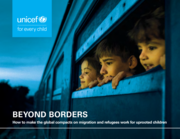
Beyond borders. How to make the global compacts on migration and refugees work for uprooted children
The report presents successful case studies from around the world, including the implementation of minimum protection standards for refugee children in Germany, cross border child protection systems in West Africa, and finding alternatives to the detention of migrant children in Zambia. Other countr...
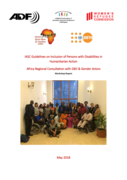
This one-day consultation workshop brought together both organizations of persons with disabilities (DPOs) and humanitarian actors to:-Identify priority areas for gender mainstreaming and GBV prevention and response across the Guidelines.-Collect useful resources, promising practices and other relev...
Many African countries were amongst the most rapid to respond to the emerging threat of COVID-19, implementing large-scale interventions at very early stages of their epidemic. As demonstrated in this document using very simple models, this rapid mobilization and timeliness of implementing control m...
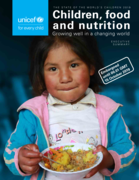
This 2019 edition of The State of the World’s Children (SOWC) examines the issue of children, food and nutrition, providing a fresh perspective on a rapidly evolving challenge. Despite progress in the past two decades, one third of children under age 5 are malnourished – stunted, wasted or overw...
This is the second guidance note in a four-part series of notes related to impact evaluation developed by InterAction with financial support from the Rockefeller Foundation.This second guidance note, Linking Monitoring and Evaluation to Impact Evaluation, illustrates the relationship between routine...
