
Filter
633
Text search:
Kenya
National
Commission
on
Human
Rights
Featured
Recommendations
39
New Publications
123
Language
Document type
No document type
362
Studies & Reports
152
Guidelines
37
Manuals
30
Strategic & Response Plan
26
Training Material
16
Situation Updates
5
Fact sheets
4
Online Courses
1
Countries / Regions
Kenya
58
Global
37
Africa
30
Uganda
26
South Sudan
20
Ethiopia
14
Nigeria
13
Sierra Leone
9
Congo, Democratic Republic of
9
Tanzania
9
South Africa
9
Malawi
9
Zambia
8
Bangladesh
8
Yemen
8
Liberia
7
Nepal
6
Rwanda
6
Guinea
5
Ghana
5
Syria
5
Lesotho
5
East and Southern Africa
5
Senegal
4
India
4
Somalia
4
Lebanon
4
Indonesia
4
Mozambique
4
Sudan
4
Central African Republic
4
West and Central Africa
4
Middle East and North Africa
4
Cameroon
3
Niger
3
Thailand
3
Ukraine
3
Colombia
3
Latin America and the Carribbean
3
Western and Central Europe
3
Burkina Faso
2
Mali
2
Côte d’Ivoire / Ivory Coast
2
Zimbabwe
2
Philippines
2
Pakistan
2
Afghanistan
2
Chad
2
China
2
Namibia
2
Brazil
2
Mexico
2
South–East Asia Region
2
Eastern Europe and Central Asia
2
Venezuela
2
Palestine
2
Southern Africa
2
Russia
2
Morocco
1
Haiti
1
Jordan
1
Germany
1
Cambodia
1
Gambia
1
Mauritania
1
Argentina
1
Eswatini/ Swaziland
1
North Macedonia
1
Hungary
1
Burundi
1
Botswana
1
Angola
1
Myanmar / Burma
1
Sri Lanka
1
Asia
1
Djibouti
1
Laos
1
Estonia
1
Iran
1
Kyrgyzstan
1
Georgia
1
Vietnam
1
Jamaica
1
Mauritius
1
Norway
1
Portugal
1
Authors & Publishers
Publication Years
Category
Countries
166
Public Health
45
Key Resources
45
Women & Child Health
37
Clinical Guidelines
18
Capacity Building
5
Pharmacy & Technologies
2
Toolboxes
Disability
86
HIV
86
Mental Health
71
Planetary Health
36
COVID-19
34
Global Health Education
30
Conflict
24
Refugee
22
TB
16
AMR
15
Caregiver
15
NTDs
15
Health Financing Toolbox
13
Rapid Response
7
Ebola & Marburg
6
Natural Hazards
4
Pharmacy
4
NCDs
4
Specific Hazards
3
2.0 Rapid Response
3
Social Ethics
2
Malaria
2
Polio
1
Typhoon
1

This global guidance was developed to support malaria-free countries and those that are close to malaria elimination to prevent re-establishment. The document outlines key concepts and principles for preventing re-establishment and provides guidance on
...
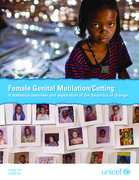
This report is a comprehensive statistical overview of female genital mutilation/cutting (FGM/C) in the 29 countries where the practice is concentrated. Analysis of the data reflects current perspectives on FGM/C, informed by the latest policy, prog
...
This publication describes the first WHO public-benefit Target Product Profiles (TPPs) for snakebite antivenoms. It focuses on antivenoms for treatment of snakebite envenoming in sub-Saharan Africa. Four TPPs are described in the document:
Broad sp
...
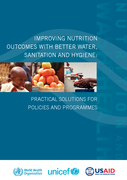
This document provides an overview of the evidence of nutrition gains that can be achieved with improved WASH, a description of key WASH practices, and practical knowledge and guidance on how to integrate WASH into nutrition programmes, including im
...
The application of digital health technology is growing at a rapid rate in Africa, with the goals of improving the delivery of healthcare services and more effectively reaching out to remote and underserved communities. The lack of enabling guidelines and standards across the continent,
...

Occupational health and safety programmes aim to prevent diseases and injuries arising out of, linked with or occurring in the course of work, while improving the quality and safety of care, safeguarding the health workforce and promoting environmental sustainability in the health sector.
This gu
...
The Global guidance framework for the responsible use of the life sciences: mitigating biorisks and governing dual-use research (the framework) aims to provide values and principles, tools and mechanisms to support Member States and key stakeholders to mitigate and prevent biorisks and govern dual-u
...

The 2024 edition reviews more than 50 health-related indicators from the Sustainable Development Goals and WHO’s Thirteenth General Programme of Work. It also highlights the findings from the Global health estimates 2021, notably the impact of the COVID-19 pandemic
...
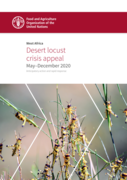
Recent forecasts by the Food and Agriculture Organization of the United Nations (FAO) have indicated a risk of locust invasion in West Africa from June 2020. From East Africa, some swarms could reach the eastern part of the Sahel and continue westwards from Chad to Mauritania.
Surveillance and co
...

This publication is a compendium of 49 country examples highlighting efforts in improving refugees’ and migrants’ health following the adoption of the WHO Global Action Plan on Promoting the health of refugees and migrants at the seventy-second
...
As the culminating volume in the DCP3 series, volume 9 will provide an overview of DCP3 findings and methods, a summary of messages and substantive lessons to be taken from DCP3, and a further discussion of cross-cutting and synthesizing topics across the first eight volumes. The introductory chapte
...

Promoting health and preventing disease is a critical component of the effort required to achieve Universal Health Coverage (UHC). to date, efforts to achieve UHC have focused mostly on strengthening health systems and their capacities to provide cu
...

This checklist is for any organization or person supporting the routine use of evidence in
the process of policy-making. Evidence-informed policy-making (EIPM) is essential for achieving the Sustainable Development Goals (SDGs) and universal health coverage (UHC). Its importance is emphasized in WH
...
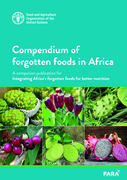
The Food and Agriculture Organization of the United Nations has launched a new Compendium of forgotten foods in Africa which is a first-of-its-kind comprehensive collection of 100 African forgotten food crops.
Also referred to as neglected, underutilized or orphan crops, these species offer valua
...
The emergence and transmission of zoonotic diseases are driven by complex interactions
between health, environmental, and socio-political systems. Human movement is considered
a significant and increasing factor in these processes, yet forced migr
...

The purpose of the situation assessment was to execute a situation analysis for Autism and Neurodevelopment Disorder (NDD) in Bangladesh. The situation assessment covers the following areas: a review of the scale and prevalence of NDD with trends of the disorder in the recent past in Bangladesh (see
...
The APCA Atlas provides the most up-to-date information of palliative care development in nearly all countries in Africa, using indicators derived, rated, and chosen by in-country African experts followed by a thorough Delphi consensus process with a panel of international experts
...

The Millennium Development Goals (MDGs) showed
that global commitment and collective action
could significantly reduce the disease burdens of
three deadly communicable diseases: HIV/AIDS,
tuberculosis (TB) and malaria. The MDGs helped
focus efforts on
...

In an effort to improve the capabilities and accountability of humanitarian and economic practitioners, the SEEP (Small Enterprise Education and Promotion) Network's Minimum Economic Recovery Standards focus on minimum industry standards for facilit
...
