
Filter
532
Text search:
International
Classification
of
Functioning,
Disability
and
Health
Featured
57
104
Language
Document type
378
52
52
23
18
3
3
2
1
Countries
19
14
14
11
11
10
9
8
8
8
6
6
6
6
6
5
4
4
4
4
4
4
4
3
3
3
3
3
3
3
3
2
2
2
2
2
2
2
2
2
2
2
1
1
1
1
1
1
1
1
1
1
1
1
1
1
1
Authors & Publishers
Publication Years
Category
162
40
34
31
25
5
2
Toolboxes
162
103
23
15
12
11
8
8
7
6
5
4
4
4
4
3
3
3
2
2
1
Living Conditions among People with Activity Limitations in Malawi. A National Representative Study.
This research report provides results from the study on living conditions
among people with disabilities in Malawi. Comparisons are made between
individuals with and without disabilities and also
...
The report provides a global knowledge base on suicide and suicide attempts as well as actionable steps for countries based on their current resources and context to move forward in suicide preventi
...
WHO guidelines on the pharmacological treatment of persisting pain in children with medical illnesses

Guidelines for WHO Representatives and Country
Offices in the Western Pacific Region
WSTP-I is the second part of the WHO wheelchair service training package series and focusses more on addressing the needs of people who have sever
...
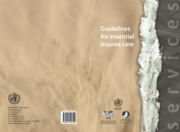
Guidelines for essential trauma care
recommended
The Guidelines for essential trauma care seek to set achievable standards for trauma treatment services which could realistically be made available to almost every injured person in the world. They then seek to define the resources that would be necessary to assure such care. These include human res
...
Application for Program Design in the Europe and Eurasia Region
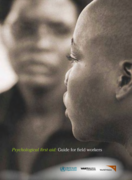
Psychological first aid: Guide for field workers
recommended
When terrible things happen in our communities, countries and the world, we want to reach out a helping hand to those who are affected. This guide covers
psychological first aid which involves humane, supportive
...
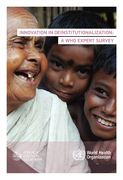
Based on the survey, five principles for deinstitutionalization were identified: community-based services must be in place; the health workforce must be committed to change; political support at the highest
...

Emergency Medical Teams 2030 strategy
recommended
The Emergency Medical Teams (EMT) initiative plays a vital role in building this stronger and
more resilient global health emergency architecture, both by driving its formation
...

The humanitarian crisis in Yemen remains the worst in the world. Nearly four years of conflict and severe economic decline are driving the country to the brink
...
The steps reassert the sequence of the HPC, with needs analysis directly informing decisions about the response and monitoring, whether for the preparation
...
CBR Training Manual
recommended
LIGHT FOR THE WORLD is a European confederation of national development NGOs committed to saving eyesight, improving the quality of life and advoca
...
Situation of Disabilities in Indonesia with Data and Statistics
Online interactive electronic ICF-based Documentation Tool. To facilitate the use of ICF Core Sets, a manual outlining one approach for using them in clinical practice was published in 2012, including an accompanying electronic documentation tool ww
...
To Initiating a Maternal, Neonatal and Child Health Project in Urban Slums with Social Mapping, Census Taking, and Community Engagement
Rethinking Health with Covid-19 Lessons and Challenges
Este e-book que integra estratégias de três Projetos PROADISUS (Lean nas Emergências, Reab pós-COVID-19 e Cuidados Paliativos) e expõe te
...
This report finds that although Lebanese law bars schools from discriminating against children with disabilities, public and private schools exclude many children with disabilities. For those allowed to enroll, schools often lack reasonable accommod
...

In April and May 2015, Nepal was hit by two major earthquakes killing around 9,000 people and leaving many thousands more injured and homeless.
...
...
Ethiopia saw a six-fold increase in confirmed COVID-19 cases between June and August, with 5,689 cases by end June compared to 34,058 cases as of 19 August. Ethiopia also registered more than 13,000
...
