
Filter
534
Text search:
Anderson,
L.
Featured
Recommendations
47
New Publications
68
Language
Document type
No document type
246
Studies & Reports
142
Guidelines
78
Manuals
29
Fact sheets
13
Training Material
11
Strategic & Response Plan
10
Situation Updates
2
Resource Platforms
1
Infographics
1
Online Courses
1
Countries / Regions
Global
22
Kenya
13
India
11
Western and Central Europe
11
Africa
10
Russia
10
South Africa
9
Ukraine
7
Zimbabwe
6
Latin America and the Carribbean
6
Eastern Europe
6
Malawi
5
Sierra Leone
4
Liberia
4
Nigeria
4
Ethiopia
4
Uganda
4
Philippines
4
Germany
4
Indonesia
4
Guinea
3
Burkina Faso
3
Ghana
3
Nepal
3
Tanzania
3
Brazil
3
South–East Asia Region
3
Congo, Democratic Republic of
2
USA
2
Haiti
2
Zambia
2
Syria
2
Mozambique
2
Argentina
2
Namibia
2
North Macedonia
2
Colombia
2
Botswana
2
Myanmar / Burma
2
East and Southern Africa
2
Venezuela
2
Vietnam
2
North America
2
Jamaica
2
Mali
1
Cameroon
1
Afghanistan
1
Cambodia
1
China
1
Rwanda
1
Singapore
1
Benin
1
Eswatini/ Swaziland
1
El Salvador
1
Lesotho
1
West and Central Africa
1
Middle East and North Africa
1
Western Pacific Region
1
Eastern Europe and Central Asia
1
Paraguay
1
Asia
1
Armenia
1
Southern Africa
1
Canada
1
Georgia
1
Belgium
1
United Kingdom
1
Belarus
1
Authors & Publishers
Publication Years
Category
Countries
106
Clinical Guidelines
49
Public Health
34
Women & Child Health
24
Key Resources
24
Capacity Building
4
Pharmacy & Technologies
1
Toolboxes
Mental Health
92
HIV
63
COVID-19
47
Planetary Health
43
NCDs
29
TB
27
Caregiver
23
NTDs
17
Disability
12
AMR
11
Ebola & Marburg
9
Global Health Education
8
Rapid Response
6
Malaria
5
Natural Hazards
4
Refugee
4
Social Ethics
4
Health Financing Toolbox
4
Conflict
3
Pharmacy
3
Specific Hazards
2
2.0 Rapid Response
2
Polio
1
Zika
1
Background paper 13
The Independent Panel for Pandemic Preparedness and Response
May 2021


Climate change threatens to undermine the past 50 years of gains in public health. In response, theNational Health Service (NHS) in England has been working since 2008 to quantify and reduce its carbon footprint.
This Article presents the latest update to its greenhouse gas accounting, identifying
...
Int. J. Environ. Res. Public Health 2018, 15(12), 2626; https://doi.org/10.3390/ijerph15122626
Climate change is increasing risks to human health and to the health systems that seek to protect the safety and well-being of populations. Health authorities require information about current associatio
...
For patients on NIPPV or HFNO with persistent hypoxaemia or respiratory distress:
• Check the equipment: inspect the exterior of the machine, the tubing (circuit), the mask for any sign of mechanical damage, confirm it fits securely without leak (if CPAP/BiPAP) and the filters are in place. Ensur
...

Non-communicable diseases (NCDs) are the second common cause of death in sub-Saharan Africa (SSA) accounting for about 35% of all deaths, after a composite of communicable, maternal, neonatal, and nutritional diseases. Despite prior perception of low NCDs mortality rates, current evidence suggests t
...
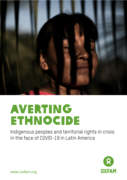
There are indigenous communities at high risk in every country of the region. At stake are the lives of 45 million people who belong to more than 800 indigenous peoples. Of these, some 100 are spread across several countries, around 200 maintain voluntary isolation or are in initial contact, and nea
...
Background paper 8
The Independent Panel for Pandemic Preparedness and Response
May 2021

Environmental pollution, protection, quality and sustainability
Las Infecciones Asociadas a la Atención en Salud (IAAS) son reconocidas en la
actualidad como un problema de salud pública y existen lineamientos guber-
namentales en la mayoría de los países para constituir sistemas de vigilancia y
Programas de Prevención y Control de Infecciones para con
...

Trachoma is an eye infection that for thousands of years caused many people to go blind across all continents. As the result of development and targeted interventions, trachoma is now limited to an estimated 57 countries, often affecting the poorest
populations of the world. Today, more than 2 mill
...

There is a broad consensus nowadays that the Earth is warming up as a result of greenhouse gas emissions caused by anthropogenic activities. It is also clear that current trends in the fields of energy, development and population growth will lead to continuous and ever more dramatic climate change.
...
Int J Hyg Environ Health. 2019 Jun; 222(5): 765–777. doi: 10.1016/j.ijheh.2019.05.004;
To develop updated estimates in response to new exposure and exposure-response data of the
burden of diarrhoea, respiratory infections, malnutrition, schistosomiasis, malaria, soil-transmitted helminth
infec
...
Technical Guidelines for Palliative Care Management
during the COVID-19 pandemic

As the Americas undergo profound demographic change and there are more persons aged 65 years or older than children younger than 5 years, it is crucial to recognize that national immunization programs must be redesigned to ensure comprehensive protection for individuals across the lifespan. By adopt
...
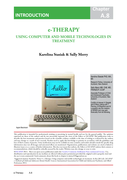
This publication seeks to describe the best treatments and practices based on the scientific evidence available at the time of writing as evaluated by the authors and may change as a result of new research. Readers need to apply this knowledge to patients in accordance with the guidelines and laws o
...
Joining efforts to control two trelated global epidemics.
