
Filter
4198
Text search:
treatment
outcome
Featured
Recommendations
406
New Publications
1061
Language
Document type
No document type
2528
Studies & Reports
617
Guidelines
575
Manuals
211
Strategic & Response Plan
130
Training Material
60
Fact sheets
42
Situation Updates
20
Resource Platforms
9
Brochures
2
Infographics
2
Online Courses
2
Countries / Regions
India
237
Global
152
Kenya
127
Ethiopia
106
South Africa
99
Western and Central Europe
87
Sierra Leone
85
Uganda
80
Nepal
77
Nigeria
74
Liberia
68
Tanzania
65
Africa
62
Ghana
61
Malawi
60
Zambia
58
Bangladesh
57
Myanmar / Burma
57
Namibia
52
Rwanda
50
Latin America and the Carribbean
45
Ukraine
35
Eastern Europe
34
Zimbabwe
33
Indonesia
30
Philippines
28
Syria
28
Congo, Democratic Republic of
26
Russia
26
Lesotho
25
Asia
24
Guinea
22
South Sudan
21
South–East Asia Region
21
Botswana
20
Cambodia
19
Mozambique
16
Brazil
15
Haiti
14
Germany
14
East and Southern Africa
14
Cameroon
12
West and Central Africa
12
Pakistan
11
Eswatini/ Swaziland
11
Eastern Europe and Central Asia
11
Senegal
10
Afghanistan
10
Sudan
10
Colombia
10
Burkina Faso
9
USA
8
Lebanon
8
Middle East and North Africa
8
Tajikistan
8
Thailand
7
Benin
7
Somalia
6
Iraq
6
Jordan
6
Yemen
6
Paraguay
6
Georgia
6
Argentina
5
Albania
5
United Kingdom
5
Turkey
4
China
4
Central African Republic
4
Angola
4
Western Pacific Region
4
Canada
4
Moldova
4
Vietnam
4
North America
4
Saudi Arabia
3
Togo
3
Gambia
3
Burundi
3
Ecuador
3
Madagascar
3
Armenia
3
Southern Africa
3
Laos
3
Iran
3
Portugal
3
Spain
3
Mali
2
Côte d’Ivoire / Ivory Coast
2
Morocco
2
Egypt
2
Chad
2
Singapore
2
Papua New Guinea
2
Peru
2
North Macedonia
2
Mexico
2
Sri Lanka
2
Chile
2
Other region
2
Bhutan
2
Venezuela
2
Palestine
2
Timor Leste/ East Timor
2
Qatar
2
Estonia
2
Kyrgyzstan
2
Kazakhstan
2
Japan
2
France
2
Mauritius
2
Guinea-Bissau
1
Niger
1
Mauritania
1
Ireland
1
Hungary
1
Honduras
1
El Salvador
1
Bolivia
1
Greece
1
Libya
1
Guatemala
1
Nicaragua
1
Fiji
1
Solomon Islands
1
Djibouti
1
Romania
1
Lithuania
1
Jamaica
1
Tunisia
1
Norway
1
Azerbaijan
1
Belarus
1
Latvia
1
Authors & Publishers
Publication Years
Category
Countries
1528
Clinical Guidelines
409
Public Health
239
Women & Child Health
223
Key Resources
213
Capacity Building
78
Pharmacy & Technologies
36
Toolboxes
Mental Health
453
TB
347
HIV
343
COVID-19
188
NTDs
162
Disability
124
Caregiver
111
AMR
110
Ebola & Marburg
104
NCDs
102
Planetary Health
87
Conflict
75
Rapid Response
72
Refugee
63
Pharmacy
58
Global Health Education
55
Malaria
44
2.0 Rapid Response
38
Health Financing Toolbox
32
Cholera
28
Natural Hazards
25
Specific Hazards
23
Zika
20
Social Ethics
15
Polio
14
Each year since 2007, G-FINDER has provided policy-makers, donors, researchers and industry with a comprehensive analysis of global investment into research and development of new products to
prevent, diagnose, control or cure neglected diseases in low- and middle-income countries, making it the go
...
Zambia is facing a severe economic crisis marked by high inflation, increasing poverty and a heavy debt burden that is straining both its fiscal stability and progress in health outcomes. By 2020, the country's external debt reached United States dollars (USD) 12.7 billion, representing 108% of the
...

The Council was established in late 2020 by Dr Tedros Adhanom
Ghebreyesus (Director-General, WHO) to provide new economic thinking – reassessing how health and wellbeing are valued, produced and distributed across the economy. An all-female group of 10 distinguished economists and area experts, t
...
There has never been a more critical moment to invest in WHO, and strengthen the unique role it plays in global health. Now is the time to sustainably finance WHO and invest in a healthy return for all.
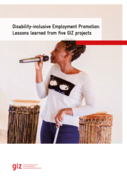
In the initial chapters, you will find different approaches that describe how to support job creation for entrepreneurs or employees who live with disabilities. The interventions are often initiated by the readiness to find and pick the right opportunities, such as an engaged entrepreneur or an open
...

Early Identification and Early Intervention Services for Young Children with Developmental Delays and Disabilities in Namibia Republic of Namibia Namibia
Regional Consultations Report

The Regional Child Protection Operational Note has been developed by IOM and UNICEF’s Regional and Country Offices in North, West and Central Africa as a collaborative inter-agency and cross-regional endeavour within the framework of the sixth phase of the IOM Regional Development and Protection P
...

Relapsing malaria caused by Plasmodium vivax parasites poses a significant challenge to global malaria elimination efforts. About one third of the population remains at risk of contracting P. vivax malaria, and 85% of P. vivax infections stem from reactivated latent parasites, leading to chronic ana
...

Meeting report, Kampala, Uganda,
7–8 November 2023

Community led-monitoring is based on the principle that «Nothing that is done for us should
be done without us”. The combination of this principle with evidence shows that community-led
monitoring is an important driver of improved service delivery and health outcomes that needs to
be re-empha
...

Pillar 3 of the Global technical strategy for malaria 2016–2030 calls for the transformation of malaria surveillance into a core intervention in all malaria-endemic countries, as well as in countries which have eliminated malaria but remain susceptible to re-establishment of transmission. This ref
...

2nd edition. The purpose of this document is to present updated standardized protocols that P. falciparum-endemic countries can use to determine the prevalence of parasites with pfhrp2/3 gene deletions causing negative HRP2 RDT results among symptomatic falciparum patients. The findings should be us
...
This practical document is available to support programmes and partners to design and implement risk communication strategies to achieve high uptake of malaria vaccination.
The aim of this protocol is to support the conduct of entomological comparative efficacy assessments for vector control products and the associated non-inferiority analysis. This evidence is used to inform discussions within the guidelines development context as to whether a new vector control prod
...

The purpose of the guideline is to provide information to stakeholders on the necessary requirements for a complete prequalification dossier for insecticide-treated nets (ITNs). Its aim is to establish the baseline for dossier requirements which are necessary to assess ITN products for the purposes
...

This toolkit is a comprehensive set of practical tools and resources designed to support country-level risk communication and community engagement (RCCE) practitioners, decision-makers and partners to plan and implement readiness and response activities for Ebola disease outbreaks. The toolkit conta
...

This toolkit is a comprehensive set of practical tools and resources designed to support country-level risk communication and community engagement (RCCE) practitioners, decision-makers, and partners to plan and implement readiness and response activities for yellow fever outbreaks. The toolkit conta
...

This toolkit is a comprehensive set of practical tools and resources designed to support country-level risk communication and community engagement (RCCE) practitioners, decision-makers, and partners to plan and implement readiness and response activities for yellow fever outbreaks. The toolkit conta
...

This guidance covers different options for banning or phasing out a pesticide and suggests related risk reduction measures to be taken during the phase-out period. A key focus of this guidance is how to take action to manage, prevent, minimize, and communicate about identified risks during the imple
...

Non-Communicable Diseases (NCDs) have emerged as conditions of great public health concern in Kenya accounting for 39% of deaths annually. The Ministry of Health through the Department of Non-Communicable Diseases has adopted the vision of achieving a nation free from preventable burden of NCDs. Fur
...
