
Filter
4139
Text search:
Action
Aid
Featured
Recommendations
400
New Publications
1195
Language
Document type
No document type
2372
Studies & Reports
664
Guidelines
395
Manuals
274
Strategic & Response Plan
174
Training Material
109
Fact sheets
71
Situation Updates
50
Resource Platforms
13
Infographics
9
Videos
4
Online Courses
2
Brochures
1
App
1
Countries / Regions
Global
191
India
151
Kenya
117
Myanmar / Burma
116
Sierra Leone
95
Liberia
93
Nepal
91
Nigeria
87
Uganda
87
Syria
87
Ethiopia
79
Bangladesh
73
Congo, Democratic Republic of
66
South Africa
66
Ukraine
56
Malawi
55
Western and Central Europe
50
South Sudan
49
Rwanda
48
Zambia
45
Haiti
41
Tanzania
40
Ghana
39
Mozambique
39
Africa
36
Guinea
34
Philippines
34
Senegal
33
Namibia
33
Yemen
33
Zimbabwe
31
Indonesia
29
Cambodia
26
Lesotho
26
Latin America and the Carribbean
26
Venezuela
26
Afghanistan
21
Lebanon
21
Germany
20
South–East Asia Region
20
Central African Republic
19
Asia
19
Jordan
18
Burkina Faso
17
Eastern Europe
16
Cameroon
15
Pakistan
15
West and Central Africa
15
East and Southern Africa
14
Somalia
12
Botswana
12
Middle East and North Africa
12
Benin
10
Brazil
10
Colombia
10
China
9
Vietnam
9
Côte d’Ivoire / Ivory Coast
8
Thailand
8
Sudan
8
Eswatini/ Swaziland
8
Madagascar
8
Mali
7
Iraq
7
Western Pacific Region
7
Laos
7
Moldova
7
Turkey
6
Sri Lanka
6
Eastern Europe and Central Asia
6
Togo
5
Peru
5
Burundi
5
Paraguay
5
Russia
5
USA
4
Egypt
4
Honduras
4
El Salvador
4
Libya
4
Angola
4
Palestine
4
Albania
4
Timor Leste/ East Timor
4
Tajikistan
4
Japan
4
Chad
3
Gambia
3
Malaysia
3
Papua New Guinea
3
North Macedonia
3
Serbia
3
Croatia
3
Greece
3
Mexico
3
Bhutan
3
Poland
3
Iran
3
Portugal
3
Guinea-Bissau
2
Niger
2
Singapore
2
Dominican Republic
2
Hungary
2
Guatemala
2
Chile
2
Italy
2
Mongolia
2
Southern Africa
2
Romania
2
Kyrgyzstan
2
Georgia
2
Jamaica
2
Mauritius
2
United Kingdom
2
Belarus
2
Ireland
1
Vanuatu
1
Argentina
1
Switzerland
1
Ecuador
1
Bolivia
1
Nicaragua
1
Fiji
1
Armenia
1
Congo-Brazzaville
1
Canada
1
Qatar
1
Bulgaria
1
Lithuania
1
Uzbekistan
1
Kazakhstan
1
Gabon
1
Turkmenistan
1
Denmark
1
Spain
1
Azerbaijan
1
Israel
1
Bosnia and Herzegovina
1
Belize
1
Costa Rica
1
Panama
1
Authors & Publishers
Publication Years
Category
Countries
1514
Key Resources
483
Women & Child Health
218
Public Health
184
Clinical Guidelines
181
Capacity Building
114
Pharmacy & Technologies
25
Annual Report MEDBOX
3
Toolboxes
Mental Health
335
COVID-19
279
Disability
251
Conflict
249
HIV
200
Planetary Health
132
Ebola & Marburg
130
Refugee
127
Natural Hazards
119
TB
118
Caregiver
98
Health Financing Toolbox
96
Rapid Response
84
NTDs
77
Global Health Education
76
AMR
76
2.0 Rapid Response
59
Pharmacy
47
Specific Hazards
46
Malaria
39
NCDs
34
Social Ethics
27
Cholera
25
Zika
22
Polio
15
Typhoon
6
South Sudan
2
The '100 Health Messages for Children to Learn & Share' is an educational resource developed by Children for Health. It is aimed at children aged 8–14, particularly young adolescents (aged 10–14), who often care for younger siblings. The set contains 100 simple, accurate and adaptable health mes
...

A historic funding crisis is threatening to unravel decades of progress unless countries can make radical shifts to HIV programming and funding. The report highlights the impact that the sudden, large-scale funding cuts from international donors are having on countries most affected by HIV. Yet it a
...

This policy brief presents a summary of current evidence on vulnerability to TB and proposes interventions for equitable, person-centred, and human rights-based TB prevention and care. It aligns with WHO policies and guidance on TB prevention and screening, management of TB and comorbidities, access
...

This toolkit is a comprehensive set of practical tools and resources designed to support country-level risk communication and community engagement (RCCE) practitioners, decision-makers, and partners to plan and implement readiness and response activities for yellow fever outbreaks. The toolkit conta
...

This toolkit is a comprehensive set of practical tools and resources designed to support country-level risk communication and community engagement (RCCE) practitioners, decision-makers, and partners to plan and implement readiness and response activities for yellow fever outbreaks. The toolkit conta
...
STANDARD OPERATING PROCEDURES - PREVENTION AND CARE FOR CHILD SURVIVORS

WHO guidelines for clinical management of arboviral diseases: dengue, chikungunya, Zika and yellow fever
recommended
The new WHO guidelines provide clinical management recommendations for four of the most widespread arboviruses affecting humans: dengue, chikungunya, Zika, and yellow fever.
An integrated approach is vital, as these four diseases often present with similar symptoms, especially in the early stages
...

Growing emergencies and displacements across the world demand increasingly complex interventions and responses. The World Health Organization (WHO) has developed Malaria control in emergencies: a field manual to provide technical guidance to help partners respond effectively to malaria in emergency
...
The guide helps patients to understand their rights in relation to the care received and provides insights into the common legal and
human rights issues they may encounter, and encourages them to share these with the health care provider for support. This booklet covers key issues that you mig
...

To contribute to the availability of basic knowledge and skills for the provision of palliative care in
the African region, the African Palliative Care Association (APCA) has developed a competencybased core curriculum framework for use in introductory training on palliative care. The curriculum
...

IDMC's Global Report on Internal Displacement (GRID) is the authoritative source for data and analysis on the state of internal displacement for the previous year.
This report synthesizes the state of knowledge on the interlinkages between environmental degradation climate change conflict and mobility in the East and Horn of Africa, focusing on Burundi, Djibouti, Ethiopia, Kenya, Somalia, South Sudan, Tanzania, and Uganda.

PHSM are vital in reducing the risk and scale of infectious disease transmission and lowering hospitalization and deaths. Examples include contact tracing, quarantine and isolation, mask use, ventilation, school or workplace measures, mobility restrictions and travel requirements.
While these mea
...

This document, with a focus on the built environment and health care facilities, intends to guide the audience in preparing for and responding to SARI pandemics caused by existing and novel pathogens. It provides technical guidance on designing, establishing, and managing health care facilities for
...

This resource was written to support persons who seek to initiate a support group for suicide loss survivors. Suicide bereavement support groups offer a wide range of benefits that can help individuals to navigate the difficult time following a loss. First and foremost, a support group provides a ch
...

The ILO has joined forces with Gallup to carry out a groundbreaking global survey covering 50 countries that sheds further light on the causes of the persistence of HIV-related stigma and discrimination in the world of work.

Building true health security in a global age. Findings and recommendations of the Global Council. In landmark findings based on two years of research and convenings around the world, the new report shows that high levels of inequality are linked to outbreaks becoming pandemics and that inequality i
...
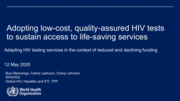
Adapting HIV testing services in the context of reduced and declining funding. Presentation May 2025

We can't stop at almost. 2025 Goalkeeper Report
recommended
2025 is the first year of this century where child deaths will increase.
But we can stop this reversal before it becomes a trend, even in a time of tight budgets.
With proven solutions and next-generation innovations that do more with less, we can save millions of children's lives, protect the pro
...
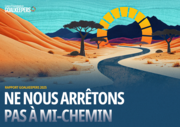
Ne nous arrêtons pas à mi-chemin. Rapports
recommended
2025 sera la première année de ce siècle où le nombre de décès d'enfants augmentera.
Mais nous pouvons mettre fin à ce renversement de tendance avant qu'il ne devienne une norme, même en période de restrictions budgétaires.
Grâce à des solutions éprouvées et à des innovations de nou
...
