
Filter
4874
Filtered Results: 4874
Text search:
methodology
Featured
Recommendations
363
New Publications
1346
Language
Document type
No document type
2720
Studies & Reports
1059
Guidelines
510
Manuals
260
Strategic & Response Plan
151
Training Material
65
Fact sheets
47
Situation Updates
26
Resource Platforms
23
Brochures
6
Infographics
6
Online Courses
1
Countries / Regions
Global
252
India
187
Kenya
137
Myanmar / Burma
127
Nepal
114
South Africa
102
Sierra Leone
97
Western and Central Europe
94
Uganda
94
Ethiopia
94
Latin America and the Carribbean
87
Nigeria
84
Africa
83
Liberia
81
Rwanda
79
Bangladesh
79
Syria
68
Malawi
68
Tanzania
66
Zambia
64
Ukraine
61
Congo, Democratic Republic of
58
Ghana
52
Senegal
47
Namibia
47
Indonesia
38
Lesotho
36
South Sudan
36
Philippines
35
Eastern Europe
32
Guinea
31
Zimbabwe
30
Mozambique
29
Haiti
28
Cambodia
28
Colombia
27
Cameroon
26
South–East Asia Region
26
Venezuela
24
Brazil
23
Benin
22
Burkina Faso
22
Afghanistan
22
Pakistan
22
East and Southern Africa
21
Russia
21
Asia
20
West and Central Africa
19
Eastern Europe and Central Asia
18
Yemen
18
Jordan
15
China
14
Lebanon
14
Sudan
14
Somalia
14
Germany
13
Thailand
12
Central African Republic
12
Mali
12
Botswana
12
Vietnam
11
Eswatini/ Swaziland
11
Laos
10
Middle East and North Africa
10
Moldova
10
Tajikistan
9
Peru
9
Sri Lanka
9
Chile
8
Albania
8
Paraguay
8
Iraq
7
Madagascar
7
Western Pacific Region
6
Côte d’Ivoire / Ivory Coast
6
Libya
6
Timor Leste/ East Timor
5
Egypt
5
Palestine
5
Ecuador
5
Togo
4
Kazakhstan
4
Kyrgyzstan
4
Niger
4
Southern Africa
4
Argentina
4
Poland
4
North Macedonia
3
Mexico
3
Serbia
3
Turkey
3
Iran
3
Canada
3
Burundi
3
Malaysia
3
Armenia
3
USA
3
Hungary
3
Turkmenistan
3
Jamaica
3
United Kingdom
3
Bolivia
3
Georgia
3
Angola
3
Chad
3
Bhutan
3
Estonia
2
Morocco
2
Mongolia
2
Guinea-Bissau
2
North America
2
Gabon
2
Japan
2
Mauritius
2
Portugal
2
Spain
2
Bosnia and Herzegovina
2
Papua New Guinea
2
Djibouti
2
Romania
2
Guatemala
2
North Korea
1
Switzerland
1
Gambia
1
Singapore
1
Congo-Brazzaville
1
Uzbekistan
1
Vanuatu
1
Qatar
1
Bulgaria
1
Italy
1
Dominican Republic
1
Croatia
1
Lithuania
1
Saudi Arabia
1
Tunisia
1
Norway
1
Azerbaijan
1
Israel
1
Slovakia
1
Greece
1
Authors & Publishers
Publication Years
Category
Countries
1824
Key Resources
337
Clinical Guidelines
293
Public Health
245
Women & Child Health
240
Capacity Building
104
Pharmacy & Technologies
40
Toolboxes
Mental Health
423
HIV
311
COVID-19
289
Planetary Health
257
Disability
222
TB
185
AMR
183
Conflict
150
NTDs
136
Caregiver
111
Ebola & Marburg
107
Refugee
99
Global Health Education
96
NCDs
93
Health Financing Toolbox
91
Rapid Response
77
Pharmacy
72
Natural Hazards
67
2.0 Rapid Response
65
Malaria
45
Specific Hazards
26
Zika
26
Polio
26
Social Ethics
25
Cholera
15
Typhoon
5
South Sudan
2

Report of the WHO/Bill & Melinda Gates Foundation Consultation. The Consultation was organized back-to-back with the first annual meeting of the International Coordinating Group of the BMGF-funded project for human and dog rabies elimination in developing countries, held at WHO headquarters, Geneva,...

This document provides technical guidance on concepts, definitions, indicators, criteria, milestones and tools to assist leprosy programmes in their journey towards the goals of interruption of transmission and elimination of leprosy disease and through the post-elimination period. Importantly, it p...

Laboratory manual for yellow fever
recommended
This WHO laboratory manual provides the most up to date methods and procedures for the laboratory identification of yellow fever virus infection in humans. It provides guidance on the establishment and maintenance of an effective laboratory providing routine surveillance testing for yellow fever, wh...
Trastornos externalizantes
Capítulo D.1.1
Edición: Matías Irarrázaval & Andres Martin
Traductores: Fernanda Prieto-Tagle & Carlos Gómez
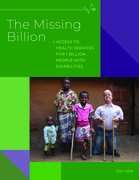
One billion people around the world live with disabilities. This report makes the case that they are being “left behind” in the global community’s work on health. This lack of access not only violates the rights of people with disabilities under international law, but UHC and SDG 3 cannot be a...
Policy Brief.
Our understanding of how to diagnose and manage Long COVID is still evolving but the condition can be very debilitating. It is associated with a range of overlapping symptoms including generalized chest and muscle pain, fatigue, shortness of breath, and cognitive dysfunction, and the ...
Introduction Community health workers (CHWs) are increasingly being tasked to prevent and manage cardiovascular disease (CVD) and its risk factors in underserved populations in low-income and middle-income countries (LMICs); however, little is known about the required training necessary for them to ...

Systematic Review Summary 4
In this entry we are looking at smoking, alcohol consumption and the use of illicit drugs. We are studying who is using these substances, how their use has changed over time, and we are presenting the estimates of their impact on health. Collectively, smoking, alcohol and illicit drug use kills 11.8...
Guidelines
UNAIDS/WHO working group on global HIV/AIDS and STI surveillance
August 2015
HIV strategic information for impact
These guidelines have been compiled for education ministries or other educational leaders (including development partners, non-governmental or private organizations working with schools or directly with caregivers) who want to adapt and adopt resources to support the marginalized caregivers of child...
Ce rapport présente les résultats de la troisième année de l’ECPSS réalisée en 2015 par l’Agence Nationale de la Statistique et de la Démographie et le Ministère de la Santé et de l’Action Sociale.
This report aims to improve the assessment of mental health needs in the Americas by providing an updated and nuanced picture of: (a) the disability resulting from mental, substance use, and specific neurological disorders, plus self-harm, alone and in combination with premature mortality; (b) the i...

Report on the symposium 26–28 May 2015, New Babylon Meeting Center, The Hague

This compendium collates current tools and resources on quality improvement developed by the WHO Service Delivery and Safety Department and provides examples of how the tools and resources have been applied in country settings. The target audience for this document are ministries of health, facility...

Цель настоящего доклада — повысить осведомленность о деменции как
одной из приоритетных проблем общественного здравоохранения, сформу-
лировать подход к этой пÑ...
