
Filter
604
Text search:
salud
pública
Featured
43
133
Language
Document type
216
126
108
41
38
18
13
11
11
9
9
3
1
Countries
102
69
45
36
31
25
20
17
8
7
7
6
5
5
5
4
4
4
3
3
2
2
2
2
2
2
2
2
1
1
1
1
1
1
1
1
1
1
1
1
1
1
1
1
1
1
1
1
1
Authors & Publishers
Publication Years
Category
333
85
69
31
31
24
10
Toolboxes
111
53
48
40
33
21
20
19
13
12
9
9
9
7
6
5
4
4
4
3
2
1
1
Accessed 25th March 2015
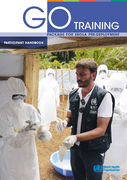
GO pre-deployment training: participant handbook
recommended
This is a pre-deployment training, tailored specially to the Ebola outbreak in West Africa, offered to WHO personnel, consultants, and key partners. The material covered in modules 1-4 is applicable and useful to frontline response workers, national and international. Only Module 5, which focuses on
...
All personnel deployed by the World Health Organization (WHO) to any type of public health or humanitarian emergency need to have basic knowledge and skills to perform effectively and safely. That is why it is essential to be trained prior to deployment. GO training is a comprehensive package of mod
...
This version of Field Trials of Health Interventions includes seven new chapters on conducting systematic literature reviews, trial
governance, preliminary studies and pilot testing, budgeting and accounting, intervention costing and economic analysis, and Phase IV studies. Before new interventions
...
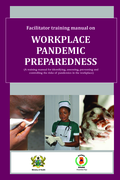
The Facilitator Training Manual on Workplace Pandemic Preparedness is a guide developed by GIZ and the Ministry of Health to help organizations prepare for and respond to pandemics while ensuring business continuity. It provides structured guidance on training, risk assessment, prevention, and respo
...
The Facilitator's Guide provides instruction and suggestions for teaching the training modules for the Technical Guidelines for Integrated Disease Surveillance and Response in the Africa Region, 2nd edition. This training is intended for district level health officers who conduct IDSR activities. Th
...
Technical Guidelines for Integrated Disease Surveillance and Response in the African Region
recommended
3rd edition.
The third edition of the Integrated Disease Surveillance and Response (IDSR) Technical Guidelines was prepared by the WHO Health Emergencies (WHE) Programme with the active participation and involvement of programmes dealing with disease surveillance at the WHO Regional Office for Afri
...
Effective Media Communication during Public Health Emergencies. Handbook and Field Guide
recommended
This handbook describes a seven-step process to assist public health officials and others to communicate effectively through the media during emergencies. At the core of this process is the belief that positive action must be taken to interactively facilitate effective media coverage
of events and
...
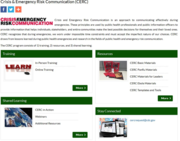
Crisis and Emergency Risk Communication is an approach to communicating effectively during emergencies. These principles are used by public health professionals and public information officers to provide information that helps individuals, stakeholders, and entire communities make the best possible
...
The GO training package was developed by the World Health Organization for use by staff, consultants and partners who are part of the emergency response, so that they can work safely as part of the teams working to bring the outbreak under control.
Training outline:
Module 1: Pre-deployment tr
...
Disaster Preparedness Training Programme
Disaster Preparedness Training Programme
Disaster Preparedness Training Programme
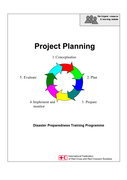
Disaster Preparedness Training Programme
This Training module on malaria elimination has been developed by WHO to support health professionals in planning, managing, monitoring and evaluating malaria elimination programmes
This Training module on malaria elimination has been developed by WHO to support health professionals in planning, managing, monitoring and evaluating malaria elimination programmes.
Supporting exercises: These files are necessary for participants to complete a number of exercises listed in the man
...
