
Filter
3478
Text search:
maternal
mortality
Featured
275
1221
Language
3334
96
73
45
32
23
10
7
6
4
3
3
2
2
2
2
1
1
1
1
1
1
1
1
1
1
1
1
1
Document type
2158
548
363
146
122
51
50
18
10
6
2
1
1
1
Countries / Regions
162
144
136
121
115
112
106
103
85
82
82
82
81
81
75
68
56
41
41
40
39
38
37
35
33
30
29
26
25
25
25
22
21
20
20
20
16
16
16
14
14
14
13
13
12
12
11
11
10
10
9
9
9
8
8
8
7
6
6
5
5
5
5
4
4
4
4
4
4
3
3
3
3
3
3
2
2
2
2
2
2
2
2
2
2
2
2
2
2
2
2
1
1
1
1
1
1
1
1
1
1
1
1
1
1
1
1
1
1
1
1
1
1
1
1
Authors & Publishers
401
128
126
113
93
83
70
39
36
35
32
24
24
24
22
18
18
17
17
16
16
16
14
14
14
13
13
13
12
11
11
11
11
11
10
10
10
10
10
9
9
9
9
9
9
9
9
9
9
9
9
9
8
8
8
8
8
7
7
7
7
7
7
7
7
7
7
7
6
6
6
6
6
6
6
6
6
6
6
6
6
6
6
5
5
5
5
5
5
5
5
5
5
5
5
5
5
5
5
5
5
5
5
5
5
5
5
5
5
4
4
4
4
4
4
4
4
4
4
4
4
4
4
4
4
4
4
4
4
4
4
4
4
4
4
4
4
4
4
4
4
4
4
4
4
4
4
4
4
4
4
3
3
3
3
3
3
3
3
3
3
3
3
3
3
3
3
3
3
3
3
3
3
3
3
3
3
3
3
3
3
3
3
3
3
3
3
3
3
3
3
3
3
3
3
3
3
3
3
3
3
3
3
3
3
3
3
3
3
3
3
3
3
3
3
3
3
3
3
3
3
3
3
3
3
2
2
2
2
2
2
2
2
2
2
2
2
2
2
2
2
2
2
2
2
2
2
2
2
2
2
2
2
2
2
2
2
2
2
2
2
2
2
2
2
2
2
2
2
2
2
2
2
2
2
2
2
2
2
2
2
2
2
2
2
2
2
2
2
2
2
2
2
2
2
2
2
2
2
2
2
2
2
2
2
2
2
2
2
2
2
2
2
2
2
2
2
2
2
2
2
2
2
2
2
2
2
2
2
2
2
2
2
2
2
2
2
2
2
2
2
2
2
2
2
2
2
2
2
2
2
2
2
2
2
2
2
2
2
2
2
2
2
2
2
2
2
2
2
2
2
2
2
2
2
2
2
2
2
2
2
2
2
2
2
2
2
2
2
2
2
2
2
2
2
2
2
2
2
2
2
2
2
2
2
2
2
2
2
2
2
2
2
2
2
2
2
2
2
2
2
2
2
2
2
2
2
2
2
2
2
2
2
2
2
2
2
2
2
2
2
2
2
2
2
2
2
2
2
2
2
2
2
2
2
2
2
2
2
2
1
1
1
1
1
1
1
1
1
1
1
1
1
1
1
1
1
1
1
1
1
1
1
1
1
1
1
1
1
1
1
1
1
1
1
1
1
1
1
1
1
1
1
1
1
1
1
1
1
1
1
1
1
1
1
1
1
1
1
1
1
1
1
1
1
1
1
1
1
1
1
1
1
1
1
1
1
1
1
1
1
1
1
1
1
1
1
1
1
1
1
1
1
1
1
1
1
1
1
1
1
1
1
1
1
1
1
1
1
1
1
1
1
1
1
1
1
1
1
1
1
1
1
1
1
1
1
1
1
1
1
1
1
1
1
1
1
1
1
1
1
1
1
1
1
1
1
1
1
1
1
1
1
1
1
1
1
1
1
1
1
1
1
1
1
1
1
1
1
1
1
1
1
1
1
1
1
1
1
1
1
1
1
1
1
1
1
1
1
1
1
1
1
1
1
1
1
1
1
1
1
1
1
1
1
1
1
1
1
1
1
1
1
1
1
1
1
1
1
1
1
1
1
1
1
1
1
1
1
1
1
1
1
1
1
1
1
1
1
1
1
1
1
1
1
1
1
1
1
1
1
1
1
1
1
1
1
1
1
1
1
1
1
1
1
1
1
1
1
1
1
1
1
1
1
1
1
1
1
1
1
1
1
1
1
1
1
1
1
1
1
1
1
1
1
1
1
1
1
1
1
1
1
1
1
1
1
1
1
1
1
1
1
1
1
1
1
1
1
1
1
1
1
1
1
1
1
1
1
1
1
1
1
1
1
1
1
1
1
1
1
1
1
1
1
1
1
1
1
1
1
1
1
1
1
1
1
1
1
1
1
1
1
1
1
1
1
1
1
1
1
1
1
1
1
1
1
1
1
1
1
1
1
1
1
1
1
1
1
1
1
1
1
1
1
1
1
1
1
1
1
1
1
1
1
1
1
1
1
1
1
1
1
1
1
1
1
1
1
1
1
1
1
1
1
1
1
1
1
1
1
1
1
1
1
1
1
1
1
1
1
1
1
1
1
1
1
1
1
1
1
1
1
1
1
1
1
1
1
1
1
1
1
1
1
1
1
1
1
1
1
1
1
1
1
1
1
1
1
1
1
1
1
1
1
1
1
1
1
1
1
1
1
1
1
1
1
1
1
1
1
1
1
1
1
1
1
1
1
1
1
1
1
1
1
1
1
1
1
1
1
1
1
1
1
1
1
1
1
1
1
1
1
1
1
1
1
1
1
1
1
1
1
1
1
1
1
1
1
1
1
1
1
1
1
1
1
1
1
1
1
1
1
1
1
1
1
1
1
1
1
1
1
1
1
1
1
1
1
1
1
1
1
1
1
1
1
1
1
1
1
1
1
1
1
1
1
1
1
1
1
1
1
1
1
1
1
1
1
1
1
1
1
1
1
1
1
1
1
1
1
1
1
1
1
1
1
1
1
1
1
1
1
1
1
1
1
1
1
1
1
1
1
1
1
1
1
1
1
1
1
1
1
1
1
1
1
1
1
1
1
1
1
1
1
1
1
1
1
1
1
1
1
1
1
1
1
1
1
1
1
1
1
1
1
1
1
1
1
1
1
1
1
1
1
1
1
1
1
1
1
1
1
1
1
1
1
1
1
1
1
1
1
1
1
1
1
1
1
1
1
1
1
1
1
1
1
1
1
1
1
1
1
1
1
1
1
1
1
1
1
1
1
1
1
1
1
1
1
1
1
1
1
1
1
1
1
1
1
1
1
1
1
1
1
1
1
1
1
1
1
1
1
1
1
1
1
1
1
1
1
1
1
1
1
1
1
1
1
1
1
1
1
1
1
1
1
1
1
1
1
1
1
1
1
1
1
1
1
1
1
1
1
1
1
1
1
1
1
1
1
1
1
1
1
1
1
1
1
1
1
1
1
1
1
1
1
1
1
1
1
1
1
1
1
1
1
1
1
1
1
1
1
1
1
1
1
1
1
1
1
1
1
1
1
1
1
1
1
1
1
1
1
1
1
1
1
1
1
1
1
1
1
1
1
1
1
1
1
1
1
1
1
1
1
1
1
1
1
1
1
1
1
1
1
1
1
1
1
1
1
1
1
1
1
1
1
1
1
1
1
1
1
1
1
1
1
1
1
1
1
1
1
1
1
1
1
1
1
1
1
1
1
1
1
1
1
1
1
1
1
1
1
1
1
1
1
1
1
1
1
1
1
1
1
1
1
1
1
1
1
1
1
1
1
1
1
1
1
1
1
1
1
1
1
1
1
1
1
1
1
1
1
1
1
1
1
1
1
1
1
1
1
1
1
1
1
1
1
1
1
1
1
1
1
1
1
1
1
1
1
1
1
1
1
1
1
1
1
1
1
1
1
1
1
1
1
1
1
1
1
1
1
1
1
1
1
1
1
1
1
1
1
1
1
1
1
1
1
1
1
1
1
1
1
1
1
1
1
1
1
1
1
1
1
1
1
1
1
1
1
1
1
1
1
1
1
1
1
1
1
1
1
1
1
1
1
1
1
1
1
1
1
1
1
1
1
1
1
1
1
1
1
1
1
1
1
1
1
1
1
1
1
1
1
1
1
1
1
1
1
1
1
1
1
1
1
1
1
1
1
1
1
1
1
1
1
1
1
1
1
1
1
1
1
1
1
1
1
1
1
1
1
1
1
1
1
1
1
1
1
1
1
1
1
1
1
1
1
1
1
1
1
1
1
1
1
1
1
1
1
1
1
1
1
1
1
1
1
1
1
1
1
1
1
1
1
1
1
1
1
1
1
1
1
1
1
1
1
1
1
1
1
1
1
1
1
1
1
1
1
1
1
1
1
1
1
1
1
1
1
1
1
1
1
1
1
1
1
1
1
1
1
1
1
1
1
1
1
1
1
1
1
1
1
1
1
1
1
1
1
1
1
1
1
1
1
1
1
1
1
1
1
1
1
1
1
1
1
1
1
1
1
1
1
1
1
1
1
1
1
1
1
1
1
1
1
1
1
1
1
1
1
1
1
1
1
1
1
1
1
1
1
1
1
1
1
1
1
1
1
1
1
1
1
1
1
1
1
1
1
1
1
1
1
1
1
1
1
1
1
1
1
1
1
1
1
1
1
1
1
1
1
1
1
1
1
1
1
1
1
1
1
1
1
1
1
1
1
1
1
1
1
1
1
1
1
1
1
1
1
1
1
1
1
1
1
1
1
1
1
1
1
1
1
1
1
1
1
1
1
1
1
1
1
1
1
1
1
1
1
1
1
1
1
1
1
1
1
1
1
1
1
1
1
1
1
1
1
1
1
1
1
1
1
1
1
1
1
1
1
1
1
1
1
1
1
1
1
1
1
1
1
1
1
1
1
1
1
1
1
1
1
1
1
1
1
1
1
1
1
1
1
1
1
1
1
1
1
1
1
1
1
1
1
1
1
1
1
1
1
1
1
1
1
1
1
1
1
1
1
1
1
1
1
1
1
1
1
1
1
1
1
1
1
1
1
1
1
1
1
1
1
1
1
1
1
1
1
1
1
1
1
1
1
1
1
1
1
1
1
1
1
1
1
1
1
1
1
1
1
1
1
1
1
1
1
1
1
1
1
1
1
1
1
1
1
1
1
1
1
1
1
1
1
1
1
1
1
1
1
1
1
1
1
1
1
1
1
1
1
1
1
1
1
1
1
1
1
1
1
1
1
1
1
1
1
1
1
1
1
1
1
1
1
1
1
1
1
1
1
1
1
1
1
1
1
1
1
1
1
1
1
1
1
1
1
1
1
1
1
1
1
1
1
1
1
1
1
1
1
1
1
1
1
1
1
1
1
1
1
1
1
1
1
1
1
1
1
1
1
1
1
1
1
1
1
1
1
1
1
1
1
1
1
1
1
1
1
1
1
1
1
1
1
1
1
1
1
1
1
1
1
1
1
1
1
1
1
1
1
1
1
1
1
1
1
1
1
1
1
1
1
1
1
1
1
1
1
1
1
1
1
1
1
1
1
1
1
1
1
1
1
1
1
1
1
1
1
1
1
1
1
1
1
1
1
1
1
1
1
1
1
1
1
1
1
1
1
1
1
1
1
1
1
1
1
1
1
1
1
1
1
1
1
1
1
1
1
1
1
1
1
1
1
1
1
1
1
1
1
1
1
1
1
1
1
1
1
1
1
1
1
1
1
1
1
1
1
1
1
1
1
1
1
1
1
1
1
1
1
1
1
1
1
1
1
1
1
1
1
1
1
1
1
1
1
1
1
1
1
1
1
1
1
1
1
1
1
1
1
1
1
1
1
1
1
1
1
1
1
1
1
1
1
1
1
1
1
1
1
1
1
1
1
1
1
1
1
1
1
1
1
1
1
1
1
1
1
1
1
1
1
1
1
1
1
1
1
1
1
1
1
1
1
1
1
1
1
1
1
1
1
1
1
1
1
1
1
1
1
1
1
1
1
1
1
1
1
1
1
1
1
1
1
1
1
1
1
1
1
1
1
1
1
1
1
1
1
1
1
1
1
1
1
1
1
1
1
1
1
1
1
1
1
1
1
1
1
1
1
1
1
1
1
1
1
1
1
1
1
1
1
1
1
1
1
1
1
1
1
1
1
1
1
1
1
1
1
1
1
1
1
1
1
1
1
1
1
1
1
1
1
1
1
1
1
1
1
1
1
1
1
1
1
1
1
1
1
1
1
1
1
1
1
1
1
1
1
1
1
1
1
1
1
1
1
1
1
1
1
1
1
1
1
1
1
1
1
1
1
1
1
1
1
1
1
1
1
1
1
1
1
1
1
1
1
1
1
1
1
1
1
1
1
1
1
1
1
1
1
1
1
1
1
1
1
1
1
1
1
1
1
1
1
1
1
1
1
1
1
1
1
1
1
1
1
1
1
1
1
1
1
1
1
1
1
1
1
1
1
1
1
1
1
1
1
1
1
1
1
1
1
1
1
1
1
1
1
1
1
1
1
1
1
1
1
1
1
1
1
1
1
1
1
1
1
1
1
1
1
1
1
1
1
1
1
1
1
1
1
1
1
1
1
1
1
1
1
1
1
1
1
1
1
1
1
1
1
1
1
1
1
1
1
1
1
1
1
1
1
1
1
1
1
1
1
1
1
1
1
1
1
1
1
1
1
1
1
1
1
1
1
1
1
1
1
1
1
1
1
1
1
1
1
1
1
1
1
1
1
1
1
1
1
1
1
1
1
1
1
1
1
1
1
1
1
1
1
1
1
1
1
1
1
1
1
1
1
Publication Years
837
2349
287
4
1
Category
1893
348
256
183
133
66
14
Toolboxes
179
173
118
117
96
83
77
67
63
59
59
53
43
42
35
34
29
20
20
17
13
10
6
5
2
1
Breast cancer is the most common cancer worldwide and the leading cause of cancer deaths among women, disproportionately affecting low- and middle-income countries. The Global Breast Cancer Initiative strives to reduce breast cancer mortality by 2.5
...
percent per year, which over a 20-year period can save 2.5 million lives. The purpose of this core technical package is to outline a pathway for incremental, sustainable improvements tailored to country-specific needs based on three key strategies and objectives: health promotion for early detection; timely diagnosis; and comprehensive breast cancer management. This document provides a common framework linking policy makers, stakeholders, the clinical community, program managers and civil society to evidence-based systematic approaches that can facilitate health systems strengthening and reduce inequities in women’s health throughout their life cycles
more

Regional implementation framework for elimination of cervical cancer as a public health problem: 2021–2030
recommended
Cervical cancer continues to be a significant public health problem and a major cause of premature mortality among women, disproportionately affecting the socioeconomically disadvantaged population in low- and middle-income countries (LMICs). In the
...
absence of implementing the known evidence-based, cost-effective interventions, the number of deaths per year is projected to reach approximately 416 000 globally in 2035. It was estimated in 2020 that 32% of incident cervical cancer cases and 34% of cervical cancer deaths in the world occurred in the 11 Member States of the WHO South-East Asia (SEA) Region. In 2020, 190 874 new cases and 116 015 deaths were estimated due to cervical cancer, which is the third commonest cancer in the Region
more

Cardiovascular diseases, principally ischemic heart disease (IHD), are the most important cause of death and disability in the majority of low- and lower-middle-income countries (LLMICs). In these countries, IHD mortality rates are significantly gre
...
ater in individuals of a low socioeconomic status (SES).
Three important focus areas for decreasing IHD mortality among those of low SES in LLMICs are (1) acute coronary care; (2) cardiac rehabilitation and secondary prevention; and (3) primary prevention. Greater mortality in low SES patients with acute coronary syndrome is due to lack of awareness of symptoms in patients and primary care physicians, delay in reaching healthcare facilities, non-availability of thrombolysis and coronary revascularization, and the non-affordability of expensive medicines (statins, dual anti-platelets, renin-angiotensin system blockers). Facilities for rapid diagnosis and accessible and affordable long-term care at secondary and tertiary care hospitals for IHD care are needed. A strong focus on the social determinants of health (low education, poverty, working and living conditions), greater healthcare financing, and efficient primary care is required. The quality of primary prevention needs to be improved with initiatives to eliminate tobacco and trans-fats and to reduce the consumption of alcohol, refined carbohydrates, and salt along with the promotion of healthy foods and physical activity. Efficient primary care with a focus on management of blood pressure, lipids and diabetes is needed. Task sharing with community health workers, electronic decision support systems, and use of fixed-dose combinations of blood pressure-lowering drugs and statins can substantially reduce risk factors and potentially lead to large reductions in IHD. Finally, training of physicians, nurses, and health workers in IHD prevention should be strengthened.
more

Non-communicable diseases (NCDs) are of increasing concern for society and national governments, as well as globally due to their high mortality rate. The main risk factors of NCDs can be classified into the categories of self-management, genetic fa
...
ctors, environmental factors, factors of medical conditions, and socio-demographic factors.
more

Unmet mental health needs in the Region of the Americas are a leading source of morbidity and mortality, which result in tremendous health, social, and economic consequences. The COVID-19 pandemic has exacerbated the mental health crisis in the Regi
...
on, necessitating urgent action at the highest levels of government and across sectors to build back better mental health now and for the future. This landmark report is the result of the PAHO High-Level Commission on Mental Health and COVID-19. It provides an analysis of the mental health situation in the Region, followed by a series of recommendations and corresponding actions to support countries in the Americas to prioritize and advance mental health using human rights- and equity-based approaches.
more
The ICMR type 1 diabetes guidelines come at a time when the SARS-CoV-2 pandemic
has disproportionately affected people with diabetes population, exposing them to a
high risk for severe illness and mortality. Globally, diabetes was responsible for
...
over fourmillion deaths in the year 2019. It was the leading cause of end-stage kidney disease, adult-onset blindness and cardiovascular diseases. Further, there was a considerable heterogeneity in the prevalence of complications and deaths associated with diabetes across the countries.
more
The Global Status Report on Noncommunicable Diseases (NCDs) 2014 by the World Health Organization outlines the global impact of NCDs, including cardiovascular diseases, cancer, diabetes, and chronic respiratory diseases, which are responsible for a significant portion of global
...
mortality, particularly in low- and middle-income countries.
more

Asthma is the most common chronic respiratory disease (CRD) worldwide and is estimated to affect 262 million causing significant mortality and morbidity, and has emerged as an important public health problem in many Latin American (LA) countries ove
...
r the last 30 or so years. LA is a highly diverse region in terms of geography, climate, wealth, and ethnicity including 20 different countries with 639 million inhabitants, where 40 million are estimated to have asthma. A common feature of LA countries is the high level of social inequalities3 (Figure 1). In LA, asthma prevalence in both children and adults is highly variable and, where high, is among the highest worldwide, particularly in coastal tropical cities.
more

Rwanda Malaria Strategic Plan 2020–2024
Ministry of Health, Rwanda; Rwanda Biomedical Centre (RBC)
Ministry of Health, Republic of Rwanda
(2020)
C2
The Rwanda Malaria Strategic Plan 2020–2024 outlines Rwanda’s national strategy to reduce malaria morbidity and mortality by at least 50% compared to 2019 levels. The vision is a malaria-free Rwanda contributing to socioeconomic development.
Th
...
e plan includes strengthening prevention through long-lasting insecticide-treated nets, indoor residual spraying, and larval source management; ensuring universal access to testing and treatment; improving surveillance and data use; and enhancing program management, coordination, and financing. It also emphasizes community engagement and behavior change to ensure at least 85% of the at-risk population adopts protective practices.
The strategy builds on past lessons, involves multi-sectoral collaboration, and aligns with global malaria goals. It highlights equity, quality services, and evidence-based interventions as guiding principles, aiming to mobilize national and international resources for sustained impact.
more
Preparedness and response to bacterial meningitis outbreaks: toolkit for frontline healthcare workers
recommended
New
Designed as a suite of job aids on acute bacterial meningitis, this document serves as a resource for frontline healthcare professionals globally, including in settings where the risk of outbreaks and excess mortality is highest. With a primary focu
...
s on acute bacterial meningitis in children aged over 1 month, adolescents and adults, the toolkit provides clinical guidance on the causative pathogens, clinical manifestations, diagnostic investigations, antibiotic therapy, adjunctive treatment, supportive care, post-exposure antibiotic prophylaxis, and infection prevention and control in healthcare settings.
more
Programming strategies for Postpartum Family Planning
World Health Organization; USAID; MCHIP
(2013)
This publication is designed to be used by programme planners and managers as a resource when designing interventions to integrate postpartum family planning into national and subnational strategies. Postpartum family planning should not be considered a ‘vertical’ programme, but rather as an int
...
egrated part of existing maternal and child health and family planning efforts. Successful interventions for postpartum family planning require holistic and evidence-based programme strategies that contribute to strengthened health systems and sustained improvements in high-quality services that put people at the centre of health care
more
Reference Guide Version 2. Revised. The Nutrition Program Design Assistant is a tool to help organizations design the nutrition component of their community-based maternal and child health, food security, or other development program. The tool focus
...
es on prevention and also provides guidance on recuperative approaches that are needed when there is a high prevalence of acute malnutrition
more
The Relationship between the Health Service Environment and Service Utilization: Linking Population Data to Health Facilities Data in Haiti and Malawi.
Wenjuan Wang, Rebecca Winter, Lindsay Mallick, Lia Florey, Clara Burgert-Brucker, and Emily Carter
ICF International
(2015)
C2
DHS Analytical Studies No. 51
Child Health, Family Planning, Geographic Information, HIV, Malaria, Maternal Health
WHO-SEARO in partnership with WHOCC AIIMS, UNICEF, UNFPA and USAID has prepared a training package for building capacity of healthcare teams in health facilities for continous quality improvement of maternal and newborn healthcare. The focus is on t
...
he care of mothers and newborns at the time of child birth since a large proportion of maternal deaths, newborn deaths and stillbirths happen around that time.
more

2018 monitoring report: current status and strategic priorities
The report sets out the status of women’s, children’s and adolescents’ health, and on health systems and social and environmental determinants. Regional dashboards on 16 key indicators highlight where progress is being made o ... r lagging. There is progress overall, but not at the level required to achieve the 2030 goals. There are some areas where progress has stalled or is reversing, namely neonatal mortality, gender inequalities and health in humanitarian settings. more
The report sets out the status of women’s, children’s and adolescents’ health, and on health systems and social and environmental determinants. Regional dashboards on 16 key indicators highlight where progress is being made o ... r lagging. There is progress overall, but not at the level required to achieve the 2030 goals. There are some areas where progress has stalled or is reversing, namely neonatal mortality, gender inequalities and health in humanitarian settings. more
This report is intended to provide information regarding reporting status of the public and private hospitals, availability and utilization of hospital services, performance of the hospitals under administration of Ministry of Health, hospital deliveries and leading causes of hospitalization and
...
mortality. The varieties of presentation were used to illustrate different utilization patterns according to geographical distribution and hospital types. Changes of hospital statistics over time were elicited with graphical and tabular presentation.
more
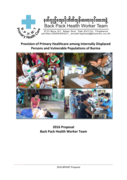
Project Programs:
A. Medical Care Program
B. Community Health Promotion and Prevention Program
C. Maternal and Child Health Program
Target Population: 228,000 people living within the Mon, Kayah, Kayan, Karen,Shan, ... Kachin, Pa O, Chin and Arakan areas
Project Duration:January to December 2016 more
A. Medical Care Program
B. Community Health Promotion and Prevention Program
C. Maternal and Child Health Program
Target Population: 228,000 people living within the Mon, Kayah, Kayan, Karen,Shan, ... Kachin, Pa O, Chin and Arakan areas
Project Duration:January to December 2016 more
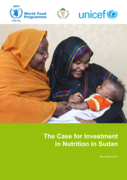
Over the period 2015 to 2019, scaling up a package of selected nutrition-specific and nutrition sensitive interventions to cover 90 per cent of Sudan would:
- Reduce the under-five mortality rate to 49/1,000 live births
- Reduce the preva ... lence of stunting to 25 per cent
- Reduce the prevalence of wasting (global acute malnutrition – GAM) to 6 per cent
- Increase exclusive breastfeeding to 63 per cent
- Reduce iron deficiency anaemia among pregnant women to 26 per cent. more
- Reduce the under-five mortality rate to 49/1,000 live births
- Reduce the preva ... lence of stunting to 25 per cent
- Reduce the prevalence of wasting (global acute malnutrition – GAM) to 6 per cent
- Increase exclusive breastfeeding to 63 per cent
- Reduce iron deficiency anaemia among pregnant women to 26 per cent. more
Private health sector assessment: selected health products and services in Sénégal
Brunner B., J. Barnes, A. Carmona et. al.
United States Agency for International Development
(2016)
C2
USAID Senegal and Health in Africa (HIA) initiative of the World Bank Group engaged the Strengthening Health Outcomes through the Private Sector (SHOPS) project to conduct an assessment of the private health sector in Senegal. The assessment’s primary focus is family planning, and its secondary fo
...
cus is maternal, neonatal and child health (MNCH), HIV and AIDS, malaria, and nutrition.
more
This report presents three scenarios on the impact of COVID-19 in Africa using economic growth forecasts, mortality and efforts to ameliorate impact through social grants. Likely effects are examined on per capita income, poverty and the attainment
...
of selected Sustainable Development Goals targets. Africa’s development trajectory has suffered a severe setback, with extreme poverty rising in all the scenarios. The pandemic threatens Africa in several ways, and the report provides policy recommendations to reduce vulnerability and strengthen resilience.
more
