
Filter
3207
Text search:
WHO,
Regional
Office
Africa
Featured
Recommendations
313
New Publications
833
Language
Document type
No document type
1688
Studies & Reports
638
Guidelines
393
Manuals
180
Strategic & Response Plan
145
Training Material
57
Fact sheets
47
Situation Updates
39
Resource Platforms
9
Infographics
5
Brochures
2
Videos
2
App
1
Online Courses
1
Countries / Regions
Global
163
Ethiopia
119
Kenya
103
Sierra Leone
100
Africa
97
Liberia
87
Uganda
78
Zambia
68
Nigeria
63
South Africa
63
Tanzania
59
Ghana
54
Malawi
53
Namibia
45
Rwanda
42
Congo, Democratic Republic of
41
Guinea
40
India
40
South Sudan
39
Mozambique
37
East and Southern Africa
37
West and Central Africa
37
Western and Central Europe
37
Syria
33
Senegal
29
Nepal
29
Middle East and North Africa
29
Lesotho
27
Asia
25
Zimbabwe
22
Yemen
20
South–East Asia Region
20
Bangladesh
19
Central African Republic
19
Ukraine
19
Latin America and the Carribbean
18
Cameroon
15
Eswatini/ Swaziland
15
Eastern Europe
15
Somalia
14
Angola
14
Myanmar / Burma
14
Botswana
13
Madagascar
12
Burkina Faso
11
Mali
11
Pakistan
11
Sudan
11
Guinea-Bissau
9
Cambodia
9
China
9
Brazil
9
Russia
9
Côte d’Ivoire / Ivory Coast
8
Afghanistan
8
Thailand
8
Venezuela
8
Haiti
7
Philippines
7
Lebanon
7
Benin
7
Burundi
7
Colombia
7
Eastern Europe and Central Asia
7
Togo
6
Chad
6
Gambia
6
Indonesia
6
Jordan
5
Sri Lanka
5
Western Pacific Region
4
Southern Africa
4
Iran
4
Niger
3
Germany
3
Peru
3
North Macedonia
3
Libya
3
Mexico
3
Laos
3
Georgia
3
Vietnam
3
Mauritius
3
Morocco
2
Saudi Arabia
2
Iraq
2
Papua New Guinea
2
Greece
2
Palestine
2
Albania
2
Djibouti
2
Moldova
2
Kyrgyzstan
2
Kazakhstan
2
Portugal
2
Bosnia and Herzegovina
2
USA
1
Turkey
1
Mauritania
1
Argentina
1
Serbia
1
Hungary
1
Ecuador
1
Armenia
1
Timor Leste/ East Timor
1
Tajikistan
1
Qatar
1
Bulgaria
1
Estonia
1
North America
1
Gabon
1
Turkmenistan
1
Jamaica
1
Japan
1
Belgium
1
Tunisia
1
United Kingdom
1
Norway
1
Spain
1
Belarus
1
Israel
1
Authors & Publishers
Publication Years
Category
Countries
1094
Clinical Guidelines
228
Key Resources
219
Women & Child Health
177
Public Health
174
Capacity Building
58
Pharmacy & Technologies
34
Toolboxes
HIV
284
COVID-19
247
Mental Health
195
Ebola & Marburg
160
Planetary Health
149
TB
147
Disability
143
Rapid Response
98
NTDs
92
AMR
89
Conflict
88
Global Health Education
80
Refugee
76
Caregiver
73
2.0 Rapid Response
61
Pharmacy
51
Health Financing Toolbox
48
NCDs
44
Malaria
41
Natural Hazards
40
Zika
22
Cholera
18
Polio
14
Social Ethics
9
Specific Hazards
8
Typhoon
3
South Sudan
1

Vaccines are powerful weapons in the fight against pandemic viruses as shown by responses to both the 2009 H1N1 influenza and the COVID-19 pandemics. However, planning for accessing, allocating and deploying vaccines in a pandemic situation is a complex endeavour, beset with multiple challenges at a
...
To complement the Global Strategy progress reporting, this report provides a detailed look at country leadership and action toward the Every Newborn National Milestones by 2020. Countries have taken the initiative to show the way forward and have demonstrated significant progress. As part of monitor
...
Rabies is entirely preventable, and vaccines, medicines, tools and technologies have long
been available to prevent people from dying of dog-mediated rabies. Nevertheless, rabies still
kills about 60 000 people a year, of whom over 40% are children under 15, mainly in rural areas
of economically
...

More than two years since the first SARS-CoV-2 infections were reported, the COVID-19 pandemic remains an acute global emergency. In this Strategic Preparedness, Readiness and Response plan for 2022, WHO sets out a number of key strategic adjustment
...

While the ratification of the Convention and its Optional Protocol has proceeded rapidly, knowledge on how to implement and monitor them has not kept pace. Conscious of this challenge, my Office has developed this Training Guide on the Convention an
...
Rabies remains an under-reported neglected zoonosis with a case-fatality rate of almost 100% in humans and animals. Dog-mediated human rabies causes tens of thousands of human deaths annually despite being 100% preventable. More than 95% of human cases are caused by the bite of a rabies-infected dog
...
Rabies is a global public health problem with important socioeconomic impacts. Human rabies is preventable; almost all cases are transmitted through the bite of a rabid dog. Elimination of human rabies is possible. Technical support and tools are available. This report covers:
- Why investment ...
- Why investment ...

Regional Tuberculosis Program, Pan American Health Organization (PAHO/WHO)
Produced by Training and Research Support Centre for the Regional Network for Equity in Health in east and southern Africa (EQUINET), March 20, 2020.
This brief summarises and provides links to of
...
People Who Inject Drugs
In addition, the following individuals of our external expert advisory committee made instrumental contributions to the initial design and content of the document: Billy Pick, USAID; Daniel Wolfe, Open Society Foundations;
...
This paper looks at the status of tuberculosis (TB) advocacy
communication and social mobilization (ACSM) activities in selected
national TB control programmes in the WHO African Region. The
findings are from an assessment of TB ACSM activities i
...
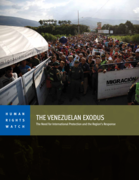
The Need for a Regional Response to an Unprecedented Migration Crisis.
This report provides an overview of where the more than 2 million Venezuelans who have left the country since 2014, at least
...
The main objectives of these guidelines are:
A. To create awareness among the CBM family (International Office, Member Associations, Regional Offices, Country Offices and partners) on the opportuni
...
Beyond borders. How to make the global compacts on migration and refugees work for uprooted children
The report presents successful case studies from around the world, including the implementation of minimum protection standards for refugee children in Germany, cross border child protection systems in West Africa, and finding alternatives to the de
...

he refugee flow to Ethiopia continued during 2018, with 36,1351 persons seeking safety and protection within the country’s borders. At the start of 2019, the nation hosted 905,8312 thousand refugees who were forced to flee their homes as a result
...

Final Evaluation
The project objectives were to promote the conservation, sustainable use and cultivation of endangered medicinal plants in Zimbabwe, by demonstrating effective models at the local level, and developing a legal framework for the conservation, sustainable use, and equitable shari ...
The project objectives were to promote the conservation, sustainable use and cultivation of endangered medicinal plants in Zimbabwe, by demonstrating effective models at the local level, and developing a legal framework for the conservation, sustainable use, and equitable shari ...
Management of Dead Bodies After Disasters: A Field Manual For First Responders. (Arabic Version)
recommended
Second edition. This revised edition incorporates experience gained in recent catastrophes, such as the 2013 Typhoon Haiyan in the Philippines, the 2014/15 Ebola epidemic in West Africa and the 2015 earthquake in Nepal. It also contains a number of
...
Female Genital Schistosomiasis (FGS) is a gynaecological disease caused by Schistosoma haematobium, a parasitic worm that is acquired by skin contact with freshwater contaminated by schistosome cerceriae. Communities in which the infection is most endemic have limited access to clean water and healt
...
