
Filter
537
Text search:
Predict
performance
Featured
51
114
Language
Document type
280
106
73
42
20
11
3
1
1
Countries / Regions
34
29
15
10
10
10
9
9
7
7
6
6
6
5
5
5
5
4
4
4
4
4
4
4
4
3
3
3
3
3
3
3
3
3
3
2
2
2
2
2
2
2
2
2
1
1
1
1
1
1
1
1
1
1
1
1
1
1
1
1
1
1
1
1
1
1
1
Authors & Publishers
Publication Years
Category
143
43
38
33
25
9
3
Toolboxes
55
41
41
39
20
17
16
14
11
11
11
11
9
9
9
9
8
8
8
6
6
4
4
2
1

Guidelines for the Prevention and Containment of Antimicrobial Resistance in South African Hospitals
These guidelines form part of efforts to institutionalise the prevention and containment of antimicrobial resistance (AMR) in health care facilities in South Africa, as outlined in the Antimicrobial Resistance Strategic Framework and Implementation Plan. The focus of these guidelines is on two inte
...
Teachers' Exercise Book for HIV Prevention
Document 6.1
This booklet contains all the participatory learning experiences that are included in the Training and Resource Manual on School Health and HIV and AIDS Prevention. It is to be given to all teachers who receive training as part of the EI/WH
...
The animal health subsector within the agriculture sector is the gatekeeper of antimicrobial resistance (AMR) in livestock, aquaculture, animal products, and the immediate animal environment. In support of member countries taking responsibility for and moving forward with putting AMR monitoring and
...
Molecular methods for antimicrobial resistance (AMR)diagnostics to enhance the Global Antimicrobial Resistance Surveillance System
The current document is anupdate of the guidelines developed by the EUCAST subcommittee on detection of resistance mechanisms. The EUCAST Steering Committee has carried out the current update. The document has been developed mainly for routine use in clinical laboratories and doesnot cover technical
...
The guidelines are to be used to guide the management of adults with lower respiratory tract infection (LRTI). As will be seen in the following text, this diagnosis, and the other clinical syndromes within this grouping, can be difficult to make accurately. In the absence of agreed definitions of th
...
Nosocomial infections, or hospital-acquired infec-tions (HAI), are among the most significant causesof morbidity and mortality in healthcare settingsthroughout the world.Prevention of HAIs iscentral to providing high quality and safe health-care, even in settings with limited resources.Transmi
...
Productive and Inclusive Cities for an Emerging Democratic Republic of Congo

Massoda Tonye et al. Malar J (2018) 17:156
https://doi.org/10.1186/s12936-018-2284-7
Background: In 2011, the demographic and health survey (DHS) in Cameroon was combined with the multiple indicator
cluster survey. Malaria parasitological data were collected, but the survey period did not overl
...
Only 8,730 asylum applications were registered in the EU+ in April, the lowest since at least 2008, and a massive 87% decrease from pre-COVID-19 levels in January and February.
The European Asylum Support Office (EASO) has released a special report which shows that the COVID-19 related travel restr
...
Although the COVID-19 crisis is, in the first instance, a physical health crisis, it has the seeds of a major mental health crisis as well, if action is not taken. Good mental health is critical to the functioning of society at the best of times. It must be front and centre of every country’s resp
...

The “United Nations Framework for the immediate socio-economic response to COVID-19: Shared responsibility, global solidarity and urgent action for people in need” calls for protecting jobs, businesses and livelihoods to set in motion a safe recovery of societies and economies as soon as possibl
...


The WHO COVID-19 Clinical management: living guidance contains the Organization’s most up-to-date recommendations for the clinical management of people with COVID-19. Providing guidance that is comprehensive and holistic for the optimal care of COVID-19 patients throughout their entire illness is
...
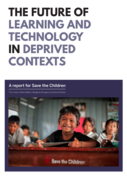
This report addresses the future of basic education, ICT use in deprived locations, and the use of ICTs in primary school learning in 2020 and 2025, especially in deprived contexts. It draws on research evidence from the literature, the authors’ experiences of ICT use in education initiatives, int
...

This guidance document has been produced by WHO to assist blood services in the development of national plans to respond to any emerging infectious threats to the sufficiency or safety of the blood supply, whether from an existing infectious agent that is changing in incidence and spread, or from a
...
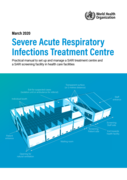
Severe acute respiratory infections treatment centre: practical manual to set up and manage a SARI treatment centre and a SARI screening facility in health care facilities
These guidelines provide evidence-based guidance on the use of peripartum antiviral prophylaxis in HBsAg-positive pregnant women for the prevention of mother-to-child transmission of HBV.

Clinical care for severe acute respiratory infection: toolkit: COVID-19 adaptation
