
Filter
1037
Text search:
Community
Health
Impact
Coalition
Featured
Recommendations
88
New Publications
242
Language
Document type
No document type
573
Studies & Reports
231
Guidelines
89
Strategic & Response Plan
57
Manuals
53
Fact sheets
13
Situation Updates
10
Training Material
7
Infographics
2
Brochures
1
Resource Platforms
1
Countries / Regions
Global
65
Western and Central Europe
24
Sierra Leone
21
Uganda
20
Nigeria
19
Ethiopia
19
Syria
19
Kenya
17
South Africa
17
Ghana
16
Tanzania
16
Liberia
15
Philippines
15
India
15
Zambia
15
Africa
15
Malawi
14
Nepal
13
Yemen
13
Eastern Europe
13
Senegal
12
Congo, Democratic Republic of
11
Bangladesh
11
Asia
11
Mozambique
10
Central African Republic
8
Ukraine
8
Myanmar / Burma
8
Latin America and the Carribbean
8
Cambodia
7
Rwanda
7
Indonesia
7
Namibia
7
South–East Asia Region
7
Zimbabwe
6
South Sudan
6
Guinea
5
Somalia
5
Lesotho
5
Venezuela
5
Mali
4
Haiti
4
Pakistan
4
Lebanon
4
Benin
4
Brazil
4
Colombia
4
Botswana
4
Burkina Faso
3
Afghanistan
3
Germany
3
Thailand
3
Eswatini/ Swaziland
3
North Macedonia
3
Mexico
3
West and Central Africa
3
Western Pacific Region
3
Albania
3
Russia
3
Guinea-Bissau
2
USA
2
Cameroon
2
Jordan
2
Papua New Guinea
2
Hungary
2
Eastern Europe and Central Asia
2
Armenia
2
Laos
2
Canada
2
Moldova
2
Georgia
2
Vietnam
2
Côte d’Ivoire / Ivory Coast
1
Morocco
1
Togo
1
Iraq
1
Chad
1
Gambia
1
China
1
Malaysia
1
Ireland
1
Sudan
1
Argentina
1
Peru
1
Bolivia
1
Libya
1
Angola
1
Sri Lanka
1
East and Southern Africa
1
Middle East and North Africa
1
Poland
1
Palestine
1
Timor Leste/ East Timor
1
Tajikistan
1
Romania
1
Lithuania
1
Slovakia
1
Iran
1
Kyrgyzstan
1
Kazakhstan
1
North America
1
Jamaica
1
Belgium
1
Norway
1
Portugal
1
Belarus
1
Authors & Publishers
Publication Years
Category
Countries
278
Women & Child Health
61
Key Resources
57
Clinical Guidelines
53
Public Health
51
Capacity Building
15
Pharmacy & Technologies
5
Toolboxes
HIV
190
TB
94
COVID-19
77
Mental Health
70
Planetary Health
53
Conflict
45
Disability
44
NTDs
36
Refugee
27
Global Health Education
27
Caregiver
20
Health Financing Toolbox
20
Ebola & Marburg
17
AMR
13
NCDs
12
Pharmacy
11
Rapid Response
10
Specific Hazards
10
Natural Hazards
9
Polio
8
2.0 Rapid Response
8
Malaria
5
Cholera
3
Social Ethics
3

About one fourth of the world’s population is estimated to have been infected with the tuberculosis (TB) bacilli, and about 5–10% of those infected develop TB disease in their lifetime. The risk for TB disease after infection depends on several factors, the most important being the person’s im
...

The EYE strategy is a comprehensive and long-term strategy built on lessons learned that aims at ending yellow fever epidemics by 2026, and consists of three strategic objectives:
protect at-risk populations;
prevent international spread; and
contain outbreaks rapidly.
World Humanitarian Data and Trends presents global- and country-level data-and-trend analysis about humanitarian
crises and assistance. Its purpose is to consolidate this information and present it in an accessible way, providing policymakers, researchers and humanitarian practitioners with an evid
...

World Health Organization Chief Tells Security Council, Urging Sustained Focus to Prevent Future Outbreaks

Trachoma is the world’s leading infectious cause of blindness. It is one of 18 neglected
tropical diseases (NTDs) that affect over one billion of the world’s poorest people.
2016 Update
Key population
Guidelines
Key Populations
Available in Arabic, Chinese, English, French, Russian and Spanish. You can download a summary of the main report and background documents!
The report demonstrates that the current system—at both national and international levels— was not adequate to protect people from COVID-19. The time it t
...
The WHO operational handbook on tuberculosis: tuberculosis preventive treatment is the companion, implementation guide to the 2020 WHO guidelines on TB preventive treatment.[1] Just as these guidelines are the first to be released under the rubric of the WHO consolidated TB guidelines, this handbook
...
A lack of knowledge about the threat of vaccine-preventable diseases, risks and benefits of vaccines, mistrust of government and health workers, poor service delivery and alternative health or relig
...

Drawing on the World Health Organization’s package of NCD best buys, the report demonstrates how these evidence-based measures can help countries reduce premature deaths, strengthen health systems
...

Cholera is an acute gastrointestinal infection caused by the bacterium Vibrio Cholerae serogroup O1 or O139, and is often linked to unsafe drinking water, lack of proper sanitation and personal hygiene. It adversely affects mostly the poor and vulnerable populations in countries, which are already d
...

The WHO South-East Asia (SEA) Region bears a high burden of tuberculosis (TB) and MDR-TB. In 2015, the Region accounted for nearly 200 000 or 35% of the global estimated new RR/MDR-TB cases eligible for treatment. Extensively drug-resistant TB (XDRTB) has also been reported from s
...

WHO today released its first roadmap to tackle postpartum haemorrhage (PPH) – defined as excessive bleeding after childbirth - which affects millions of women annually and is the world’s leading cause of maternal deaths.
Despite being preventable and treatable, PPH results in around 70 000 de
...

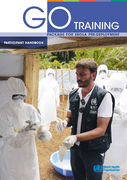
GO pre-deployment training: participant handbook
recommended
This is a pre-deployment training, tailored specially to the Ebola outbreak in West Africa, offered to WHO personnel, consultants, and key partners. The material covered in modules 1-4 is applicable and useful to frontline response workers, national and international. Only Module 5, which focuses on
...
беларускі - Belorussian
