
Filter
35
Text search:
transmisión
oral
Featured
5
9
Language
Document type
15
11
3
3
2
1
Countries
5
5
4
4
3
1
1
1
Authors & Publishers
Publication Years
Category
20
6
2
1
Toolboxes
8
6
1
1
Abstract: Chagas disease is caused by infection with the protozoan Trypanosoma cruzi, and although over 100 years have passed since the discovery of Chagas disease, it still presents an increasing problem for global public health. A plethora of information concerning the chronic phase of human Chaga
...
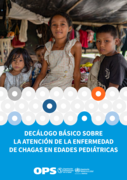
El presente decálogo expone de manera concisa los aspectos esenciales de la enfermedad y recoge 10 puntos básicos, esquemáticos y orientados a la práctica para la atención pediátrica de la enfermedad de Chagas.

April 2022 Volume 35 Issue 2 e00152-21
Population movements have turned Chagas disease (CD) into a global public health problem. Despite the successful implementation of subregional initiatives to control vectorial and transfusional Trypanosoma cruzi transmission in Latin American settings where t
...

DESDE UN ABORDAJE DE SALUD INTEGRAL Actualización Enero 2023 Neuquén
Diagnóstico y tratamiento de sífilis recomendaciones para los equipos de salud.

BMJ Glob Health 2017;2:e000345. doi:10.1136/bmjgh-2017-000345. WHO's 2020 milestones for Chagas disease include having all endemic Latin American countries certified with no intradomiciliary Trypanosoma cruzi transmission, and infected patients under care. Evaluating the variation in historical expo
...

Accessed on 20.08.2022#
Actualización en Profilaxis Post Exposición (PPE) en Niños, Niñas y Adolescentes
