Filter
490
Text search:
meat
production
Featured
40
151
Language
Document type
213
139
52
25
21
16
15
6
1
1
1
Countries
24
20
20
19
16
14
12
11
10
10
9
7
7
7
7
6
5
5
5
5
4
4
4
4
4
3
3
3
3
2
2
2
2
2
2
2
2
2
2
2
2
2
2
2
2
1
1
1
1
1
1
1
1
1
1
1
1
1
1
1
1
1
1
1
1
1
1
1
1
1
1
1
1
1
1
1
1
1
1
Authors & Publishers
Publication Years
Category
184
41
28
26
17
9
1
Toolboxes
80
72
26
24
22
16
9
9
8
6
5
5
5
4
4
3
3
3
2
2
2
1
1
1
This report provides an update on the level of poverty based on 2013/14 Integrated Household Living Conditions Survey (EICV4) focusing on poverty as measured in consumption terms. The report also highlights other trend dimensions of living conditions captured in other surveys that complement and pro
...

As the number of transboundary pest and animal and foodborne disease outbreaks rises, so does the number of people who are chronically hungry due to these and other factors. The correlation can be explained by the link between our health and that of the planet. We rely on land and sea for the
...
Food environments are usually defined as the settings with all the different types of
food made available and accessible to people as they go about their daily lives.
That is, the range of food in supermarkets, small retail outlets, wet markets, street
food stalls, coffee shops, tea houses, s
...
The policy brief focuses on four key areas for intervention - air pollution, energy, transport and food systems. Air pollution causes 7 million deaths annually, and is a leading cause of both NCDs and climate change, thus all interventions to reduce air pollution have a positive impact on both human
...
As a result of Russia’s invasion of Ukraine, the people of Ukraine, especially the most vulnerable, are paying an enormous price. Lives and livelihoods are being lost, with more than ten million people forced from their homes— and their country—in search of safety. The war has unleashed catast
...

This report aims to support countries in the necessary transition toward healthier, more sustainable diets by integrating biodiversity in food-based interventions to support nutrition and health. It is intended to help guide decision-makers in the health, nutrition and other sectors, to:
Consider
...

For thousands of years, humans have been using wildlife for commercial and subsistence purposes. Wildlife trade takes place at local, national and international levels, with different forms of wildlife, such as live animals, partly processed products and finished products. Wildlife is a vital source
...
This manual will contribute directly to the fourth focus area of the FAO Action Plan by promoting the prevention of infections and the prudent use of antibiotics in the pig and poultry sectors. The pig and poultry sectors are addressed together, as these sectors generally have the highest use of ant
...
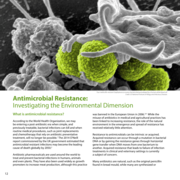
In this edition, the Antimicrobial Resistance chapter discusses the growing, dangerous trend of antimicrobial resistance and the potential catastrophic consequences on global health.
Chapter 1 of Frontier 2017: Emerging Issues of Environmental Concern
Issue Brief No. 29:
Planetary Health is an interdisciplinary academic collective of many scientific disciplines. In addition to the fields of
environmental and social sciences, that of human health is one of many.
Because of the many disciplines involved in this topic and the large number of res
...
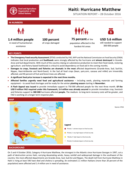
IN NUMBERS
1.4 million people in need of humanitarian assistance
100 percent of crops damaged
75 percent of the population affected in the hardest-hit areas
USD 5.6 million still needed to support 300 000 people
Antimicrobial Resistance - What is it?
Fact Sheet

Constraints, Technologies, Policies and Processes

Antibiotics and other antimicrobial agents are invaluable life savers, particularly in resource-limited countries where infectious diseases are abundant. Both uncomplicated and severe infections are potentially curable as long as the aetiological agents are susceptible to the
...
This Study presents the key results of a research that analyses the implications of an ambitious agroecological transition across Europe, following the TYFA scenario. Published in 2018, what it proposes by 2050 is fully aligned with the objectives that the European Farm to Fork and Biodiversity stra
...
Lancet Planet Health 2022;6: e760–68
The emergence of COVID-19 has drawn the attention of health researchers sharply back to the role that food systems can play in generating human disease burden. But emerging pandemic threats are just one dimension of the complex relationship between agriculture
...

- Regional analysis of acute food insecurity: Current situation (February-March 2015)