
Filter
2153
Text search:
infected
material
Featured
311
517
Language
Document type
1019
439
266
179
83
70
51
15
13
8
5
2
2
1
Countries
125
95
67
67
55
54
46
46
37
36
33
33
29
24
24
24
24
21
20
17
17
17
15
15
14
14
14
14
13
13
12
12
12
11
11
10
10
10
10
9
8
8
8
8
7
7
6
6
6
5
5
5
4
4
4
4
4
4
4
4
4
3
3
3
3
3
3
3
3
3
2
2
2
2
2
2
2
2
2
2
2
2
2
2
2
2
2
1
1
1
1
1
1
1
1
1
1
1
1
1
1
1
1
1
1
1
1
1
1
1
1
1
1
1
1
Authors & Publishers
Publication Years
Category
712
296
127
118
110
68
49
2
Toolboxes
284
201
162
152
108
64
61
60
58
54
42
39
34
33
32
30
27
26
23
16
14
13
11
8
4
Key messages include Effective communication skills should be used for everyone seeking health care,
including people with MNS conditions and their carers; Effective communication skills enable health-care providers to build rapport and trust with people as well as enabling health-care providers to
...
Training Material - Power Point
Education material for teachers of midwifery
Midwifery education modules - second edition
Education material for teachers of midwifery
Midwifery education modules - second edition
The aim is to provide early detection of potentially infected persons; to assist in implementing WHO recommendations related to Ebola management; and to prevent the international spread of the disease while allowing PoE authorities to avoid unnecess
...
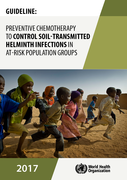
Preventive chemotherapy to control soil-transmitted helminth infections in at-risk population groups
recommended
Treating children infected with intestinal worms is one of the simplest and most cost–effective ways to improve their health.
The recommendations are intended for a wide audience, including policy-makers and their expert advisers as well as tech
...
District Level M & E Training and Reference Material for Primary Health Care Programmes
This brief document compiles existing material related to mental health and psychosocial support (MHPSS) for the COVID-19 crisis, as well as other resources that can be applicable to the context. Documents are divided into different sections, based
...

The Covid-19 pandemic has so far infected more than 30 million people in the world, having major impact on global health with collateral damage. In Mozambique, a public state of emergency was declared at the end of March 2020. This has limited peopl
...
Archives of Medicine vo.7 no.5:10
Individuals infected with human immunodeficiency virus (HIV) often develop
multiple complications and comorbidities, among them, opportunistic infections.
The highest incidence of opportunistic infections was rep
...
Skin and mucosal conditions are extremely common in all children and adults in particular in HIV-infected adults and children and are one of the commonest daily management problems faced by health care workers caring for patients with HIV infection
Onchocerciasis used to be an important public health problem in Africa, with over 37 million people infected and millions suffering from debilitating skin disease, terrible itching, impaired vision and
blindness. But the epidemiological situation h
...

About one fourth of the world’s population is estimated to have been infected with the tuberculosis (TB) bacilli, and about 5–10% of those infected develop TB disease in their lifetime. The risk
...

About one fourth of the world’s population is estimated to have been infected with the tuberculosis (TB) bacilli, and about 5–10% of those infected develop TB disease in their lifetime. The risk
...
Issue Brief Marburg virus disease (MVD)
recommended
Issue Brief No. 40 provides healthcare professionals with the most relevant treatment guidelines, prevention measures and training material on MVD
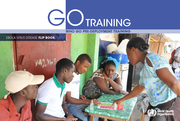
The flip book is for pre-deployment trainings for Ebola response, and is based on frequently asked questions about Ebola virus disease (EVD):
What is Ebola virus disease?
How do people become infected with EVD?
Why WHO is focusing on
...
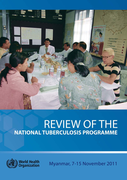
Myanmar is one of the world’s 22 high tuberculosis (TB) burden countries, and supporting TB control in Myanmar is a global priority. This report reflects the findings, discussions, conclusions and recommendations of the fourth international review mission of the Myanmar National TB Programme (NTP)
...
BMJ Global Health, Vol.5 No. 12Spatial subdivision of the camp (‘sectoring’) was able to ‘flatten the curve’, reducing peak infection by up to 70% and delaying peak infection by up to several months. The use of face masks coupled with the efficient isolation of
...
