Filter
185
Text search:
heat
wave
Featured
14
35
Language
Document type
72
57
18
15
6
5
4
3
3
1
1
Countries
12
6
5
4
4
3
3
3
2
2
2
2
2
2
2
2
1
1
1
1
1
1
1
1
1
1
1
1
1
1
1
1
1
1
1
1
1
Authors & Publishers
Publication Years
Category
36
14
12
10
4
2
2
Toolboxes
68
21
15
12
11
9
5
5
5
4
4
3
3
1
1
1
1
Mobile vaccination teams visiting long-term care homes will have an important role in providing vaccination coverage for some of the most vulnerable population sub-groups. However, based on the experiences of German mobile diagnostic teams during the first COVID-19 pandemic
...
BackgroundClimate change is one of the great challenges of our time. The consequences of climate change on exposed biological subjects, as well as on vulnerable societies, are a concern for the entire scientific community. Rising temperatures, heat
...

Heatwaves, or heat and hot weather that can last for several days, can have a significant impact on society, including a rise in heat-related deaths. Heatwaves are among the most dangerous of natura
...
2023 is seeing intense heatwaves. According to a July 2023 briefing by the World Meteorological Association temperatures will frequently reach above 35–40°C in many places across the Mediterranean region, with temperatures in the Middle East and southeastern Türkiye reaching up to 45°C and, in
...
The 2022 report of the Lancet Countdown on health and climate change: health at the mercy of fossil fuels
recommended
The Lancet October 25, 2022DOI:https://doi.org/10.1016/S0140-6736(22)01540-9
As climate change’s impacts continue to accrue, countries are persistently making wrong choices that are harming human health.
A desperate global thirst for fossil fuels is worsening climate change, leading to more extr
...
According to the International Science Council, the report focuses on identifying the scope of hazards that should be considered in risk reduction efforts, and provides scientifically robust and internationally agreed definitions of these hazards.
En esta publicación se presenta un método integral para brindar apoyo a los Estados Miembros de la Organización Panamericana de la Salud (OPS) en la preparación para la respuesta a los riesgos para la salud relacionados con el calor en la Región de las Américas. Se basa en los documentos de al
...
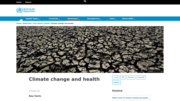
Climate change is the single biggest health threat facing humanity, and health professionals worldwide are already responding to the health harms caused by this unfolding crisis.
The Intergovernmental Panel on Climate Change (IPCC) has concluded that to avert catastrophic health impacts and prevent
...

Injury to the skin and underlying tissues from acute exposure to
a large external dose of radiation is referred to as cutaneous
radiation injury (CRI). Acute radiation syndrome (ARS) 1 will
usually be accompanied by some skin damage; however, CRI
can
...
In this paper, we review the most significant health and environmental facts and explain why — from a medical perspective — a proper understanding of what nuclear weapons will do invalidates all arguments for continued possession of these weapons and requires that they urgently be pro
...
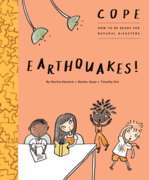
The Sendai Framework for Disaster Risk Reduction highlights children as among the most vulnerable groups who must be empowered to get ready for natural hazards and play a vital role in preventing and reducing risk.
This child-friendly booklet is for kids who are 6-12 years old to generate earthqu
...

From the start of the COVID-19 pandemic until August 2021, extreme weather events have affected at least 139.2 million people and killed at least 17,242 people in at least 433 unique events. These figures are certainly an underestimate, as they do not include estimates of numbers of people affected
...
English Analysis on World and 26 other countries about Agriculture, Climate Change and Environment, Drought, Epidemic and more; published on 26 Oct 2021 by WMO

A summary of health effects, resources, and adaptation examples from health departments funded by CDC’s Climate and Health Program
Mortality statistics are fundamental to public health decision making. Mortality varies by time and location, and its measurement is affected by well known biases that have been exacerbated during the COVID-19 pandemic. This paper aims to estimate excess mortality from
...

Current Environmental Health Reports volume 7, pages 363–370 (2020)
Climate change has direct impacts on human health, but those impacts vary widely by location. Local health impacts depend on a large number of factors including specific regional climate impacts, demographics and human vulnerabil
...