Filter
391
Text search:
famine
Featured
26
112
Language
Document type
216
91
24
22
16
9
6
5
1
1
Countries
34
27
25
11
9
9
8
7
7
6
6
5
5
4
4
4
4
4
4
3
3
3
3
3
3
3
3
2
2
2
2
2
2
2
2
2
2
2
2
1
1
1
1
1
1
1
1
1
1
1
1
1
1
1
1
1
1
1
1
1
1
1
1
1
1
1
1
1
1
1
1
Authors & Publishers
Publication Years
Category
119
76
16
12
11
1
1
Toolboxes
64
43
27
25
22
16
15
13
13
7
6
6
5
4
3
3
2
2
2
2
2
2
1
1

he refugee flow to Ethiopia continued during 2018, with 36,1351 persons seeking safety and protection within the country’s borders. At the start of 2019, the nation hosted 905,8312 thousand refugees who were forced to flee their homes as a result of insecurity, political instability, military cons
...
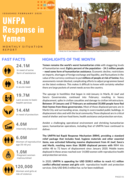
Yemen remains the world’s worst humanitarian crisis with staggering levels of humanitarian need. Eighty per cent of the population – 24.1 million people – need some form of humanitarian assistance. Economic decline, restrictions on imports, shortages of foreign exchange and liquidity, and fluc
...
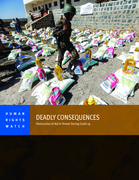
With about 24 million of Yemen’s 30 million people in need of some form of assistance, the United Nations calls Yemen the world’s worst humanitarian crisis. Cholera and other disease outbreaks are common, malnutrition is widespread, water is scarce, and the healthcare system is crumbling, with o
...

With about 24 million of Yemen’s 30 million people in need of some form of assistance, the United Nations calls Yemen the world’s worst humanitarian crisis. Cholera and other disease outbreaks are common, malnutrition is widespread, water is scarce, and the healthcare system is crumbling, with o
...

Uganda hosts approximately 1.1 million refugees making it Africa’s largest refugee hosting country and one of the five largest refugee hosting countries in the world. Most recently, throughout 2016- 2018, Uganda was impacted by three parallel emergencies from South Sudan, the Democratic Republic o
...
In 2018, the Food and Agriculture Organization of the United Nations (FAO) in South Sudan must respond to the highest levels of food insecurity ever recorded in the country. To address this challenge, FAO revised its multiyear Emergency Livelihood Response Programme (ELRP) to enable rapid food produ
...
Nutrition Guidelines
recommended

Adapted from CURRENT Medical Diagnosis & Treatment 2010
The number of new Ebola infections in Sierra Leone is declining, despite the outbreak continuing to claim lives. New cases have dropped to around 9-12 per week, according to recent WHO figures. There were over 500 cases per week at the height of the crisis around late November 2014.
The impact on t
...
Highlights
The third corridor for delivery of humanitarian assistance from Sudan to South Sudan is open.
In response to the drastic increase in humanitarian needs, WFP continues to scale up its assistance in Eastern Equatoria, Northern Bahr El Ghazal and Lakes states.
Construction w
...
With the increase in frequency of disasters, there is a need to improve early warning systems (EWS) for EA to reduce the risks faced by children and their families. As a consequence, the term early warning, early action (EWEA) has become increasingly common among those responding to slow-onset disas
...

At the World Humanitarian Summit in Istanbul in May 2016, leaders made over 3,700 commitments to advance the Agenda for Humanity. In their first self-reports against these commitments, 142 stakeholders described the efforts they made from June to December 2016 to realize this ambitious vision.
The
...
Four years after the Houthi takeover of the capital Sana’a and the beginning of the Saudi-led military intervention, there is little to suggest that Yemen will find peace in the near future. As of January 2018, the conflict has killed tens of thousands of people and displaced millions, causing wid
...

A joint FAO/WFP update for the United Nations Security Council, January 2018. ISSUE N.3. Six months on from the last joint report for the United
Nations Security Council (UNSC), this report by the
Food and Agriculture Organization of the United
Nations (FAO) and the World Food Programme (WFP)
...
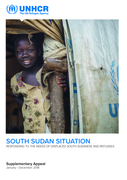
The refugee exodus from South Sudan continues at an alarming rate, even as the crisis is entering its fifth year. Close to 2.4 million South Sudanese have fled to neighbouring countries mostly to Uganda—the largest host country in sub-Saharan Africa—followed by Sudan, Ethiopia, Kenya, the Democr
...
The present DHR-ICMR guidelines comprehensively address the various concerns regarding the clinical assessment, treatment, and laboratory diagnosis of rickettsial diseases in India and the world. It is hoped that physicians, health care workers, the scientific community, the regulatory agencies, pub
...