
Filter
645
Text search:
dietary
intake
Featured
49
230
Language
Document type
351
153
78
23
21
10
6
2
1
Countries
75
46
33
24
21
16
15
12
12
12
11
9
9
8
8
7
7
7
5
5
5
5
4
4
4
3
3
3
3
3
3
3
3
3
2
2
2
2
2
2
2
2
2
2
2
2
1
1
1
1
1
1
1
1
1
1
1
1
1
1
1
1
1
1
1
1
1
1
1
1
Authors & Publishers
Publication Years
Category
311
80
74
70
47
18
Toolboxes
70
38
23
21
16
12
10
9
5
5
4
4
3
3
3
2
1
1
1
1
1
1
The document outlines strategies for reducing salt intake to combat high blood pressure, strokes, and heart disease in the Eastern Mediterranean Region. It highlights the need for progressive reductions in salt consumption, particularly in staple fo
...
This Topic Guide has been compiled to provide an overview of undernutrition in the context of development. The focus of the Guide is on undernutrition, defined as the outcome of insufficient (quantity and quality) of food intake (hunger) and repeate
...
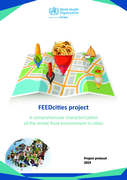
Project protocol
Introduction Ready-to-eat food sold in the street represents a global phenomenon, more common in urbanized areas, that constitutes an important dietary source in populations from low- and middle-income countries. However, research
...
Hypertension, or high blood pressure, is a condition which generally has no symptoms and if left untreated, can lead to heart attacks, heart failure, stroke, kidney failure and blindness. Risk factors include older age, overweight or obesity, lack of physical activity, high salt/sodium
...
Noncommunicable diseases (NCDs) are the principal cause of morbidity, disability and premature mortality in Azerbaijan. The most effective way to reduce the NCD burden is to prevent NCD development, by addressing thebehavioural risk factors underlying NCDs at the population and individual leve
...

High meat consumption, particularly red meat and processed meat, negatively affects our health, while meat production is one of the largest contributors to global warming and environmental degradation. The aim of our study was to explore trends in meat consumption within the UK and the associated ch
...

This guideline covers care and management for adults (aged 18 and over) with type 2 diabetes. It focuses on patient education, dietary advice, managing cardiovascular risk, managing blood glucose levels, and identifying and managing long-term compli
...
The publication conveys the most recent quantitative surveillance results focusing on noncommunicable disease (NCDs)-related risk behaviours among adults from the WHO STEPwise approach to NCD risk factor surveillance (STEPS) and tobacco use among adults from the Global Adult Tobacco Survey (GATS) in
...
This volume contains monographs prepared at the ninety-first meeting of the Joint FAO/WHO Expert Committee on Food Additives (JECFA), which met virtually online from 1 to 12 February 2021.
The detailed monographs in this volume summarize data on specific contaminants in food. Individual monographs
...
This guideline provides evidence-informed guidance on the use of non-sugar sweeteners to reduce the risk of unhealthy weight gain and diet-related noncommunicable diseases in adults and children. The guidance in this guideline is not based on toxicological assessments of the safety of individual no
...

Распространенность депрессивных расстройств и их роль в формировании различных вариантов патологии человека обусловливают актуальность поиска новых подходов к
...

The article explores the underlying factors influencing unhealthy diets and sedentary lifestyles among adolescents in Kilifi County, Kenya. Using a qualitative approach, the study involved interviews and focus group discussions with adolescents, stakeholders, and young adults. Key findings include a
...
Cardiovascular diseases (CVDs) have collectively remained the leading causes of death worldwide and substantially contribute to loss of health and excess health system costs. The Global Burden of Diseases, Injuries, and Risk Factors (GBD) Study has tracked trends in death and disability since 1990 a
...

A long and healthy life for all South Africans
The current guidelines on Integrated Management of Acute Malnutrition (IMAM), addresses the issue of improved management of severe acute malnutrition (SAM), particularly in children under 5 years of age. In the absence of standard protocols, mortality in children admitted to hospital with SAM can ra
...
The COVID-19 pandemic has brought social and economic crisis that is rapidly exacerbating an ongoing nutrition insecurity in Nigeria.
To contain the spread of the pandemic in Nigeria, the government has put in place a number of measures, one of which is the lockdown in the three states of Lagos,
...
