
Filter
666
Text search:
World
Health
Organization.
Country
Office
for
Nepal
Featured
Recommendations
70
New Publications
197
Language
Document type
No document type
379
Studies & Reports
128
Guidelines
68
Manuals
49
Strategic & Response Plan
16
Situation Updates
8
Fact sheets
8
Training Material
7
Infographics
3
Countries / Regions
Nepal
98
Global
47
South–East Asia Region
37
Asia
29
India
23
Bangladesh
14
Myanmar / Burma
8
Haiti
6
Pakistan
6
Liberia
5
Uganda
5
Tanzania
5
Thailand
5
Indonesia
5
South Africa
5
Ethiopia
4
Ghana
4
Philippines
4
Zambia
4
Sri Lanka
4
Africa
4
Sierra Leone
3
Afghanistan
3
Syria
3
Kenya
3
Cambodia
3
Mozambique
3
North Macedonia
3
Latin America and the Carribbean
3
Western and Central Europe
3
Russia
3
Vietnam
3
Nigeria
2
Zimbabwe
2
Jordan
2
Lebanon
2
Malawi
2
East and Southern Africa
2
Western Pacific Region
2
Bhutan
2
Laos
2
Georgia
2
Guinea
1
Senegal
1
Congo, Democratic Republic of
1
Morocco
1
Rwanda
1
Central African Republic
1
Argentina
1
Namibia
1
Brazil
1
Hungary
1
Ukraine
1
Colombia
1
Ecuador
1
Mexico
1
Yemen
1
West and Central Africa
1
Middle East and North Africa
1
Eastern Europe and Central Asia
1
Other region
1
Venezuela
1
North Korea
1
Armenia
1
Timor Leste/ East Timor
1
Romania
1
Kyrgyzstan
1
Jamaica
1
Belgium
1
Norway
1
Portugal
1
Belarus
1
Authors & Publishers
Publication Years
Category
Countries
176
Key Resources
76
Clinical Guidelines
56
Women & Child Health
54
Public Health
43
Capacity Building
12
Pharmacy & Technologies
2
Toolboxes
HIV
72
Disability
52
Mental Health
46
COVID-19
32
Planetary Health
31
TB
28
NTDs
28
Global Health Education
20
Natural Hazards
18
Conflict
17
AMR
15
Caregiver
14
2.0 Rapid Response
13
Refugee
11
Pharmacy
10
NCDs
10
Rapid Response
8
Health Financing Toolbox
7
Malaria
5
Polio
4
Specific Hazards
4
Ebola & Marburg
3
Cholera
2
Typhoon
2
Zika
1

The WHO South-East Asia (SEA) Region bears a high burden of tuberculosis (TB) and MDR-TB. In 2015, the Region accounted for nearly 200 000 or 35% of the global estimated new RR/MDR-TB cases eligible
...

With the goal of ending viral hepatitis as a public health threat by 2030, the Regional Action Plan will provide an actionable framework for implementing evidence-based interventions at scale. It wi
...
hese are two parallel guidelines, one for small hospitals and another one for large hospitals. In view of heavy burden of malaria and prevalence of drug resistant falciparum malaria in the South-Eas
...
The Asia Pacific Observatory on Health Systems and Policies is a collaborative partnership which supports and promotes evidence-based health policy making in the Asia Pacific Region. Based in WHO’
...
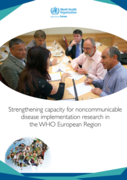
Calls for greater implementation research (IR) capacity came in the wake of compelling evidence that implementation strategies are critically important for the dissemination and facilitation of evid
...

Based on WHO South-East Asia Regional Strategy on Autism Spectrum Disorder
The collaborative framework for implementation of the “WHO South-East Asia Regional Strategy on Autism Spectrum Disorders” articulates to Member States: the nature o ...
The collaborative framework for implementation of the “WHO South-East Asia Regional Strategy on Autism Spectrum Disorders” articulates to Member States: the nature o ...

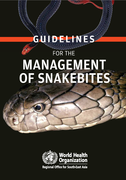
Snakebites are well-known medical emergencies in many parts of the world, especially in rural areas. Agricultural workers and children are the most affected. The incidence of snakebite mortality is particularly high in South-East Asia. Rational use
...
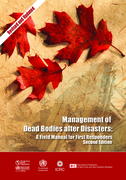
Management of Dead Bodies After Disasters: A Field Manual For First Responders. Second Edition
recommended
Proper and dignified management of the dead in disasters is one of the three key pillars of humanitarian response and a fundamental factor in facilitating identification of the deceased and helping families discover the fate of their loved ones. This second and updated edition of this hugely success
...
This report presents country, regional and global estimates of low birth weight for 2000, together with a detailed description of the methods used in calculating the estimates. Some limited data on
...
The Strategic Framework for Emergency Preparedness is a unifying framework which identifies the principles and elements of effective country health
...
This report reviews the current situation in relation to national capacity to address NCDs and the progress made at country level over the past decade. It highlights that, while progress is being made, there is still much work to be done to create t
...
The effective vaccine management (EVM) workshop, jointly organized by WHO and UNICEF, was attended by participants from 13 countries, who reviewed the various EVM benchmarks, identified the gaps in policies, guidelines, SOPs and job aids, and developed respective
...

To complement the Global Strategy progress reporting, this report provides a detailed look at country leadership and action toward the Every Newborn National Milestones by 2020. Countries have taken the initiative to show the way forward and have de
...
The WHO Quality Health Services: a planning guide focuses on actions required at the national, district and facility levels to enhance quality of health services, providing guidance on implementing
...

This template dossier complements and should be used after fulfilling the criteria and preconditions specified in the Process of validation of elimination of kala-azar as a public health problem in South-East Asia. The national kala-azar programme s
...
The results of the report clearly show that in 2020, a year dominated by the emergence of COVID-19 and its associated health and economic crises, governments around the world rose to the challenge.
...
