
Filter
1182
Text search:
World
Health
Organization
(WHO),
Kenya
Country
Office
Featured
119
269
Language
Document type
570
273
141
82
60
24
15
14
1
1
Countries / Regions
120
70
47
43
28
24
23
20
19
17
16
15
15
14
13
13
12
12
12
9
9
9
8
8
7
7
6
6
6
6
5
5
5
5
5
5
5
5
4
4
4
4
4
3
3
3
3
3
3
3
3
3
3
3
3
2
2
2
2
2
2
2
2
2
2
2
2
2
2
2
2
2
1
1
1
1
1
1
1
1
1
1
1
1
1
1
1
1
1
1
1
1
1
1
1
Authors & Publishers
Publication Years
Category
344
91
91
89
86
32
13
Toolboxes
106
102
74
69
64
50
49
41
40
35
32
25
23
22
18
17
17
16
15
10
9
5
5
4
2
1
1

Adolescence is a critical stage in life for physical, cognitive and emotional development, shaping future health and well-being. Comprehensive measurement of adolescent health is essential to priori
...

This publication is a compendium of 49 country examples highlighting efforts in improving refugees’ and migrants’ health following the adoption of the
...
This report outlines the coordination and partnership between two key ministries (Education and Public Health) in Kenya, other line ministries, the private sector, NGOs and the community in implemen
...

20 April 2022. The response to the COVID-19 pandemic continues to adversely affect essential TB services in many countries. A first report of case studies was published in 2021 comprising 23 examples of innovative interventions implemented by countries to effectively respond to disruptions of TB ser
...

This publication provides guidance for planning country-specific programming to achieve the triple elimination of mother-to-child (or vertical) transmission of HIV, syphilis and hepatitis B virus. It is based on the
...
Fact Book on WHO Level I and Level II monitoring indicators - To monitor the progress of efforts to improve the global medicines situation, WHO has developed a system of indicators that measure impo
...
The World Health Organization Regional Office for Africa (
...




The brief concludes that sustaining the continuity of EHS requires policies that ensure a whole-society and systems strengthening approach. This involves increased health care investment, community engagement, disease control regulations, and multis
...

Stigma and discrimination related to mental health conditions are widespread and harmful. Reducing stigma and discrimination can benefit families, societies and economies – it can save lives. The toolkit offers practical guidance on how to achieve
...
The WHO Framework Convention on Tobacco Control (WHO FCTC) is an evidence-based treaty that reaffirms the right of all people to the highest standard of health and was developed in response to
...

To complement the Global Strategy progress reporting, this report provides a detailed look at country leadership and action toward the Every Newborn National Milestones by 2020. Countries have taken the initiative to show the way forward and have de
...
This analytical report reviews and discusses the potential role and influence of political commitment in implementing endorsements and conducting policy in the field of tuberculosis (TB) prevention and care. It promotes discussion by comparing and analysing the extent to which selected international
...
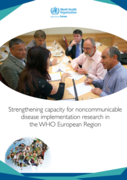
Calls for greater implementation research (IR) capacity came in the wake of compelling evidence that implementation strategies are critically important for the dissemination and facilitation of evidence-informed policies and interventions to tackle noncommunicable diseases (NCDs), thereby improving
...

The WHO End TB Strategy aims to end the global TB epidemic by 2030, in alignment with Goal 3 of the United Nations (UN) Sustainable Development Goals (SDGs). Member States of the World
...
