
Filter
522
Text search:
World
Health
Organization
(Bangladesh)
Featured
Recommendations
49
New Publications
129
Language
Document type
No document type
285
Studies & Reports
116
Guidelines
58
Manuals
32
Strategic & Response Plan
12
Training Material
7
Situation Updates
5
Fact sheets
4
Resource Platforms
2
Infographics
1
Countries / Regions
Global
49
Bangladesh
34
Nepal
16
Myanmar / Burma
15
South–East Asia Region
15
Asia
15
India
11
Ethiopia
5
Uganda
5
Philippines
5
Pakistan
4
Thailand
4
Zimbabwe
3
Syria
3
Kenya
3
Rwanda
3
Indonesia
3
Western and Central Europe
3
Africa
3
Russia
3
Liberia
2
Nigeria
2
Senegal
2
Congo, Democratic Republic of
2
Afghanistan
2
Zambia
2
Tanzania
2
Cambodia
2
China
2
South Africa
2
Malawi
2
Colombia
2
Sri Lanka
2
Latin America and the Carribbean
2
Venezuela
2
Guinea
1
Burkina Faso
1
Sierra Leone
1
Mali
1
Cameroon
1
Ghana
1
Niger
1
Haiti
1
Somalia
1
South Sudan
1
Iraq
1
Lebanon
1
Eswatini/ Swaziland
1
Brazil
1
North Macedonia
1
Ukraine
1
Yemen
1
East and Southern Africa
1
West and Central Africa
1
Middle East and North Africa
1
Other region
1
Bhutan
1
Eastern Europe
1
Mongolia
1
Authors & Publishers
Publication Years
Category
Countries
109
Women & Child Health
61
Key Resources
51
Clinical Guidelines
50
Public Health
30
Capacity Building
9
Pharmacy & Technologies
7
Toolboxes
TB
45
COVID-19
40
Disability
36
HIV
36
Planetary Health
28
Mental Health
27
Global Health Education
19
Caregiver
19
NTDs
19
Health Financing Toolbox
12
Natural Hazards
10
Refugee
10
AMR
10
Conflict
7
NCDs
7
2.0 Rapid Response
6
Polio
5
Pharmacy
5
Rapid Response
3
Social Ethics
3
Ebola & Marburg
2
Cholera
2
Zika
2
Typhoon
1
Specific Hazards
1
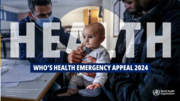
In 2024, we need US$1.5 billion to provide live-saving health care to millions of people in emergencies. An alarming combination of conflict, climate-related threats and increasing economic hardship mean an estimated 166 million people require
...

This fourth WHO report on neglected tropical diseases (NTDs) reviews the progress made towards achieving the Roadmap targets for 2020, noting the remaining challenges, then looks beyond 2020 to evaluate the changing global health and development lan
...
The Strategic Tool for Assessing Risks (STAR) offers a comprehensive, easy-to-use toolkit and approach to enable national and subnational governments to rapidly conduct a strategic and evidence-based assessment of public health risks for planning an
...
This South-East Asia Regional Strategy for Primary Health Care: 2022-2030 aims to accelerate progress in all countries of the Region towards universal health coverage (UHC),
...
Connecting global priorities: biodiversity and human health: a state of knowledge review
This manual focuses on the availability and clinical use of oxygen therapy in children in health facilities by providing the practical aspects for health workers, biomedical engineers, and administr
...
A Toolkit for Implementation. Module 5: Finalizing, monitoring and evaluating the IFC action plan
Discussion Paper "Mental health, poverty and development", July 2009
2nd edition. This new edition provides policy-makers, programme managers and health-service providers with the latest evidence-based guidance on clinical care. It includes information on how to establish and strengthen services, and outlines a human
...

Every year, around 830 000 children die from unintentional or "accidental" injuries. The vast majority of these injuries occur in low-income and middle-income countries. However, dozens of prevention strategies and programmes exist. If they were integrated into other child survival programmes and im
...

This manual provides practical guidelines for the management of children with severe malnutrition. It seeks to promote the best available therapy so as to reduce the risk of death, shorten the length of time spent in hospital, and facilitate rehabilitation and full recovery. Emphasis is given to the
...

In 2015, 5.9 million children under age five died (1). The major causes of child deaths globally are pneumonia, prematurity, intrapartum-related complications, neonatal sepsis, congenital anomalies, diarrhoea, injuries and malaria (2). Most of these diseases and conditions are at least partially cau
...
The 10 recommendations in the COP26 Special Report on Climate Change and Health propose a set of priority actions from the global health community to governments and policy makers, calling on them t
...
This template dossier complements and should be used after fulfilling the criteria and preconditions specified in the Process of validation of elimination of kala-azar as a public health problem in South-East Asia. The national kala-azar programme s
...
The Asia Pacific Observatory on Health Systems and Policies is a collaborative partnership which supports and promotes evidence-based health policy making in the Asia Pacific Region. Based in WHO’
...
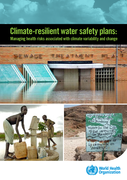
Long-term planning for an adequate and safe supply of drinking-water should be set in the context of growing external uncertainties arising from changes in the climate and environment. The water safety plan (WSP) process offers a systematic framework to manage these risks by considering the implica
...
