
Filter
457
Text search:
UNICEF,
World
Health
Organisation
(WHO)
Featured
Recommendations
35
New Publications
125
Language
Document type
No document type
278
Studies & Reports
87
Guidelines
35
Strategic & Response Plan
21
Manuals
19
Situation Updates
6
Fact sheets
6
Training Material
3
Resource Platforms
2
Countries / Regions
India
18
Sierra Leone
16
Global
16
Nepal
15
Ghana
12
Malawi
12
Nigeria
11
Kenya
10
Namibia
9
Zambia
8
Africa
8
Congo, Democratic Republic of
7
South Sudan
7
Indonesia
7
Myanmar / Burma
7
Uganda
6
Zimbabwe
6
Rwanda
6
South Africa
6
Ethiopia
5
Syria
5
Tanzania
5
Madagascar
5
East and Southern Africa
5
West and Central Africa
5
Latin America and the Carribbean
5
Senegal
4
Haiti
4
Mozambique
4
Benin
4
Burkina Faso
3
Mali
3
Côte d’Ivoire / Ivory Coast
3
Niger
3
Pakistan
3
Afghanistan
3
Central African Republic
3
Lesotho
3
Middle East and North Africa
3
Western and Central Europe
3
Guinea
2
Cameroon
2
Togo
2
Lebanon
2
Cambodia
2
China
2
Malaysia
2
Bangladesh
2
Croatia
2
Botswana
2
Sri Lanka
2
Yemen
2
South–East Asia Region
2
Asia
2
Iran
2
Vietnam
2
Japan
2
France
2
Liberia
1
Philippines
1
Jordan
1
Germany
1
Chad
1
Thailand
1
Papua New Guinea
1
Brazil
1
Serbia
1
Burundi
1
Ukraine
1
Colombia
1
Greece
1
Angola
1
Bhutan
1
Eastern Europe
1
Albania
1
Laos
1
Congo-Brazzaville
1
Timor Leste/ East Timor
1
Russia
1
Moldova
1
Kyrgyzstan
1
Gabon
1
Turkmenistan
1
Portugal
1
Spain
1
Azerbaijan
1
Bosnia and Herzegovina
1
Authors & Publishers
Publication Years
Category
Countries
176
Key Resources
44
Women & Child Health
42
Clinical Guidelines
24
Public Health
18
Capacity Building
3
Pharmacy & Technologies
3
Toolboxes
COVID-19
44
Disability
35
HIV
30
Mental Health
24
Conflict
18
Ebola & Marburg
15
Planetary Health
15
Global Health Education
13
Refugee
12
Health Financing Toolbox
11
Caregiver
10
AMR
9
Natural Hazards
7
Rapid Response
6
NTDs
5
Cholera
4
TB
4
2.0 Rapid Response
4
Pharmacy
3
NCDs
3
Polio
2
Zika
2
Specific Hazards
2
Social Ethics
2

Safe water, sanitation and hygiene (collectively known as WASH) are crucial for human health and well-being. Yet, millions of people globally lack adequate WASH services and consequently suffer from or are exposed to a multitude of preventable illne
...

A lot has happened this year. While we continued to tackle the COVID-19 pandemic, we were hit by disease outbreaks and
humanitarian crises. Yet, despite these challenges, we marched on, resolute in resolving critical health systems issues to increa
...
The introduction of vaccines for coronavirus disease 2019 (COVID-19) added another measure to the existing set of
recommended preventive measures (wearing a mask in public, keeping a distance from other people and regular handwashing). The roll-out of the vaccines, however, raised concerns that vac
...
Conflict, climate crisis and COVID-19 pose great threats to the health of women and children.

The report identifies major global gaps in WASH services: one third of health care facilities do not have what is needed to clean hands where care is provided; one in four facilities have no water services, and 10% have no sanitation services. This
...
The 2021 COVID-19 Strategic Preparedness and Response Plan (SPRP) for AFR serves as a regional guide for a holistic public health response to COVID‑19 at regional, national and sub-national levels. The 2021
SPRP:
1. Builds upon the lessons learn
...

Every year, around 830 000 children die from unintentional or "accidental" injuries. The vast majority of these injuries occur in low-income and middle-income countries. However, dozens of prevention strategies and programmes exist. If they were integrated into other child survival programmes and im
...
Over the past decade, the reduction of maternal mortality in Latin America and the Caribbean has shown signs of a marked slowdown and in some cases a reversal, jeopardizing commitments made at the global and regional levels and by the Member States themselves, including those established in the Sust
...
Fever Diagnostic Technology Landscape
recommended
1st edition.
Unitaid’s report describes a slate of new devices that can more efficiently identify dangerously ill children so that they can be treated immediately. These tools make it easier to recognize danger signs, and support integrated approaches to reducing childhood deaths from the three
...
Adolescence, defined as the period between 10 and 19 years of age, is a developmental stage during which many psychosocial and mental health challenges emerge. There is a well-established link between mental
...
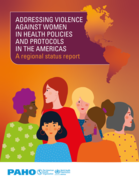
La violencia contra las mujeres y las niñas es generalizada en la Región de las Américas, y tiene enormes consecuencias para su salud y bienestar, así como el de sus familias y sus comunidades. Se trata de un costo inaceptable que puede ser prevenido mediante acciones basadas en la evidencia, pr
...
The objective of this guidance document is to support the public health professionals
in implementing effective surveillance of cholera in at-risk, endemic and epidemic
areas. This document has been developed by the Surveillance Working Group of t
...

Noma (cancrum oris) is a severe gangrenous disease of the mouth and face. It mostly affects children between the ages of 2 and 6 years living in extreme poverty. In addition to the known factors such as malnutrition, lack of vaccination in children and poor oral hygiene, several social and environme
...
Organisation mondiale de la Santé, Organisation des Nations Unies pour l’alimentation et l’agriculture & Organisation mondiale de la santé an
...
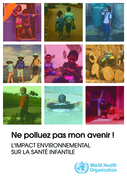
En 2015, 5,9 millions d'enfants de moins de cinq ans sont décédés (1). Les principales causes de mortalité infantile dans le monde sont la pneumonie, la prématurité, les complications durant l'accouchement, la septicémie néonatale, les anomalies congénitales, la diarrhée, les tra
...
dades infecciosas. Los antimicrobianos eficaces son imprescindibles para las medidas preventivas y curativas, para proteger a los pacientes frente a enfermedades potencialmente mortales y para garantizar que se puedan llevar a cabo procedimientos complejos, como la cirugía y la quimioterapia, con e
...

The key to a lasting world free of all forms of poliovirus lies in rapidly interrupting all remaining endemic transmission of WPV in the endemic areas of Pakistan and Afghanistan. This is the only way to ensure that such strains do not re-emerge glo
...
