
Filter
2022
Text search:
Pneumonia
Featured
241
579
Language
Document type
969
439
283
118
69
52
43
23
10
5
5
4
2
Countries
134
65
64
63
63
56
51
47
41
40
37
36
32
32
31
30
30
28
27
27
26
26
22
21
21
17
17
15
14
12
12
12
11
11
10
9
9
9
8
8
7
7
7
7
7
7
7
6
6
6
5
5
5
5
5
5
5
5
5
5
4
4
4
4
4
4
4
4
3
3
3
3
2
2
2
2
2
2
2
2
2
2
2
2
2
1
1
1
1
1
1
1
1
1
1
1
1
1
1
1
1
1
1
1
1
1
1
1
1
1
1
1
1
1
1
1
Authors & Publishers
Publication Years
Category
1025
187
170
96
77
51
22
Toolboxes
383
141
93
87
47
47
42
35
34
32
30
29
29
24
21
21
21
18
13
12
8
8
4
4
2
1
Review
Triccas and Counoupas Pneumonia (2016) 8:18; DOI 10.1186/s41479-016-0020-z

This film is the Luganda version of 'Is your child sick? Identifying signs of pneumonia, malaria and diarrhoea.' This was locally dubbed in Uganda, thanks to Royal College of Paediatrics and Child Health.
Evidence for technical update of pocket book recommendations. Newborn conditions, dysentery, pneumonia, oxygen use and delivery, common causes of fever, severe acute malnutrition and supportive care

This film is the Bemba version of our English film: Is your child sick - identifying a sick child (pneumonia, diarrhoea and malaria)
Pocket book of hospital care for children
recommended
Guidelines for the Management of common childhood Illness. 2nd edition
These guidelines focus on the management of the major causes of childhood mortality in most developing countries, such as newborn problems, pneumonia, diarrhoea, malaria, mening
...
Integrated community case management (ICCM) – an approach where community-based health workers are trained to identify, treat and refer children under-five with pneumonia, diarrhoea and malaria – is increasingly being used across sub-Saharan Afr
...
This film is a Somali language version of the English film \\\'Is your child sick? Identifying signs of sickness and diarrhoea.\\\' This piece is part of a longer film which also covers pneumonia and malaria.
This film is the Somali language version of the English film \\\'Is your child sick?\\\' The film shows how to identify signs of sickness and malaria, pneumonia and diarrhoea. Each of the topics are available as a separate film.
http://medicalaid
...

JE, MTOTO WAKO NI MGONJWA? MUDA MREFU FILAMU - KUHARISHA, NYUMONIA, MALARIA
This film is the full length version of the Is Your Child Sick? videos on pneumonia, diarrhoea and malaria. The film is aimed at community health workers, parents and com
...
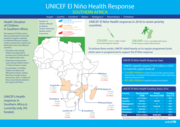
Health Situation of Children in Southern Africa
The impacts of El Niño and La Niña are expected to more than double the regular caseloads of childhood illnesses (malaria, cholera, pneumonia, measles and diarrhoea) in the most affected countri
...
Fever Diagnostic Technology Landscape
recommended
1st edition.
Unitaid’s report describes a slate of new devices that can more efficiently identify dangerously ill children so that they can be treated immediately. These tools make it easier to recognize danger signs, and support integrated approaches to reducing childhood deaths from the three
...
Screenshot of statistic data websites.
Follow the link and find Country Profiles in indonesian language on TB, Reproductive Health, Malaria, Lymphoma, Pneumonia, Hypertension and much more.
Alternative websites:
http://www.promkes.depkes.go.id/
...
The purpose of this document is to provide interim guidance to laboratories and stakeholders involved in laboratory testing of patients who meet the definition of suspected case of pneumonia associated with a novel coronavirus identified in Wuhan, C
...
On the 31st December 2019, the World Health Organization (WHO) China country office reported a cluster of pneumonia cases in Wuhan City, Hubei Province of China now known to be caused by a novel virus. Severe acute respiratory syndrome coronavirus 2
...
Methicillin-resistant Staphylococcus aureus(MRSA) strainsor multidrug-resistant S.aureus, initially described in 1960s,emerged in the last decade as a cause of nosocomial infections responsible for rapidly progressive, potential fatal diseases including life-threatening
...
Antibiotics, also known as antimicrobial drugs, are medicines that can kill or inhibit the growth of bacteria to cure infections in people, animals and sometimes plants. Antibiotics are medicines for bacterial infections (such as pneumococcal pneumonia
...
On 31st December 2019, the World Health Organization (WHO) China Country Office was informed of cases of pneumonia of unknown etiology (unknown cause) detected in Wuhan City, Hubei Province of China. On 7th January 2020, Chinese authorities identifi
...
First published in 2020, this toolkit is intended for clinicians working in acute care, managing adult and paediatric patients with acute respiratory infection, including severe pneumonia, acute respiratory distress syndrome, sepsis and septic shock
...
In 2015, 5.9 million children under age five died (1). The major causes of child deaths globally are pneumonia, prematurity, intrapartum-related complications, neonatal sepsis, congenital anomalies, diarrhoea, injuries and malaria (2). Most of these
...
Last accessed on 21.12.22
IPCHS is a new concept for Zambia and has been implemented in limited proportions. The WHO global strategy on IPCHS reported that in Zambia there is limited focus on integrated community case management for malaria, pneumonia
...
