
Filter
131
Text search:
Nepal
Disabled
Human
Rights
Centre
Featured
Recommendations
13
New Publications
30
Language
Document type
No document type
99
Studies & Reports
11
Manuals
9
Guidelines
9
Training Material
2
Strategic & Response Plan
1
Countries / Regions
Nepal
22
India
9
Bangladesh
5
Indonesia
4
Global
4
Uganda
3
Philippines
3
Myanmar / Burma
3
Ethiopia
2
Ghana
2
Haiti
2
Syria
2
Thailand
2
Vietnam
2
Zimbabwe
1
Pakistan
1
Lebanon
1
Zambia
1
Tanzania
1
Malawi
1
Yemen
1
South–East Asia Region
1
Laos
1
Authors & Publishers
Publication Years
Category
Countries
35
Key Resources
18
Clinical Guidelines
6
Public Health
5
Women & Child Health
5
Capacity Building
2
Toolboxes
Disability
63
Mental Health
11
NTDs
7
Conflict
6
Natural Hazards
6
Refugee
3
Specific Hazards
3
COVID-19
3
Global Health Education
2
Pharmacy
2
Ebola & Marburg
1
Typhoon
1
Rapid Response
1
HIV
1
TB
1
Caregiver
1
Planetary Health
1
Malaria
1

An estimated 1.3 billion people – or 16% of global population worldwide – experience a significant disability today. Persons with disabilities have the right to the highest attainable standard of health as those without disabilities. However, the WHO Global report on health equity for persons w
...
For close to 15 years, the Monitor has tracked the impact of victim assistance on the lives of victims of landmines, cluster munitions,
and other explosive remnants of war (hereafter “mine/ERW victims”). Over this time, the international communi
...
Non-discrimination disability and ethnic rights
This study examines over 20 years of CBR implementation in Nepal. It includes an overview of CBR interventions, provides analysis of approaches and activities in terms of impact and sustainability and makes recommendations for future developments in
...
This publication explores how housing, land and property rights issues have been addressed in peace agreements concluded over the past three decades. It provides practical guidance for peace negotiators on all sides in Myanmar and outlines how addre
...
This document provides a guidance on the importance of consulting with children with disabilities. It provides practical suggestions for consulting with children and young people with disabilities in a variety of situations. It aims to equip individuals working on child
...
VADEMECUM | This Vademecum is intended to provide a benchmark for aid workers—whether working in the field or at a strategic level—in particular concerning the formulation and implementation of programmes of prevention or response to humanitarian crises. It is not solely a theoretical document b
...
Embracing Diversity: Toolkit for Creating Inclusive, Learning-Friendly Environments Specialized Booklet 3
The Minimum Standards for Age and Disability Inclusion in Humanitarian Action inform the design, implementation, monitoring and evaluation of humanitarian programmes across all sectors and phases of response, and in all emergency contexts, ensuring older people and people with disabilities are not e
...
Nepal: Urban Housing Sector Profile
recommended
Based on research by a team of Nepalese and international experts, this report carries an analysis of the five key elements in the sector - land, basic services, housing finance, building materials and construction technologies, and labour. It gives an assessment
of how these components are governe
...
Workshop on PHC Revitalisation in Nepal, April 5-6, 2010
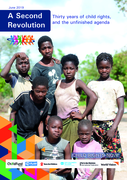
The report showed commitments made three decades ago to protect the rights of children remain unfulfilled for millions. Violence still affects countless children. Discrimination based on age, gender, disability, sexual orientation and religion harms
...

In April and May 2015, Nepal was hit by two major earthquakes killing around 9,000 people and leaving many thousands more injured and homeless.
To optimize the speed and volume of critical humanitarian assistance, the HCT has developed this Pla ...
To optimize the speed and volume of critical humanitarian assistance, the HCT has developed this Pla ...
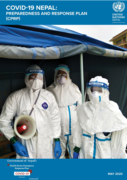
The COVID-19 pandemic is having far reaching impacts, well beyond the health crisis and needs, with the most severe impacts experienced in the poorest countries and those most vulnerable to humanitarian crises including natural disasters, such as Nepal
...
Experience from Save the Children and partners globally
demonstrates that improvements in education quality go hand-in-hand
with inclusion and access, Flexible, quality, responsive learning
environments will benefit all children and are fundamental to including
marginalised groups like
...
