
Filter
289
Text search:
Chikungunya
Fever
Featured
41
119
Language
Document type
136
44
34
20
15
12
9
6
6
5
1
1
Countries
25
12
12
11
8
7
6
5
4
4
3
3
2
2
2
2
2
2
2
1
1
1
1
1
1
1
1
1
1
1
1
1
1
1
1
1
1
1
1
1
1
1
1
1
Authors & Publishers
Publication Years
Category
62
35
25
10
8
3
1
Toolboxes
94
70
19
16
15
11
10
6
4
4
2
2
1
1
1
1
1
1
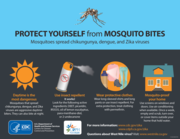
The poster is a public health communication tool designed to prevent the transmission of diseases such as chikungunya, dengue and Zika. The poster emphasises that Aedes mosquitoes bite aggressively during the day and sometimes at night, and recommen
...
Issue Brief: Neglected Tropical Diseases Part 2
recommended
In this subsequent part of the issue brief on the NTD Toolbox you will learn about general strategies, roadmaps, key
treatment guidelines, reports, and training material on Dengue & Chikungunya, Human African Trypanosomiasis and
Leprosy.
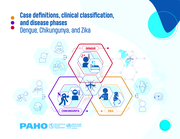
The purpose of this document is to present concise information on the current case definitions for dengue, chikungunya, and Zika proposed by PAHO, as well as information on the clinical phases and severity classification of dengue and
...
Health communication has proven to play a crucial role in addressing diseases such as dengue, Zika and chikungunya, for which there are no definitive or easily accessible vaccines. In this context, this discipline becomes a fundamental tool to promo
...
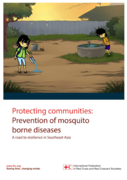
This comic book is a children-friendly tool to support school safety, to raise awareness and prevention of mosquito-borne diseases such as dengue, zika and chikungunya, with the key messages: clean up, cover up and keep it up.
Available in Lao, Khm
...
PLOS One November 20, 2020 https://doi.org/10.1371/journal.pone.0241799 . The first autochthonous case of chikungunya virus (CHIKV) infection in Brazil was in September 2014 in the State of Amapá, and from there it rapidly spread across the country
...
PLoS Neglected Tropical Diseases https://doi.org/10.1371/journal.pntd.0004762
This study shows the importance of an integrated entomological and medical surveillance for the evaluation of arboviral disease risk, which is a precondition for designing cost-effective vector control programs.
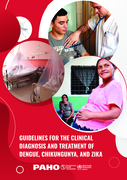
Evidence-based guidelines are one of the most useful tools for improving public health and clinical practice. Their purpose is to formulate interventions based on strong evidence of efficacy, avoid unnecessary risks, use resources efficiently, reduce clinical variability and, in essence, improve hea
...

Armed Forces Pest Management Board Technical Guide No. 47
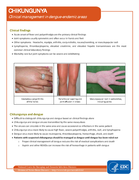
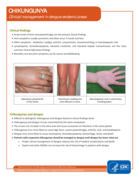
Clinical Management in dengue-endemic areas


Guía Nacional para el Manejo de la Enfermedad por el Virus de la Chikungunya
In the battle against diseases like Zika and dengue, knowledge is power. Climate change is shifting the
distribution of mosquitoes and to new areas. Empowering communities is essential in reaching and pro-
tecting the most vulnerable individuals and households. Vector control programmes, community
...
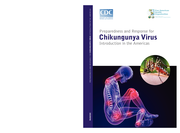
These guidelines provide guidance on how to detect an outbreak of the disease, conduct pertinent epidemiological investigations, and prevent or mitigate the spread of the disease throughout the Region. We encourage everyone working to apply these guidelines to take into account all the knowledge ava
...
This country profile presents a summary and analysis of Argentina's status with yellow fever. It is part of a series of profiles on this topic, each focusing on a different country in the Region of the Americas. Argentina's geographical location pre
...
July 2016
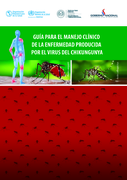
Revised and expanded version of the Guidelines
