
Filter
2209
Text search:
Breastfeeding
Featured
231
767
Language
Document type
1343
276
236
89
74
65
61
22
12
11
10
5
1
1
Countries
144
96
84
67
66
63
62
54
50
49
48
47
46
42
41
36
36
27
24
22
21
19
19
19
17
17
15
15
15
15
14
13
11
11
10
9
9
8
8
7
7
7
7
7
6
6
6
6
6
5
5
5
5
4
4
4
4
4
3
3
3
3
3
3
3
3
3
3
3
3
2
2
2
2
2
2
1
1
1
1
1
1
1
1
1
1
1
1
1
1
1
1
1
1
1
1
1
1
Authors & Publishers
Publication Years
Category
1176
309
192
76
70
70
2
Toolboxes
142
118
91
58
56
48
47
33
31
30
28
27
26
22
22
19
18
16
15
12
8
7
6
6
1
1
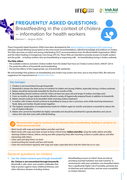
These Frequently Asked Questions (FAQs) have been developed by the Infant Feeding in Emergencies (IFE) Core Group Infectious Disease Working Group based on the most recent recommendations, collective knowledge and evidence on cholera. The FAQs also draw on infant and young child feeding (IYCF) recom
...
Swahili language version of the film for Breastfeeding (0 to 6 months).Aimed at community health workers to help facilitate training on nutrition to communities and other health workers.
Translation courtesy of Yussuf Hamad
The way a mother holds her baby affects how easy it is for her baby to feed effectively. This video shows basic points important for any position and then demonstrates several common positions that have worked well for many mothers and babies.
Within the first few hours after birth, most healthy newborns will instinctively move to their mother’s breast and attach on their own. This video shows early breastfeeding initiation through the journeys of 3 newborns and ways to support the prac
...
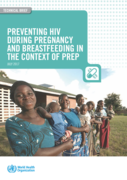
Technical Brief
July 2017
Accessed: 02.04.2020
Accessed: 01.05.2020
Breastmilk is the best source of nutrition for infants, including infants whose mothers have confirmed or suspected coronavirus infection. As long as an infected mother takes appropriate precautions—outlined below—she can breastfeed her baby. Breastmilk contains antibodie
...
Link from the Q&A for the general population
Although there are currently no data showing that COVID-19 affects pregnant people differently than others, we do know that pregnant people are at greater risk of getting sick from other respiratory viruses than people who are not pregnant. Sometimes, this causes adverse outcomes for the mother or c
...
Women and children, especially pregnant girls and women, infants and young children and postpartum women, are populations that are extremely vulnerable in emergencies. Breastfeeding provides children with hydration, comfort, connection, high quality
...
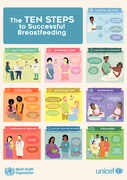
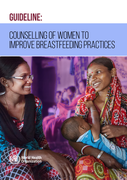
This guideline examines the evidence and makes recommendations and remarks on the implementation of some of the details of breastfeeding counselling, such as frequency, timing, mode and provider of breastf
...
Guidelines for the management of pregnant and breastfeeding women in the context of Ebola virus disease
recommended
To save the lives of mothers and their babies, mitigate complications, and limit the spread of disease, it is critical that recommendations are made on the prevention, treatment, and surveillance of women who are exposed to EVD, acquire EVD during pregnancy or
...
Bulletin of the World Health Organization; http://dx.doi.org/10.2471/BLT.16.176677

COVID-19 Vaccines: 1 Safety Surveillance 2 Manual
While there is no indication that pregnant women have an increased susceptibility to infection with SARS-CoV-2, there is evidence that pregnancy may increase the risk of severe illness and mortality from COVID-19 disease in comparison with non-pregn
...
July 2023 version .The 2023 ART guideline introduces simplified ART provision and harmonised methods of management of children, adolescents and adults, as well as pregnant women living with HIV/AIDS, TB and other common opportunistic infections.
The guidelines also provide guidance on the use of D
...
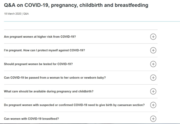
The advice is presented in a Q&A format, addressing the following questions:
Are pregnant women at higher risk from COVID-19?
I’m pregnant. How can I protect myself against COVID-19?
Should pregnant women be tested for COVID-19?
Can COVID-19 be passed from a woman to her unborn or newborn ba
...
