
Filter
135
Text search:
ACF
International
Network
Featured
Recommendations
17
New Publications
66
Language
Document type
No document type
97
Strategic & Response Plan
10
Studies & Reports
8
Guidelines
8
Manuals
7
Situation Updates
3
Fact sheets
2
Countries / Regions
Myanmar / Burma
14
Nepal
8
Bangladesh
8
Sierra Leone
7
Syria
6
Madagascar
5
Global
5
Liberia
4
Nigeria
3
Jordan
3
Congo, Democratic Republic of
2
Uganda
2
Zimbabwe
2
Haiti
2
India
2
Lebanon
2
Ukraine
2
Yemen
2
South–East Asia Region
2
Eastern Europe
2
Guinea
1
Burkina Faso
1
Niger
1
Philippines
1
Iraq
1
Zambia
1
Turkey
1
Kenya
1
Indonesia
1
Mozambique
1
Eswatini/ Swaziland
1
Colombia
1
West and Central Africa
1
Western Pacific Region
1
Western and Central Europe
1
Asia
1
Timor Leste/ East Timor
1
Tajikistan
1
Georgia
1
Vietnam
1
Authors & Publishers
Publication Years
Category
Countries
55
Key Resources
39
Women & Child Health
14
Public Health
3
Clinical Guidelines
3
Toolboxes
Conflict
11
TB
11
Mental Health
7
Ebola & Marburg
6
Rapid Response
5
COVID-19
5
Natural Hazards
4
Planetary Health
4
Cholera
3
HIV
3
Disability
2
Global Health Education
2
2.0 Rapid Response
2
Refugee
1
Caregiver
1
NTDs
1
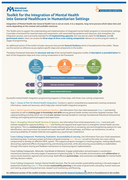
This Toolkit aims to support the understanding and implementation of integrated mental health programs in humanitarian settings. It provides a framework for essential steps and components, with associated key guidance and resources, that strengthen the integration process, and is primarily intended
...
A discussion paper on the scope of the problem, its drivers, and strategies for moving forward for policy, practice, and research
In many protracted emergencies, the prevalence rates of global acute malnutrition (GAM) regularly exceed the emergency threshold of > 15% of children with acute malnutri
...
The Minimum Standards for Age and Disability Inclusion in Humanitarian Action inform the design, implementation, monitoring and evaluation of humanitarian programmes across all sectors and phases of response, and in all emergency contexts, ensuring older people and people with disabilities are not e
...
This operation update provides a summary of key results achieved against the IFRC Syria Complex Emergency Plan of Action covering 13-month period, from 1 June 2019 to 30 June 2020.

These Frequently Asked Questions (FAQs) have been developed by the Infant Feeding in Emergencies (IFE) Core Group Infectious Disease Working Group based on the most recent recommendations, collective knowledge and evidence on cholera. The FAQs also draw on infant and young child feeding (IYCF) recom
...

Ces questions fréquemment posées (FAQs) ont été élaborées par le Groupe de travail sur les maladies infectieuses du Groupe l'alimentation central sur des nourrissons en situation d'urgence (IFE) en se basant sur les recommandations les plus récentes, les connaissances collectives et les donnÃ
...
Services, Identified needs and recommendations following the April and May 2015 Earthquakes in Nepal
This review of the IFRC support to the Sierra Leone Red Cross Society response to the 2012 cholera outbreak provides ideas and concepts to promote a more coherent and evidence based rationale on how to make more effective use of IFRC global assets to stop, control, mitigate and respond to cholera ep
...

Mapping actions of nongovernmental organizations and other international development organizations

A paper presented at the 10th International Congress on Infectious Disease, Singapore
This document is written for local and international staff running nutrition programmes in emergencies, and for local, regional and national authorities and donors involved in such programmes.
The note explains why nutrition programmes need to inc
...
The emergency Water, Sanitation and Hygiene Promotion (WASH) gap analysis project was funded by The Humanitarian Innovation Fund (HIF), a program managed by Enhancing Learning and Research for Humanitarian Assistance (ELRHA) in partnership with the Active Learning
...
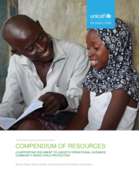
For applying the new operational guidance on CB-MHPSS in the field, UNICEF country offices and partners will need ready access to tools and resources that can be used to implement the programs. By bringing together resources from different contexts, the compendium makes options available to country
...
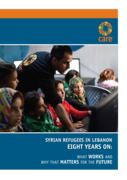
This publication includes quotes from various respondents interviewed in Tripoli, Akkar and Beirut. We focused on three main questions: How are the relations between refugees and Lebanese? How are refugees faring in the job market? Which concrete initiatives have already demonstrated positive impact
...
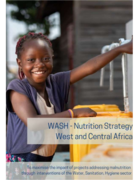
This document was prepared by UNICEF Regional Office for West and Central Africa, under the leadership of Christophe Valingot and the review of Joachim Peeters (WASH Specialist) and Arnaud Laillou (Nutrition Specialist), on behalf of the WASH Regional Group and the Nutrition Regional Group.
This
...
