
Filter
6434
Text search:
National
HIV
Featured
Recommendations
539
New Publications
1855
Language
Document type
No document type
4098
Studies & Reports
910
Guidelines
690
Manuals
240
Strategic & Response Plan
195
Fact sheets
120
Training Material
88
Situation Updates
39
Infographics
24
Resource Platforms
17
Brochures
9
Online Courses
2
App
1
Countries / Regions
India
325
Kenya
247
South Africa
201
Global
197
Uganda
156
Ethiopia
155
Malawi
152
Nigeria
147
Tanzania
143
Nepal
137
Zambia
137
Sierra Leone
114
Rwanda
112
Liberia
108
Namibia
103
Western and Central Europe
100
Bangladesh
86
Africa
86
Ghana
83
Myanmar / Burma
78
Lesotho
74
Zimbabwe
72
Senegal
68
Congo, Democratic Republic of
68
Ukraine
67
Eastern Europe
63
Latin America and the Carribbean
62
Indonesia
59
Mozambique
54
Philippines
51
Cambodia
49
Asia
46
Haiti
42
Burkina Faso
38
Botswana
36
Russia
33
South–East Asia Region
30
South Sudan
29
Eswatini/ Swaziland
29
East and Southern Africa
26
Guinea
25
Cameroon
25
Germany
23
Brazil
23
Venezuela
23
Syria
21
Colombia
20
Benin
18
West and Central Africa
17
Central African Republic
15
Madagascar
15
Tajikistan
15
Pakistan
14
Albania
14
Vietnam
13
Argentina
12
Middle East and North Africa
12
Eastern Europe and Central Asia
12
Georgia
11
Somalia
10
Papua New Guinea
10
Moldova
10
North Macedonia
9
Jordan
8
Thailand
8
Sudan
8
Paraguay
8
Afghanistan
7
Lebanon
7
Yemen
7
Southern Africa
7
Mali
6
Burundi
6
Peru
5
Ecuador
5
El Salvador
5
Armenia
5
Laos
5
Timor Leste/ East Timor
5
Côte d’Ivoire / Ivory Coast
4
Niger
4
Iraq
4
Angola
4
Sri Lanka
4
Western Pacific Region
4
Iran
4
USA
3
Togo
3
Turkey
3
China
3
Switzerland
3
Serbia
3
Hungary
3
Mexico
3
Poland
3
Estonia
3
Romania
3
Uzbekistan
3
North America
3
Jamaica
3
United Kingdom
3
Portugal
3
Morocco
2
Saudi Arabia
2
Egypt
2
Chad
2
Gambia
2
Honduras
2
Bolivia
2
Greece
2
Chile
2
Bhutan
2
Palestine
2
Qatar
2
Bulgaria
2
Kyrgyzstan
2
Turkmenistan
2
Japan
2
Mauritius
2
Spain
2
Guinea-Bissau
1
Singapore
1
Croatia
1
Libya
1
Other region
1
Solomon Islands
1
North Korea
1
Italy
1
Djibouti
1
Canada
1
Slovakia
1
Kazakhstan
1
Gabon
1
Belgium
1
France
1
Tunisia
1
Norway
1
Azerbaijan
1
Belarus
1
Israel
1
Bosnia and Herzegovina
1
Authors & Publishers
Publication Years
Category
Countries
2927
Clinical Guidelines
449
Women & Child Health
341
Key Resources
236
Public Health
229
Capacity Building
117
Pharmacy & Technologies
52
Annual Report MEDBOX
1
Toolboxes
HIV
1010
TB
631
COVID-19
301
Mental Health
254
Caregiver
166
AMR
150
Disability
117
Ebola & Marburg
106
Conflict
104
NTDs
96
Pharmacy
92
Global Health Education
88
Refugee
79
Health Financing Toolbox
79
Rapid Response
74
NCDs
60
Planetary Health
58
Malaria
49
Natural Hazards
41
Cholera
29
2.0 Rapid Response
27
Polio
26
Zika
18
Social Ethics
11
Specific Hazards
5
South Sudan
1
Typhoon
1
Humanitarian emergencies result in a breakdown of critical health-care services and often make vulnerable communities dependent on external agencies for care. In resource-constrained settings, this may occur against a backdrop of extreme poverty, malnutrition, insecurity, low literacy and poor infra
...
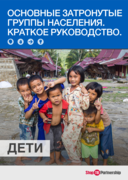
Очень часто дети это уязвимая под-группа внутри уже уязвимых групп населения. Поэтому необходимо, чтобы политики, гражданское общество и медицинские работники без
...
African Health Sciences 2013; 13(2): 219 - 232 http://dx.doi.org/10.4314/ahs.v13i2.4

According to the United Nations, Yemen has been the "Worst humanitarian crisis in the world," for the past two years. Despite the Hudaydah Agreement signed in December 2018, the fighting continued in many areas of the country, such as Hajjah in the north, Al Dhale' e in the south and Hudaydah along
...

Journal of Infectious Diseases and Therapeutics, 2013, 1, 17-24

WHY THIS GUIDE?
Because, in the face of crises and emergencies, it is vital to include a human rights perspective in responses. Vulnerable groups face major obstacles to accessing and benefiting from prevention, mitigation, and health care policies due to structural barriers of inequality. To offer
...

Interim rapid response guidance, 10 June 2022.
It includes considerations for certain populations such as patients with mild disease with considerations for community care, patients with moderate to severe disease, sexually active persons, pregnant or breastfeeding women, children and young persons
...

This report assesses the impact of the conflict in Ukraine and its implications for organized crime and security-related issues for neighbouring countries, with a focus on Moldova.
These include:
Organized crime and illicit trafficking (including trafficking in persons, drugs, arms, illicit toba
...
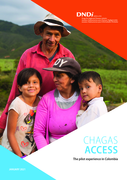
Over 6 million people worldwide are infected with Trypanosoma cruzi, the protozoan that causes Chagas disease. Endemic in 21 Latin American countries, the disease can be transmitted by vector insects called triatomines — also known as “kissing bugs” —, foods or beverages contaminated with th
...

In 2012, all Member States of the World Health Organization (WHO) endorsed a historical target to reduce premature mortality from noncommunicable diseases
(NCD). This commitment was echoed in 2015 by the United Nations Sustainable Development Goals, which included a target to reduce premature morta
...
The ICAT is a simple and practical approach for assessing the adequacy of existing infection prevention and control practices and provides specific recommendations for improving practices and monitoring their effectiveness over time
These Guidelines comprise a General Guidelines document that provides the basic parameters of DG ECHO humanitarian health assistance, complemented by specific Technical Guidance in annex.
Undernutrition increases the risk of tuberculosis (TB) and in turn TB can lead to malnutrition. Undernutrition is therefore highly prevalent among people with TB. It has been demonstrated that undernutrition is a risk factor for progression from TB infection to active TB disease and that undernutrit
...
Investigación original / Original research
Panam Salud Publica. 2016;39(1):38–43.
J Bras Pneumol. 2022;48(2):e20220082
The spread of Severe Acute Respiratory Syndrome - Coronavirus 2 (SARS-CoV-2) continues to progress, causing damage in several countries of the world due to its rapid transmissibility and significant mortality rates, despite government measures to contain its tra
...
PLOS ONE | DOI:10.1371/journal.pone.0133869 July 28, 2015, p.1-16
