
Filter
3899
Text search:
childhood
Featured
Recommendations
295
New Publications
1048
Language
Document type
No document type
2481
Studies & Reports
592
Guidelines
351
Manuals
150
Strategic & Response Plan
101
Training Material
88
Fact sheets
67
Situation Updates
22
Infographics
22
Resource Platforms
13
Brochures
9
Online Courses
2
App
1
Countries / Regions
India
195
Global
179
Kenya
131
Nepal
107
Uganda
90
South Africa
82
Rwanda
78
Ethiopia
75
Malawi
74
Nigeria
70
Tanzania
67
Bangladesh
64
Sierra Leone
62
Africa
60
Zambia
59
Liberia
53
Western and Central Europe
51
Namibia
50
Ghana
49
Myanmar / Burma
48
Latin America and the Carribbean
44
Lesotho
42
Philippines
41
Indonesia
36
Russia
36
Syria
35
Zimbabwe
30
Senegal
28
Cambodia
28
Ukraine
28
Mozambique
25
South–East Asia Region
23
Eastern Europe
23
South Sudan
21
Eastern Europe and Central Asia
19
Haiti
18
Burkina Faso
17
Congo, Democratic Republic of
16
Germany
16
Asia
16
Botswana
15
Eswatini/ Swaziland
14
Paraguay
14
Cameroon
12
Pakistan
12
Yemen
12
Venezuela
12
Lebanon
11
Brazil
11
Colombia
11
Middle East and North Africa
11
Guinea
9
Jordan
9
Afghanistan
9
West and Central Africa
9
Somalia
8
Sudan
8
East and Southern Africa
8
Benin
7
Thailand
6
Papua New Guinea
6
Tajikistan
6
USA
5
Iraq
5
China
5
Chile
5
Albania
5
Mali
4
Turkey
4
Argentina
4
Mexico
4
Western Pacific Region
4
Central African Republic
3
Madagascar
3
Sri Lanka
3
Palestine
3
Iran
3
Kyrgyzstan
3
Vietnam
3
Saudi Arabia
2
Egypt
2
El Salvador
2
Greece
2
Libya
2
Angola
2
Guatemala
2
Canada
2
Timor Leste/ East Timor
2
Estonia
2
Kazakhstan
2
North America
2
Jamaica
2
Japan
2
Portugal
2
Spain
2
Belarus
2
Côte d’Ivoire / Ivory Coast
1
Niger
1
Togo
1
Gambia
1
Ireland
1
Peru
1
North Macedonia
1
Serbia
1
Hungary
1
Croatia
1
Burundi
1
Honduras
1
Ecuador
1
Bolivia
1
Nicaragua
1
Other region
1
Bhutan
1
Djibouti
1
Southern Africa
1
Laos
1
Qatar
1
Georgia
1
Turkmenistan
1
Mauritius
1
United Kingdom
1
Azerbaijan
1
Israel
1
Bosnia and Herzegovina
1
Authors & Publishers
Publication Years
Category
Countries
1665
Women & Child Health
356
Clinical Guidelines
308
Public Health
218
Key Resources
117
Capacity Building
77
Pharmacy & Technologies
12
Annual Report MEDBOX
1
Toolboxes
Mental Health
518
Disability
264
TB
202
COVID-19
174
HIV
148
NCDs
119
Caregiver
101
Planetary Health
98
Conflict
94
Refugee
86
Global Health Education
67
NTDs
66
Malaria
42
AMR
39
Ebola & Marburg
36
Pharmacy
35
Health Financing Toolbox
27
Rapid Response
25
Natural Hazards
23
Polio
20
Cholera
15
Zika
10
Social Ethics
7
Specific Hazards
6
2.0 Rapid Response
6

Breastfeeding is a cornerstone of healthy infant nutrition, development and survival. It is critical for countries* to improve breastfeeding rates in order to achieve global targets for newborn and child health and survival, as well as economic growth and environmental sustainability
More than a quarter of the global population still cook meals over open fires and/or on simple stoves fuelled by firewood, agricultural waste, dried dung, charcoal, and coal. This practice results in the emission of harmful and dangerously high levels of household air pollution.
Exposure to this h
...
Effective surveillance and monitoring of noncommunicable diseases (NCDs) and their risk factors are essential for informing evidence-based public health policies, addressing health inequities, and ensuring progress toward global and regional targets. By tracking trends in NCDs, their modifiable risk
...
Las enfermedades no transmisibles (ENT), entre las que se incluyen lasenfermedades cardiovasculares (ECV), el cáncer, las enfermedades respiratoriascrónicas (ERC) y la diabetes, son las principales causas de muerte y discapacidaden la Región de las Américas. En el 2021, las ENT ocasionaron 6 mil
...

Tuberculosis (TB) remains a significant global health challenge, with an estimated annual death rate of approximately one per 100,000 people in countries with low TB prevalence. Rapid reductions in TB cases and deaths worldwide depend on research breakthroughs, including the development of new vac
...

Non-Communicable Diseases (NCDs) have emerged as conditions of great public health concern in Kenya accounting for 39% of deaths annually. The Ministry of Health through the Department of Non-Communicable Diseases has adopted the vision of achieving a nation free from preventable burden of NCDs. Fur
...

In the absence of a such a measure, and building on the success of developing the APCA African
Palliative Outcome Scale (POS) for adults, the African Palliative Care Association has developed the
APCA African Children’s POS. The tool has been validated across diseases, countries, settings and
...

Drawing on the World Health Organization’s package of NCD best buys, the report demonstrates how these evidence-based measures can help countries reduce premature deaths, strengthen health systems, and advance progress towards the Sustainable Development Goals. It provides policymakers, donors, ad
...

WHO, as the coordinating authority on international health, supports countries in protecting public health through evidence-based policies and actions. Considering the significant health burden and the multiple potential benefits of interventions, the WHO Air Quality, Energy and Health Unit aims to
...

Lesotho’s Social and Behaviour Change Communication Strategy is a strategic response to the high levels of HIV and TB prevalence in the country that are exacerbated by the persistence of structural and sio-economic difficulties, such as poverty, unemployment, gender inequality and more. This strat
...

On Global Handwashing Day, WHO and UNICEF have released the first-ever global Guidelines on Hand Hygiene in Community Settings to support governments and practitioners in promoting effective hand hygiene outside health care – across households, public spaces and institutions. Framing hand hygiene
...

These Frequently Asked Questions (FAQs) have been developed by the Infant Feeding in Emergencies (IFE) Core Group Infectious Disease Working Group based on the most recent recommendations, collective knowledge and evidence on cholera. The FAQs also draw on infant and young child feeding (IYCF) recom
...

Ces questions fréquemment posées (FAQs) ont été élaborées par le Groupe de travail sur les maladies infectieuses du Groupe l'alimentation central sur des nourrissons en situation d'urgence (IFE) en se basant sur les recommandations les plus récentes, les connaissances collectives et les donnÃ
...

The Best Buys for Disease Elimination is a practical, evidence-based guide to the most effective actions for countries to implement in order to eliminate communicable diseases. The guide highlights the efficient use of resources and prioritizing populations in vulnerable situations.
“The Region
...

This plan, approved by the Organization’s 62nd Directing Council, was shaped by extensive consultations with countries and stakeholders, and commits to transformative health outcomes over the next six years, tackling noncommunicable diseases (NCDs), mental health, health security, fragmented healt
...

These guidelines, produced in 2022 by the Uganda Ministry of Health, provide guidance on the diagnosis of HIV, the care of people living with HIV, and the use of antiretroviral drugs for treating and preventing HIV infection, including injectable cabotegravir and the dapivirine vaginal ring.
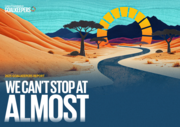
We can't stop at almost. 2025 Goalkeeper Report
recommended
2025 is the first year of this century where child deaths will increase.
But we can stop this reversal before it becomes a trend, even in a time of tight budgets.
With proven solutions and next-generation innovations that do more with less, we can save millions of children's lives, protect the pro
...

World malaria report 2025
recommended
Addressing the threat of antimalarial drug resistance. This year’s report spotlights the growing threat of antimalarial drug resistance. Partial resistance to artemisinin derivatives – the backbone of malaria treatments after failures of chloroquine and sulfadoxine-pyrimethamine – has now b
...
Measles is one of the most contagious diseases for humans. It is caused by a paramyxovirus virus, manifesting as a febrile rash illness. The incubation period for measles usually is 10–14 days (range 7–23 days) from exposure to symptom onset. Initial symptoms (prodrome) generally consist of feve
...
