Filter
1353
Text search:
facility
births
Featured
81
567
Language
Document type
1001
161
84
44
30
13
7
5
3
3
1
1
Countries
95
87
67
67
64
55
54
51
50
46
45
41
35
34
33
28
22
21
20
19
19
18
17
15
13
12
11
11
9
9
8
7
7
6
6
6
6
5
5
4
4
4
3
3
3
3
2
2
2
2
2
2
2
1
1
1
1
1
1
1
1
1
1
1
1
1
1
1
1
1
1
1
1
1
Authors & Publishers
Publication Years
Category
987
148
59
45
45
31
2
Toolboxes
38
32
20
20
19
19
14
12
12
11
10
10
8
8
6
5
3
2
2
1
1
1
1

Rwanda’s mountainous topography makes ground transportation of medical supplies unreliable — some roads stretching into rural areas remain uncared for and unpaved. Between 25 and 40 per cent of all temperature-sensitive medical supplies sent from urban centres to rural health clinics are wasted
...

Progress report and road map. Countries included in this report: Algeria, Afghanistan, Bahrain, Djibouti, Egypt, the Islamic Republic of Iran, Iraq, Jordan, Kuwait, Lebanon, Libya, Morocco, Oman, Pakistan, Qatar, State of Palestine, Saudi Arabia, Somalia, Sudan, the Syrian Arab Republic, Tunisia, Un
...

Indicators and questions to monitor progress towards the Global AIDS Strategy 2026-2031 targets
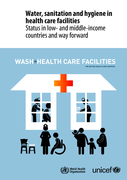
This report presents, for the first time, a global assessment of the extent to which health care facilities provide essential water, sanitation and hygiene (WASH) services. Drawing on data from 54 low- and middle-income countries, the report concludes that 38% lack access to even rudimentary levels
...
Lancet Glob Health 2015; 3: e396–409. Open Access
District Level M & E Training and Reference Material for Primary Health Care Programmes
DHS Comparative Reports No. 41
Building on Nigeria’s Call to Action to Save Newborn Lives, the Federal Ministry of Health (FMoH) has developed the National Strategy and Implementation Plan for Scale-up of Chlorhexidine. The Ministry incorporated existing maternal, newborn, and child health plans with additional comprehensive st
...

14 January 2021
This practical guide can be used to help countries monitor and analyse the impact of COVID-19 on essential health services to inform planning and decision-making. It provides practical recommendations on how to use key performance indicators to analyse changes in access to and deliv
...
The survey highlights changes that have taken place in Bangladesh’s demographic and health situation since the previous BDHS surveys. The survey provides important information for policymakers and program personnel in addressing the monitoring and evaluation needs of the 4th Health, Population and
...
The 2018 NDHS is a national sample survey that provides up-to-date information on demographic and health indicators. The sample was selected using a stratified, two-stage cluster design, with enumeration areas (EAs) as the sampling units for the first stage. The second stage was a complete listing o
...
Volume I, 2005-06