
Filter
2178
Text search:
ethiopia
Featured
160
511
Language
2048
82
32
31
23
20
12
10
8
6
5
4
3
2
2
2
2
2
2
2
2
1
1
1
1
1
1
1
1
1
1
1
1
1
1
1
1
1
1
1
1
1
1
1
Document type
1077
605
161
93
89
62
41
21
12
11
2
2
1
1
Countries / Regions
398
148
101
95
57
46
46
41
40
40
39
37
36
35
32
31
30
28
27
27
26
23
23
21
21
20
18
17
16
16
15
15
14
14
14
13
13
12
11
10
10
9
9
9
9
8
8
8
8
8
7
7
6
6
5
5
5
5
4
4
4
4
4
4
4
4
4
3
3
3
3
3
3
3
3
2
2
2
2
2
2
2
2
2
2
2
1
1
1
1
1
1
1
1
1
1
1
1
1
1
1
1
1
1
1
1
1
1
1
1
Authors & Publishers
250
104
82
56
51
43
40
40
36
33
28
24
23
21
19
18
15
14
14
13
13
12
12
12
12
12
12
12
11
11
11
11
10
10
10
9
9
9
9
8
8
8
8
8
7
7
7
7
7
7
7
7
6
6
6
6
6
6
6
6
6
6
6
6
6
6
6
5
5
5
5
5
5
4
4
4
4
4
4
4
4
4
4
4
4
4
4
4
4
4
4
4
4
4
4
3
3
3
3
3
3
3
3
3
3
3
3
3
3
3
3
3
3
3
3
3
3
3
3
3
3
3
3
3
3
3
3
3
3
3
3
3
3
3
3
3
3
2
2
2
2
2
2
2
2
2
2
2
2
2
2
2
2
2
2
2
2
2
2
2
2
2
2
2
2
2
2
2
2
2
2
2
2
2
2
2
2
2
2
2
2
2
2
2
2
2
2
2
2
2
2
2
2
2
2
2
2
2
2
2
2
2
2
2
2
2
2
2
2
2
2
2
2
2
2
2
2
2
2
2
2
2
2
2
2
2
2
2
2
2
2
2
2
2
2
2
2
2
2
2
2
2
2
2
2
2
2
2
2
2
2
2
2
2
2
2
2
2
2
2
2
2
2
2
2
2
2
2
2
2
2
2
2
2
2
2
2
2
2
2
2
1
1
1
1
1
1
1
1
1
1
1
1
1
1
1
1
1
1
1
1
1
1
1
1
1
1
1
1
1
1
1
1
1
1
1
1
1
1
1
1
1
1
1
1
1
1
1
1
1
1
1
1
1
1
1
1
1
1
1
1
1
1
1
1
1
1
1
1
1
1
1
1
1
1
1
1
1
1
1
1
1
1
1
1
1
1
1
1
1
1
1
1
1
1
1
1
1
1
1
1
1
1
1
1
1
1
1
1
1
1
1
1
1
1
1
1
1
1
1
1
1
1
1
1
1
1
1
1
1
1
1
1
1
1
1
1
1
1
1
1
1
1
1
1
1
1
1
1
1
1
1
1
1
1
1
1
1
1
1
1
1
1
1
1
1
1
1
1
1
1
1
1
1
1
1
1
1
1
1
1
1
1
1
1
1
1
1
1
1
1
1
1
1
1
1
1
1
1
1
1
1
1
1
1
1
1
1
1
1
1
1
1
1
1
1
1
1
1
1
1
1
1
1
1
1
1
1
1
1
1
1
1
1
1
1
1
1
1
1
1
1
1
1
1
1
1
1
1
1
1
1
1
1
1
1
1
1
1
1
1
1
1
1
1
1
1
1
1
1
1
1
1
1
1
1
1
1
1
1
1
1
1
1
1
1
1
1
1
1
1
1
1
1
1
1
1
1
1
1
1
1
1
1
1
1
1
1
1
1
1
1
1
1
1
1
1
1
1
1
1
1
1
1
1
1
1
1
1
1
1
1
1
1
1
1
1
1
1
1
1
1
1
1
1
1
1
1
1
1
1
1
1
1
1
1
1
1
1
1
1
1
1
1
1
1
1
1
1
1
1
1
1
1
1
1
1
1
1
1
1
1
1
1
1
1
1
1
1
1
1
1
1
1
1
1
1
1
1
1
1
1
1
1
1
1
1
1
1
1
1
1
1
1
1
1
1
1
1
1
1
1
1
1
1
1
1
1
1
1
1
1
1
1
1
1
1
1
1
1
1
1
1
1
1
1
1
1
1
1
1
1
1
1
1
1
1
1
1
1
1
1
1
1
1
1
1
1
1
1
1
1
1
1
1
1
1
1
1
1
1
1
1
1
1
1
1
1
1
1
1
1
1
1
1
1
1
1
1
1
1
1
1
1
1
1
1
1
1
1
1
1
1
1
1
1
1
1
1
1
1
1
1
1
1
1
1
1
1
1
1
1
1
1
1
1
1
1
1
1
1
1
1
1
1
1
1
1
1
1
1
1
1
1
1
1
1
1
1
1
1
1
1
1
1
1
1
1
1
1
1
1
1
1
1
1
1
1
1
1
1
1
1
1
1
1
1
1
1
1
1
1
1
1
1
1
1
1
1
1
1
1
1
1
1
1
1
1
1
1
1
1
1
1
1
1
1
1
1
1
1
1
1
1
1
1
1
1
1
1
1
1
1
1
1
1
1
1
1
1
1
1
1
1
1
1
1
1
1
1
1
1
1
1
1
1
1
1
1
1
1
1
1
1
1
1
1
1
1
1
1
1
1
1
1
1
1
1
1
1
1
1
1
1
1
1
1
1
1
1
1
1
1
1
1
1
1
1
1
1
1
1
1
1
1
1
1
1
1
1
1
1
1
1
1
1
1
1
1
1
1
1
1
1
1
1
1
1
1
1
1
1
1
1
1
1
1
1
1
1
1
1
1
1
1
1
1
1
1
1
1
1
1
1
1
1
1
1
1
1
1
1
1
1
1
1
1
1
1
1
1
1
1
1
1
1
1
1
1
1
1
1
1
1
1
1
1
1
1
1
1
1
1
1
1
1
1
1
1
1
1
1
1
1
1
1
1
1
1
1
1
1
1
1
1
1
1
1
1
1
1
1
1
1
1
1
1
1
1
1
1
1
1
1
1
1
1
1
1
1
1
1
1
1
1
1
1
1
1
1
1
1
1
1
1
1
1
1
1
1
1
1
1
1
1
1
1
1
1
1
1
1
1
1
1
1
1
1
1
1
1
1
1
1
1
1
1
1
1
1
1
1
1
1
1
1
1
1
1
1
1
1
1
1
1
1
1
1
1
1
1
1
1
1
1
1
1
1
1
1
1
1
1
1
1
1
1
1
1
1
1
1
1
1
1
1
1
1
1
1
1
1
1
1
1
1
1
1
1
1
1
1
1
1
1
1
1
1
1
1
1
1
1
1
1
1
1
1
1
1
1
1
1
1
1
1
1
1
1
1
1
1
1
1
1
1
1
1
1
1
1
1
1
1
1
1
1
1
1
1
1
1
1
1
1
1
1
1
1
1
1
1
1
1
1
1
1
1
1
1
1
1
1
1
1
1
1
1
1
1
1
1
1
1
1
1
1
1
1
1
1
1
1
1
1
1
1
1
1
1
1
1
1
1
1
1
1
1
1
1
1
1
1
1
1
1
1
1
1
1
1
1
1
1
1
1
1
1
1
1
1
1
1
1
1
1
1
1
1
1
1
1
1
1
1
1
1
1
1
1
1
1
1
1
1
1
1
1
1
1
1
1
1
1
1
1
1
1
1
1
1
1
1
1
1
1
1
1
1
1
1
1
1
1
1
1
1
1
1
1
1
1
1
1
1
1
1
1
1
1
1
1
1
1
1
1
1
1
1
1
1
1
1
1
1
1
1
1
1
1
1
1
1
1
1
1
1
1
1
1
1
1
1
1
1
1
1
1
1
1
1
1
1
1
1
1
1
1
1
1
1
1
1
1
1
1
1
1
1
1
1
1
1
1
1
1
1
1
1
1
1
1
1
1
1
1
1
1
1
1
1
1
1
1
1
1
1
1
1
1
1
1
1
1
1
1
1
1
1
1
1
1
1
1
1
1
1
1
1
1
1
1
1
1
1
1
1
1
1
1
1
1
1
1
1
1
1
1
1
1
1
1
1
1
1
1
1
1
1
1
1
1
1
1
1
1
1
1
1
1
1
1
1
1
1
1
1
1
1
1
1
1
1
1
1
1
1
1
1
1
1
1
1
1
1
1
1
1
1
1
1
1
1
1
1
1
1
1
1
1
1
1
1
1
1
1
1
1
1
1
1
1
1
1
1
1
1
1
1
1
1
1
1
1
1
1
1
1
1
1
1
1
1
1
1
1
1
1
1
1
1
1
1
1
1
1
1
1
1
1
1
1
1
1
1
1
1
1
1
1
1
1
1
1
1
1
1
1
1
1
1
1
1
1
1
1
1
1
1
1
1
1
1
1
1
1
1
1
1
1
1
1
1
1
1
1
1
1
1
1
1
1
1
1
1
1
1
1
1
1
1
1
1
1
1
1
1
1
1
1
1
1
1
1
1
1
1
1
1
1
1
1
1
1
1
1
1
1
1
1
1
1
1
1
1
1
1
1
1
1
1
1
1
1
1
1
1
1
1
1
1
1
1
1
1
1
1
1
1
1
1
1
1
1
1
1
1
1
1
1
1
1
1
1
1
1
1
1
1
1
1
1
1
1
1
1
1
1
1
1
1
1
1
1
1
1
1
1
1
1
1
1
1
1
1
1
1
1
1
1
1
1
1
1
1
1
1
1
1
1
1
1
1
1
1
1
1
1
1
1
1
1
1
1
1
1
1
1
1
1
1
1
1
1
1
1
1
1
1
1
1
1
1
1
1
1
1
1
1
1
1
1
1
1
1
1
1
1
1
1
1
1
1
1
1
1
1
1
1
1
1
1
1
1
1
1
1
1
1
1
1
1
1
1
1
1
1
Publication Years
731
1292
148
6
1
Category
782
165
162
145
121
46
19
Toolboxes
188
131
127
122
117
102
101
71
67
61
56
52
44
43
37
29
28
24
21
20
19
17
7
4
2
1
1
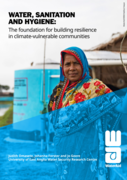
This report, which involved input from across WaterAid, in particular from the Programme Support Unit (PSU) of WaterAid UK, includes case studies from a variety of countries, including Bangladesh, Burkina Faso, Eswatini, Ethiopia, Ghana, India and N
...
epal, each demonstrating what must be done now to improve WASH services and address current challenges, in order to increase community resilience to climate change.
more
EQUIP: Ensuring Quality in Psychological Support is a joint WHO/UNICEF project to improve the competence of helpers and the consistency and quality of training and service delivery. The EQUIP platform makes freely available competency assessment tools and e-learning courses to support governments, t
...
raining institutions, and non-governmental organizations, both in humanitarian and development settings, to train and supervise the workforce to deliver effective psychological support to adults and children.
EQUIP enhances training and supervision for improved mental health and psychosocial support services.
EQUIP used a consensus-building approach including key stakeholders to develop the evidence-informed competency-based training materials and guidance, as well as the competency assessment tools. These resources have been tested in Ethiopia, Jordan, Kenya, Lebanon, Nepal, Peru, Uganda and Zambia, with results demonstrating training improvements in groups that used the EQUIP platform. For example, use of EQUIP in Lebanon with children and adolescents led to an increase in mastery of core helping skills compared to standard training approaches.
more
Cholera English Information
recommended
MEDBOX Issue Brief 26. Cholera is an acute diarrhoeal infection caused by eating or drinking food or water that is contaminated with the
bacterium Vibrio cholerae. Cholera remains a global threat to public health and is an indicator of inequity and lack of
social development. Researchers have esti
...
mated that every year, there are 1.3 to 4.0 million cases of cholera, and 21
000 to 143 000 deaths worldwide due to the infection.
However, cholera remains a neglected and underreported disease. Many cases are not recorded due to limitations in
surveillance systems and fears of potential impact on trade or tourism.
Today cholera affects 47 countries across the globe. Almost every developing country faces cholera outbreaks or
the threat of cholera. Major ongoing outbreaks are being reported from Afghanistan, Bangladesh, Democratic
Republic of Congo, Ethiopia and Nigeria. Major outbreaks are currently in Syria and Haiti.
Therefore, MEDBOX decided to produce issue briefs on cholera and available resources in Arabic, English and
French.
more
Currently, Mauritius and Seychelles have 85 and 82 percent vaccination rates, respectively, surpassing the 70 percent target set by the WHO in 2021. Countries that have attained vaccination rates of between 50 and 70 percent include Liberia
at 67 percent, Rwanda at 66 percent, Morocco at 62 percent
...
, and Tunisia at 53 percent. Meanwhile, about 25.3 percent of the continent's population is fully vaccinated.
Africa has registered over 12 million COVID-19 cases since the beginning of the pandemic. The following countries have recorded the highest number of cases: Egypt, Ethiopia, Libya, Morocco, South Africa, and Tunisia
more
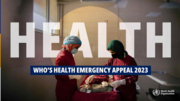
WHO needs US$2.54 billion to provide life-saving assistance to millions of people around the world facing health emergencies. WHO’s Health Emergency Appeal is a consolidation of WHO’s priorities and financial requirements for 2023 to carry out health interventions in emergency and humanitarian r
...
esponses. The number of people in need of humanitarian relief has increased by almost a quarter compared to 2022, to a record 339 million. WHO is responding to an unprecedented number of intersecting health emergencies: climate change-related disasters such as flooding in Pakistan and food insecurity across the Sahel in the greater Horn of Africa; the war in Ukraine; and the health impact of conflict in Yemen, Afghanistan, Syria and north eastern Ethiopia – all of these emergencies overlapping with the health system disruptions caused by the COVID-19 pandemic and outbreaks of measles, cholera, and other killers. Contributions to the appeal can be fully flexible, flexible across a region, or flexible within a country appeal.
more
Dracunculiasis, also known as Guinea-worm disease is a parasitic disease caused by the nematode Dracunculus medinensis. The infection is transmitted to humans by drinking water contaminated with the small crustacean copepods (Cyclops) which contain the larvae of D. medinensis. Humans are the princip
...
al definitive host and Cyclops being the intermediate host. The disease is endemic to the rural and poorer areas of the world and is most common in African countries like Chad, South Sudan, Ethiopia, and Mali. Efforts are underway towards global eradication of this disease. Due to its rarity in developed countries, this activity describes the interprofessional team's role in the assessment and treatment of patients with this condition.
more
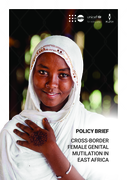
In East Africa, the trend in cross-border FGM puts at risk the progress achieved in eliminating the practice. The only way we can reach zero FGM by 2030 is by concerted and immediate action to address all aspects of FGM.
This policy brief highlights the cross-border dimension of FGM (
...
Ethiopia, Kenya, Somalia, Tanzania and Uganda) in the East Africa region. The brief describes the factors that perpetuate cross-border FGM and the work that is being done to reduce the rates.
more
This webinar provides an overview of the new IEC & Social Mobilization NTD Tool Kit, which leads users through a step-by-step process to systematically review, revise, develop and adapt current IEC materials and social mobilization approaches towards stronger, evidence-based practices in support of
...
positive behavior change for MDA programs in the control of NTDs. Experiences from Ethiopia and Uganda are shared.
more
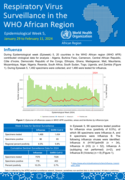
During Epidemiological week (Epiweek) 5, 20 countries in the WHO African region (WHO AFR) contributed virological data for analysis - Algeria, Burkina Faso, Cameroon, Central African Republic, Côte d’Ivoire, Democratic Republic of the Congo, Ethiopia
...
, Ghana, Madagascar, Mali, Mauritania, Mozambique, Niger, Nigeria, Rwanda, South Africa, South Sudan, Togo, Uganda, and Zambia
more
The burden of severe asthma in sub-Saharan Africa: Findings from the African Severe Asthma Project
Kirenga, B.J.; Chakaya, J.; Yimer, G. et al.
Journal of Allergy and Clinical Immunology: Global
(2024)
CC
Severe asthma is associated with high morbidity, mortality, and health care utilization, but its burden in Africa is unknown. This article wants to determine the burden (prevalence,
mortality, and activity and work impairment) of severe asthma in 3 countries in East Africa: Uganda, Kenya, and
...
Ethiopia using the American Thoracic Society/European Respiratory Society case definition of severe asthma.
more
Trachoma is the leading infectious cause of blindness worldwide. In April 2023, it was a public health problem
in approximately 40 countries, with an estimated 116 million people at risk and 1.5 million people affected
by the late blinding stage of the disease (1). About 84% of those at risk of tr
...
achoma are in the World Health
Organization (WHO)’s African Region; about 52% of those at risk of trachoma live in Ethiopia
more
Background
Four methods have previously been used to track aid for reproductive, maternal, newborn, and child health (RMNCH). At a meeting of donors and stakeholders in May, 2018, a single, agreed method was requested to produce accurate, predictable, transparent, and up-to-date estimates that coul
...
d be used for analyses from both donor and recipient perspectives. Muskoka2 was developed to meet these needs. We describe Muskoka2 and present estimates of levels and trends in aid for RMNCH in 2002–17, with a focus on the latest estimates for 2017.
Methods
Muskoka2 is an automated algorithm that generates disaggregated estimates of aid for reproductive health, maternal and newborn health, and child health at the global, donor, and recipient-country levels. We applied Muskoka2 to the Organisation for Economic Co-operation and Development's Creditor Reporting System (CRS) aid activities database to generate estimates of RMNCH disbursements in 2002–17. The percentage of disbursements that benefit RMNCH was determined using CRS purpose codes for all donors except Gavi, the Vaccine Alliance; the UN Population Fund; and UNICEF; for which fixed percentages of aid were considered to benefit RMNCH. We analysed funding by donor for the 20 largest donors, by recipient-country income group, and by recipient for the 16 countries with the greatest RMNCH need, defined as the countries with the worst levels in 2015 on each of seven health indicators.
Findings
After 3 years of stagnation, reported aid for RMNCH reached $15·9 billion in 2017, the highest amount ever reported. Among donors reporting in both 2016 and 2017, aid increased by 10% ($1·4 billion) to $15·4 billion between 2016 and 2017. Child health received almost half of RMNCH disbursements in 2017 (46%, $7·4 billion), followed by reproductive health (34%, $5·4 billion), and maternal and newborn health (19%, $3·1 billion). The USA ($5·8 billion) and the UK ($1·6 billion) were the largest bilateral donors, disbursing 46% of all RMNCH funding in 2017 (including shares of their core contributions to multilaterals). The Global Fund and Gavi were the largest multilateral donors, disbursing $1·7 billion and $1·5 billion, respectively, for RMNCH from their core budgets. The proportion of aid for RMNCH received by low-income countries increased from 31% in 2002 to 52% in 2017. Nigeria received 7% ($1·1 billion) of all aid for RMNCH in 2017, followed by Ethiopia (6%, $876 million), Kenya (5%, $754 million), and Tanzania (5%, $751 million).
Interpretation
Muskoka2 retains the speed, transparency, and donor buy-in of the G8's previous Muskoka approach and incorporates eight innovations to improve precision. Although aid for RMNCH increased in 2017, low-income and middle-income countries still experience substantial funding gaps and threats to future funding. Maternal and newborn health receives considerably less funding than reproductive health or child health, which is a persistent issue requiring urgent attention.
Funding
Bill & Melinda Gates Foundation; Partnership for Maternal, Newborn & Child Health.
more
Participant Modules
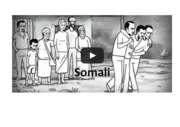
The Story of Cholera was produced in collaboration with award-winning animator Yoni Goodman.
This animation covers cholera transmission, prevention, signs, and care in a simple and accessible way. The film follows evidence-based guidelines, has been field-tested, and reviewed for accuracy and conte
...
nt. Download flashcards and mobil phone versions from the website
more
This film is the Amharic version of our 'Steps to a normal delivery' film - an adaptation of our original 'Safe delivery' film with added voiceover.
Accessed 26 January 2015
This film is the Amharic language version of our 'How to care for a newborn' film.
This film is the Amharic version of our 'Management of PPH' film for a low resource setting.
This film is the Amharic version of our 'Warning Signs in Pregnancy' film.
This film is the Amharic version of our community 'FANC' film.
