Filter
908
Text search:
clinical
algorithm
Featured
155
242
Language
Document type
427
230
122
69
22
21
9
5
2
Countries
71
38
31
29
29
28
18
17
17
15
13
13
13
12
10
9
8
8
8
8
7
7
6
6
6
6
6
6
6
5
4
4
4
4
4
4
4
3
3
2
2
2
2
2
2
2
2
2
2
1
1
1
1
1
1
1
1
1
1
1
1
1
1
1
1
1
1
1
1
1
1
1
1
1
1
1
1
1
1
1
1
Authors & Publishers
Publication Years
Category
358
144
54
39
25
15
14
Toolboxes
137
77
63
61
56
34
33
21
19
17
15
13
11
10
8
6
6
5
5
5
4
3
2
2
This 2011 update of Guidelines for the programmatic management of drug-resistant tuberculosis is intended as a tool for use by public health professionals working in response
to the Sixty-second World Health Assembly’s resolution on prevention and control of multidrug-resistant tuberculosis and e
...

5th edition.
guidance for health managers, health workers, and activists

Lancet 2013; 381: 1405–16
Series: Childhood Pneumonia and Diarrhoea no.1
Joint WHO/ILO guidelines on post-exposure prophylaxis (PEP) to prevent HIV infection.

The Access to Controlled Medications Programme identified the development of treatment guidelines that cover the treatment of all types of pain as one of the core areas of focus for improving access to opioid analgesics. Such guidelines are interesting both for health-care professionals and policy-
...
This document provides a summary of infection control recommendations when providing direct and non-direct care to patients with suspected or confirmed Filovirus haemorrhagic fever (HF), including Ebola or Marburg haemorrhagic fevers. These recommendations are interim and will be updated when additi
...
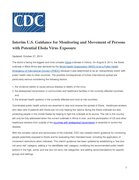

Presentation is current through November 21, 2014 and will be updated every Friday by 5pm. For the most up-to-date information, please visit www.cdc.gov/ebola.
*Presentation contains materials from CDC, MSF, and WHO
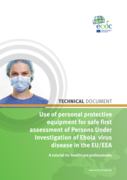
A tutorial for healthcare professionals


Guidelines for the prevention, care and treatment of persons with chronic hepatitis B infection
recommended
The recommendations in these guidelines promote the use of simple, non-invasive diagnostic tests to assess the stage of liver disease and eligibility for treatment; prioritize treatment for those with most advanced liver disease and at greatest risk of mortality; and recommend the preferred use of n
...