
Filter
3577
Filtered Results: 3577
Text search:
World
Health
Organization
(WHO),
the
United
Nations
Children’s
Fund
(UNICEF)
Featured
Recommendations
277
New Publications
1095
Language
Document type
No document type
2150
Studies & Reports
654
Guidelines
325
Strategic & Response Plan
159
Manuals
155
Situation Updates
43
Training Material
40
Fact sheets
37
Infographics
9
Resource Platforms
4
Online Courses
1
Countries / Regions
Global
197
Kenya
118
Nepal
93
Ethiopia
92
Liberia
92
Sierra Leone
84
Nigeria
84
Uganda
82
Myanmar / Burma
81
Zambia
69
India
64
Syria
62
Malawi
59
Rwanda
56
Bangladesh
56
Western and Central Europe
46
Africa
45
Ghana
44
Tanzania
44
Namibia
44
Ukraine
42
Latin America and the Carribbean
37
South Sudan
37
South Africa
36
Lesotho
32
Philippines
32
Congo, Democratic Republic of
31
Indonesia
31
Zimbabwe
30
Asia
29
Guinea
27
Mozambique
27
South–East Asia Region
27
Yemen
27
Cambodia
24
Haiti
21
Eastern Europe
18
Senegal
17
Afghanistan
17
Pakistan
17
Venezuela
16
East and Southern Africa
16
Central African Republic
16
Botswana
16
Jordan
14
West and Central Africa
14
Middle East and North Africa
14
Cameroon
12
Somalia
11
Eastern Europe and Central Asia
10
Lebanon
10
Russia
10
Laos
9
Burkina Faso
9
Brazil
9
Sri Lanka
9
Colombia
8
Germany
8
Western Pacific Region
8
Vietnam
8
Moldova
8
Sudan
8
Eswatini/ Swaziland
8
Thailand
7
Benin
7
Mali
7
Madagascar
7
Tajikistan
6
Togo
6
China
6
Albania
6
Iraq
6
Turkey
5
Iran
5
Guinea-Bissau
5
North Macedonia
4
Papua New Guinea
4
Georgia
4
Libya
4
Timor Leste/ East Timor
3
Mexico
3
Peru
3
Paraguay
3
North America
3
Turkmenistan
3
Bosnia and Herzegovina
3
Côte d’Ivoire / Ivory Coast
3
Palestine
3
Chad
3
Bhutan
3
North Korea
2
Gambia
2
Kazakhstan
2
Estonia
2
Niger
2
Burundi
2
Bulgaria
2
Italy
2
Armenia
2
USA
2
Croatia
2
Jamaica
2
Japan
2
Mauritius
2
Southern Africa
2
Egypt
2
Greece
2
Angola
2
Serbia
1
Kyrgyzstan
1
Uzbekistan
1
Malaysia
1
Vanuatu
1
Qatar
1
Hungary
1
Saudi Arabia
1
United Kingdom
1
Portugal
1
Spain
1
Azerbaijan
1
Bolivia
1
Argentina
1
Romania
1
Slovakia
1
Poland
1
Solomon Islands
1
Authors & Publishers
Publication Years
Category
Countries
1444
Women & Child Health
324
Key Resources
264
Clinical Guidelines
177
Public Health
168
Capacity Building
63
Pharmacy & Technologies
18
Toolboxes
HIV
360
COVID-19
226
Disability
206
Mental Health
161
Conflict
157
TB
133
Planetary Health
119
Ebola & Marburg
85
Health Financing Toolbox
84
Refugee
78
Global Health Education
73
Caregiver
72
Rapid Response
52
AMR
52
Natural Hazards
49
NTDs
43
Malaria
33
Pharmacy
31
2.0 Rapid Response
31
NCDs
27
Polio
25
Cholera
15
Zika
13
Specific Hazards
11
Social Ethics
6
South Sudan
2
Typhoon
2
A practical guide to meaningfully engage adolescents in the AIDS response
UNAIDS 2016 reference
In its resolution 34/16, the Human Rights Council decided to focus its next full-day meeting on “Protecting the rights of the child in humanitarian situations” and invited the Office of the High Commissioner to prepare a report on that issue, in close collaboration with relevant stakeholders. Th...
This report is a comprehensive statistical overview of female genital mutilation/cutting (FGM/C) in the 29 countries where the practice is concentrated. Analysis of the data reflects current perspectives on FGM/C, informed by the latest policy, programmatic and theoretical evidence.

The review’s objectives are to review progress in TB control with emphasis on DOTS strategy implementation, summarize the experience, lessons learnt and methods of work and to make recommendations for international donors, technical agencies and the Ministry of Health.

Drawing on the World Health Organization’s package of NCD best buys, the report demonstrates how these evidence-based measures can help countries reduce premature deaths, strengthen health systems, and advance progress towards the Sustainable Development Goals. It provides policymakers, donors, ad...

This publication’s primary purpose is to provide a compilation of actions to address malnutrition in all its forms, in a concise and user-friendly format to help in decision-making processes for integration of nutrition interventions in national health policies, strategies, and plans based on coun...
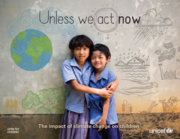
Today’s children, and their children, are the ones who will live with the consequences of climate change.

Saving lives is the priority of WHO’s response in Ukraine. WHO works to ensure time-critical, lifesaving multisectoral assistance, non-discriminatory access to emergency and essential health services and priority prevention programmes, and laying the foundation for longer-term health systems recov...
Practical actions in cities to strengthen preparedness for the COVID-19 pandemic and beyond
recommended
This document accompanies the interim guidance on “Strengthening Preparedness for COVID-19 in cities and urban settings”. It provides local authorities, leaders and policy-makers in cities with a checklist tool to ensure that key areas have been covered. An excel version that local authorities m...
The COVID-19 pandemic arrived in an evolving epidemiological context where some countries are experiencing a progressive decrease in HIV positivity in their testing programme as they are moving closer to the first 95 target. Distinguishing changes in HIV testing services due to the COVID-19 pandemic...
A Systematic Review, Country Case Studies, and Recommendations for Integration into National Health Systems
Alliance Report
Participation of community health workers (CHWs) in the provision of primary health care has been experienced all over the world for several decades, and there is an amount ...

The Malaria Ministerial Conference, co-hosted by WHO and the Government of Cameroon on 6 March 2024, brought together more than 400 stakeholders, including Ministers of Health and senior representatives from the African countries hardest hit by malaria, global health leaders, scientists, civil socie...

The sixteenth meeting of the Strategic and Technical Advisory Group for Neglected Tropical Diseases (STAG-NTD) was held as a hybrid meeting, 27–28 September 2022.
Dr Ren Minghui, Assistant Director-General, Universal Health Coverage/Communicable and Noncommunicable Diseases, welcomed participan...
At a time when the world is reeling from the deepest global disruption and health crisis of a lifetime, this year’s Living Planet
report provides unequivocal and alarming evidence that nature is unraveling and that our planet is flashing red warning signs of
vital natural systems failure. The ...
The health and socioeconomic crisis triggered by the COVID-19 pandemic has hit the countries of Latin America hard and laid bare the profound inequities about which numerous international, regional and national reports have sounded warnings in recent decades. In this context, the historical politica...
Rabies is a global public health problem with important socioeconomic impacts. Human rabies is preventable; almost all cases are transmitted through the bite of a rabid dog. Elimination of human rabies is possible. Technical support and tools are available. This report covers:
- Why investment ...
- Why investment ...

This document describes the key areas that national governments should consider for the introduction and scale-up of point-of-care (POC) diagnostics within national programmes, as new innovative POC technologies are being introduced into the market. The next steps taken to include these new innovati...
UNAIDS leads and inspires the world to achieve its shared vision of zero new HIV infections, zero discrimination and zero AIDS-related deaths. It unites the efforts of 11 UN Cosponsor organizations- UNHCR, UNICEF, WFP, UNDP,UNFPA, UNODC, UN Women, ILO, UNESCO, WHO and the World Bank- and a Secretari...

Latin America and the Caribbean is characterized by a matrix of social inequality whose axes —such as
socioeconomic stratum, gender, stage in the life cycle, ethnicity and race, territory, disability, and immigration
status— create multiple, often concurrent, situations of exclusion and discri...
