
Filter
5039
Text search:
2021
Featured
497
286
Language
3751
639
592
274
254
236
219
95
39
37
23
23
22
20
19
18
16
16
15
14
13
13
13
12
12
12
11
11
10
9
9
8
8
8
8
7
7
6
6
5
5
5
4
4
4
4
3
3
3
3
3
2
2
2
2
2
2
2
1
1
1
1
1
1
1
1
1
1
1
Document type
1610
875
467
457
408
388
185
167
131
131
90
58
54
8
5
Countries / Regions
394
200
183
131
117
99
95
86
82
80
72
70
64
56
54
53
52
51
49
49
47
46
42
42
42
41
38
36
36
36
32
32
32
31
30
26
25
24
23
23
23
23
22
22
22
22
20
20
19
18
18
17
16
16
15
15
15
15
14
14
14
13
13
13
12
11
11
11
10
10
10
9
8
8
8
8
7
7
7
7
7
7
7
6
6
6
6
6
6
6
6
6
5
5
5
5
5
5
5
5
5
4
4
4
4
4
4
4
4
4
4
3
3
3
3
3
3
3
3
3
2
2
2
2
2
2
2
2
2
2
2
2
2
2
2
1
1
1
1
1
1
1
1
1
1
1
1
1
Authors & Publishers
931
251
173
103
102
92
79
74
69
62
59
58
55
45
44
43
43
38
38
34
33
32
30
29
25
23
22
22
22
21
20
19
19
17
17
17
16
16
16
16
16
16
15
15
15
14
14
14
13
13
13
12
12
12
11
11
11
11
11
11
10
10
10
10
10
10
10
9
9
9
9
9
9
9
9
8
8
8
8
8
8
8
8
8
8
7
7
7
7
7
7
7
7
7
7
7
7
7
7
6
6
6
6
6
6
6
6
6
6
6
6
6
6
6
5
5
5
5
5
5
5
5
5
5
5
5
5
5
5
5
5
5
5
5
5
5
5
5
5
5
5
5
5
5
4
4
4
4
4
4
4
4
4
4
4
4
4
4
4
4
4
4
4
4
4
4
4
4
4
4
4
4
4
4
4
4
4
4
4
4
4
4
4
4
4
4
4
4
4
4
4
4
4
4
4
4
4
4
3
3
3
3
3
3
3
3
3
3
3
3
3
3
3
3
3
3
3
3
3
3
3
3
3
3
3
3
3
3
3
3
3
3
3
3
3
3
3
3
3
3
3
3
3
3
3
3
3
3
3
3
3
3
3
3
3
3
3
3
3
3
3
3
3
3
3
3
3
3
3
3
3
3
3
3
3
3
3
3
3
3
3
3
3
3
3
3
3
3
3
2
2
2
2
2
2
2
2
2
2
2
2
2
2
2
2
2
2
2
2
2
2
2
2
2
2
2
2
2
2
2
2
2
2
2
2
2
2
2
2
2
2
2
2
2
2
2
2
2
2
2
2
2
2
2
2
2
2
2
2
2
2
2
2
2
2
2
2
2
2
2
2
2
2
2
2
2
2
2
2
2
2
2
2
2
2
2
2
2
2
2
2
2
2
2
2
2
2
2
2
2
2
2
2
2
2
2
2
2
2
2
2
2
2
2
2
2
2
2
2
2
2
2
2
2
2
2
2
2
2
2
2
2
2
2
2
2
2
2
2
2
2
2
2
2
2
2
2
2
2
2
2
2
2
2
2
2
2
2
2
2
2
2
2
2
2
2
2
2
2
2
2
2
2
2
2
2
2
2
2
2
2
2
2
2
2
2
2
2
2
2
2
2
2
2
2
2
2
2
2
2
2
2
2
2
2
2
2
2
2
2
2
2
2
2
2
2
2
2
2
2
2
2
2
2
2
2
2
2
2
2
2
2
1
1
1
1
1
1
1
1
1
1
1
1
1
1
1
1
1
1
1
1
1
1
1
1
1
1
1
1
1
1
1
1
1
1
1
1
1
1
1
1
1
1
1
1
1
1
1
1
1
1
1
1
1
1
1
1
1
1
1
1
1
1
1
1
1
1
1
1
1
1
1
1
1
1
1
1
1
1
1
1
1
1
1
1
1
1
1
1
1
1
1
1
1
1
1
1
1
1
1
1
1
1
1
1
1
1
1
1
1
1
1
1
1
1
1
1
1
1
1
1
1
1
1
1
1
1
1
1
1
1
1
1
1
1
1
1
1
1
1
1
1
1
1
1
1
1
1
1
1
1
1
1
1
1
1
1
1
1
1
1
1
1
1
1
1
1
1
1
1
1
1
1
1
1
1
1
1
1
1
1
1
1
1
1
1
1
1
1
1
1
1
1
1
1
1
1
1
1
1
1
1
1
1
1
1
1
1
1
1
1
1
1
1
1
1
1
1
1
1
1
1
1
1
1
1
1
1
1
1
1
1
1
1
1
1
1
1
1
1
1
1
1
1
1
1
1
1
1
1
1
1
1
1
1
1
1
1
1
1
1
1
1
1
1
1
1
1
1
1
1
1
1
1
1
1
1
1
1
1
1
1
1
1
1
1
1
1
1
1
1
1
1
1
1
1
1
1
1
1
1
1
1
1
1
1
1
1
1
1
1
1
1
1
1
1
1
1
1
1
1
1
1
1
1
1
1
1
1
1
1
1
1
1
1
1
1
1
1
1
1
1
1
1
1
1
1
1
1
1
1
1
1
1
1
1
1
1
1
1
1
1
1
1
1
1
1
1
1
1
1
1
1
1
1
1
1
1
1
1
1
1
1
1
1
1
1
1
1
1
1
1
1
1
1
1
1
1
1
1
1
1
1
1
1
1
1
1
1
1
1
1
1
1
1
1
1
1
1
1
1
1
1
1
1
1
1
1
1
1
1
1
1
1
1
1
1
1
1
1
1
1
1
1
1
1
1
1
1
1
1
1
1
1
1
1
1
1
1
1
1
1
1
1
1
1
1
1
1
1
1
1
1
1
1
1
1
1
1
1
1
1
1
1
1
1
1
1
1
1
1
1
1
1
1
1
1
1
1
1
1
1
1
1
1
1
1
1
1
1
1
1
1
1
1
1
1
1
1
1
1
1
1
1
1
1
1
1
1
1
1
1
1
1
1
1
1
1
1
1
1
1
1
1
1
1
1
1
1
1
1
1
1
1
1
1
1
1
1
1
1
1
1
1
1
1
1
1
1
1
1
1
1
1
1
1
1
1
1
1
1
1
1
1
1
1
1
1
1
1
1
1
1
1
1
1
1
1
1
1
1
1
1
1
1
1
1
1
1
1
1
1
1
1
1
1
1
1
1
1
1
1
1
1
1
1
1
1
1
1
1
1
1
1
1
1
1
1
1
1
1
1
1
1
1
1
1
1
1
1
1
1
1
1
1
1
1
1
1
1
1
1
1
1
1
1
1
1
1
1
1
1
1
1
1
1
1
1
1
1
1
1
1
1
1
1
1
1
1
1
1
1
1
1
1
1
1
1
1
1
1
1
1
1
1
1
1
1
1
1
1
1
1
1
1
1
1
1
1
1
1
1
1
1
1
1
1
1
1
1
1
1
1
1
1
1
1
1
1
1
1
1
1
1
1
1
1
1
1
1
1
1
1
1
1
1
1
1
1
1
1
1
1
1
1
1
1
1
1
1
1
1
1
1
1
1
1
1
1
1
1
1
1
1
1
1
1
1
1
1
1
1
1
1
1
1
1
1
1
1
1
1
1
1
1
1
1
1
1
1
1
1
1
1
1
1
1
1
1
1
1
1
1
1
1
1
1
1
1
1
1
1
1
1
1
1
1
1
1
1
1
1
1
1
1
1
1
1
1
1
1
1
1
1
1
1
1
1
1
1
1
1
1
1
1
1
1
1
1
1
1
1
1
1
1
1
1
1
1
1
1
1
1
1
1
1
1
1
1
1
1
1
1
1
1
1
1
1
1
1
1
1
1
1
1
1
1
1
1
1
1
1
1
1
1
1
1
1
1
1
1
1
1
1
1
1
1
1
1
1
1
1
1
1
1
1
1
1
1
1
1
1
1
1
1
1
1
1
1
1
1
1
1
1
1
1
1
1
1
1
1
1
1
1
1
1
1
1
1
1
1
1
1
1
1
1
1
1
1
1
1
1
1
1
1
1
1
1
1
1
1
1
1
1
1
1
1
1
1
1
1
1
1
1
1
1
1
1
1
1
1
1
1
1
1
1
1
1
1
1
1
1
1
1
1
1
1
1
1
1
1
1
1
1
1
1
1
1
1
1
1
1
1
1
1
1
1
1
1
1
1
1
1
1
1
1
1
1
1
1
1
1
1
1
1
1
1
1
1
1
1
1
1
1
1
1
1
1
1
1
1
1
1
1
1
1
1
1
1
1
1
1
1
1
1
1
1
1
1
1
1
1
1
1
1
1
1
1
1
1
1
1
1
1
1
1
1
1
1
1
1
1
1
1
1
1
1
1
1
1
1
1
1
1
1
1
1
1
1
1
1
1
1
1
1
1
1
1
1
1
1
1
1
1
1
1
1
1
1
1
1
1
1
1
1
1
1
1
1
1
1
1
1
1
1
1
1
1
1
1
1
1
1
1
1
1
1
1
1
1
1
1
1
1
1
1
1
1
1
1
1
1
1
1
1
1
1
1
1
1
1
1
1
1
1
1
1
1
1
1
1
1
1
1
1
1
1
1
1
1
1
1
1
1
1
1
1
1
1
1
1
1
1
1
1
1
1
1
1
1
1
1
1
1
1
1
1
1
1
1
1
1
1
1
1
1
1
1
1
1
1
1
1
1
1
1
1
1
1
1
1
1
1
1
1
1
1
1
1
1
1
1
1
1
1
1
1
1
1
1
1
1
1
1
1
1
1
1
1
1
1
1
1
1
1
1
1
1
1
1
1
1
1
1
1
1
1
1
1
1
1
1
1
1
1
1
1
1
1
1
1
1
1
1
1
1
1
1
1
1
1
1
1
1
1
1
1
1
1
1
1
1
1
1
1
1
1
1
1
1
1
1
1
1
1
1
1
1
1
1
1
1
1
1
1
1
1
1
1
1
1
1
1
1
1
1
1
1
1
1
1
1
1
1
1
1
1
1
1
1
1
1
1
1
1
1
1
1
1
1
1
1
1
1
1
1
1
1
1
1
1
1
1
1
1
1
1
1
1
1
1
1
1
1
1
1
1
1
1
1
1
1
1
1
1
1
1
1
1
1
1
1
1
1
1
1
1
1
1
1
1
1
1
1
1
1
1
1
1
1
1
1
1
1
1
1
1
1
1
1
1
1
1
1
1
1
1
1
1
1
1
1
1
1
1
1
1
1
1
1
1
1
1
1
1
1
1
1
1
1
1
1
1
1
1
1
1
1
1
1
1
1
1
1
1
1
1
1
1
1
1
1
1
1
1
1
1
1
1
1
1
1
1
1
1
1
1
1
1
1
1
1
1
1
1
1
1
1
1
1
1
1
1
1
1
1
1
1
1
1
1
1
1
1
1
1
1
1
1
1
1
1
1
1
1
1
1
1
1
1
1
1
1
1
1
1
1
1
1
1
1
1
1
1
1
1
1
1
1
1
1
1
1
1
1
1
1
1
1
1
1
1
1
1
1
1
1
1
1
1
1
1
1
1
1
1
1
1
1
1
1
1
1
1
1
1
1
1
1
1
1
1
1
1
1
1
1
1
1
1
1
1
1
1
1
1
1
1
1
1
1
1
1
1
1
1
1
1
1
1
1
1
1
1
1
1
1
1
1
1
1
1
1
1
1
1
1
1
1
1
1
1
1
1
1
1
1
1
1
1
1
1
1
1
1
1
1
1
1
1
1
1
1
1
1
1
1
1
1
1
1
1
1
1
1
1
1
1
1
1
1
1
1
1
1
1
1
1
1
1
1
1
1
1
1
1
1
1
1
1
1
1
1
1
1
1
1
1
1
1
1
1
1
1
1
1
1
1
1
1
1
1
1
1
1
1
1
1
1
1
1
1
1
1
1
1
1
1
1
1
1
1
1
1
1
1
1
1
1
1
1
1
1
1
1
1
1
1
1
1
1
1
1
1
1
1
1
1
1
1
1
1
1
1
1
1
1
1
1
1
1
1
1
1
1
1
1
1
1
1
1
1
1
1
1
1
1
1
1
1
1
1
1
1
1
1
1
1
1
1
1
1
1
1
1
1
1
1
1
1
1
1
1
1
1
1
1
1
1
1
1
1
1
1
1
1
1
1
1
1
1
1
1
1
1
1
1
1
1
1
1
1
1
1
1
1
1
1
1
1
1
1
1
1
1
1
1
1
1
1
1
1
1
1
1
1
1
1
1
1
1
1
1
1
1
1
1
1
1
1
1
1
1
1
1
1
1
1
1
1
1
1
1
1
1
1
1
1
1
1
1
1
1
1
1
1
1
1
1
1
1
1
1
1
1
1
1
1
1
1
1
1
1
1
1
1
1
1
1
1
1
1
1
1
1
1
1
1
1
1
1
1
1
1
1
1
1
1
1
1
1
1
1
1
1
1
1
1
1
1
1
1
1
1
1
1
1
1
1
1
1
1
1
1
1
1
1
1
1
1
1
1
1
1
1
1
1
1
1
1
1
1
1
1
1
1
1
1
1
1
1
1
1
1
1
1
1
1
1
1
1
1
1
1
1
1
1
1
1
1
1
1
1
1
1
1
1
1
1
1
1
1
1
1
1
1
1
1
1
1
1
1
1
1
1
1
1
1
1
1
1
1
1
1
1
1
1
1
1
1
1
1
1
1
1
1
1
1
1
1
1
1
1
1
1
1
1
1
1
1
1
1
1
1
1
1
1
1
1
1
1
1
1
1
1
1
1
1
1
1
1
1
1
1
1
1
1
1
1
1
1
1
1
1
1
1
1
1
1
1
1
1
1
1
1
1
1
1
1
1
1
1
1
1
1
1
1
1
1
1
1
1
1
1
1
1
1
1
1
1
1
1
1
1
1
1
1
1
1
1
1
1
1
1
1
1
1
1
1
1
1
1
1
1
1
1
1
1
1
1
1
1
1
1
1
1
1
1
1
1
1
1
1
1
1
1
1
1
1
1
1
1
1
1
1
1
1
1
1
1
1
1
1
1
1
1
1
1
1
1
1
1
1
1
1
1
1
1
1
1
1
1
1
1
1
1
1
1
1
1
1
1
1
1
1
1
1
1
1
1
1
1
1
1
1
1
1
1
1
1
1
1
1
1
1
1
1
1
1
1
1
1
1
1
1
1
1
1
1
1
1
1
1
1
1
1
1
1
1
1
1
1
1
1
1
1
1
1
1
1
1
1
1
1
1
1
1
1
1
1
1
1
1
1
1
1
1
1
1
1
1
1
1
1
1
1
1
1
1
1
1
1
1
1
1
1
1
1
1
1
1
1
1
1
1
1
1
1
1
1
1
1
1
1
1
1
1
1
1
1
1
1
1
1
1
1
1
1
1
1
1
1
1
1
1
1
1
1
1
1
1
1
1
1
1
1
1
1
1
1
1
1
1
1
1
1
1
1
1
1
1
1
1
1
1
1
1
1
1
1
1
1
1
1
1
1
1
1
1
1
1
1
1
1
1
1
1
1
1
1
Publication Years
1
4461
555
20
1
1
Category
1895
284
268
217
201
93
41
3
Toolboxes
1409
366
260
244
233
217
204
197
174
172
137
133
129
88
65
59
46
43
40
37
15
15
10
9
7
Este documento es una nota técnica con propuestas de intervenciones para la atención, la prevención y la vigilancia de la malaria en poblaciones migrantes y en comunidades de acogida, especialmente en países de Centroamérica, considerando el reciente incremento del número de personas que se mo
...
vilizan a través de la subregión.
more
Two malaria vaccines are currently WHO prequalified and recommended1 for use to prevent
P. falciparum malaria in young children, the RTS,S/AS01 vaccine, currently manufactured by
GlaxoSmithKline (GSK), and the R21/Matrix-M vaccine, manufactured by Serum Institute of India
Pvt (SII)

Presentation OPT-SMC malaria vaccine workshop - Jan 2023

Depuis 2010, la lutte contre le paludisme a permis de réaliser des progrès majeurs grâce à la distribution de moustiquaires, au diagnostic rapide, aux traitements à base d'artémisinine (ACT) et aux interventions préventives ciblées.

Plan stratégique national de lutte contre le paludisme 2023-2026
Programme National de Lutte contre le Paludisme (PNLP), Ministère de la Santé et de l’Hygiène Publique du Togo
République Togolaise, Ministère de la Santé et de l’Hygiène Publique
(2023)
C2
Le Plan Stratégique National de Lutte contre le Paludisme 2023–2026 du Togo définit les grandes orientations pour réduire de 65 % l’incidence et la mortalité liées au paludisme d’ici 2026, en comparaison avec les niveaux de 2022. Élaboré par le Programme National de Lutte contre le Pa
...
ludisme (PNLP), il s’inscrit pleinement dans les objectifs mondiaux fixés par l’Organisation mondiale de la Santé pour parvenir à l’élimination du paludisme d’ici 2030. Ce plan repose sur quatre axes stratégiques : la prévention à travers l’utilisation des moustiquaires imprégnées, la chimio-prévention et la lutte antivectorielle ; la prise en charge efficace des cas grâce au diagnostic rapide et au traitement par ACT ; le renforcement du système de santé et la gestion du programme ; ainsi que la surveillance, le suivi et l’évaluation des interventions. Une attention particulière est accordée à la digitalisation des outils, à l’amélioration de la qualité des données, à l’implication des communautés locales et à la réduction des inégalités régionales dans l’accès aux services. Intégrant les partenaires techniques et financiers, le secteur privé et les acteurs communautaires, ce document constitue une véritable feuille de route nationale pour coordonner et intensifier la lutte contre le paludisme sur la période 2023–2026.
more
Guidelines on lenacapavir for HIV prevention and testing strategies for long-acting injectable pre-exposure prophylaxis. Web Annex C
El Plan de acción regional sobre inmunización para las Américas (RIAP) constituye un paso fundamental para consolidar los avances alcanzados y proporciona una visión clara para enfrentar los desafíos actuales y futuros, con el objetivo de alcanzar las metas establecidas para el año 2030. Este
...
plan es esencial para fortalecer los sistemas de salud, mejorar el acceso a la vacunación y optimizar la coordinación entre las partes interesadas, de manera de asegurar que todos los sectores de la población tengan la oportunidad de beneficiarse de programas de inmunización resilientes, eficaces y equitativos a lo largo del curso de vida. Diseñado en el marco de la política sobre Revitalizar la inmunización como un bien de salud pública para la salud universal y en consonancia con la Agenda de Inmunización 2030, en este plan se integran las prioridades definidas por los países y territorios, con indicadores que abordan seis líneas de acción: gobernanza, seguimiento, integración, comunicación, recursos humanos y toma de decisiones basada en la evidencia. Este enfoque integral e inclusivo reafirma el compromiso con el logro de la cobertura universal de salud y de los Objetivos de Desarrollo Sostenible. De cara al futuro, es esencial mantener un compromiso sólido a todos los niveles y adaptar las estrategias a los cambios que enfrentan los países y territorios, a fin de avanzar de manera eficaz en los esfuerzos de inmunización mediante mejores prácticas y enfoques innovadores. Se invita a todas las partes interesadas a unirse a este esfuerzo colectivo para garantizar la inmunización como un bien público y proteger a la población contra las enfermedades prevenibles por vacunación.
more
Le Plan d'action régional pour la vaccination dans les Amériques (RIAP) constitue une étape fondamentale pour consolider les progrès accomplis et offre une vision concrète pour relever les défis actuels et futurs en vue d'atteindre les objectifs fixés pour l'année 2030. Ce plan est essentiel
...
pour renforcer les systèmes de santé, améliorer l'accès à la vaccination et optimiser la coordination entre les parties prenantes, en veillant à ce que tous les secteurs de la population aient la possibilité de bénéficier de programmes de vaccination résilients, efficaces et équitables tout au long du parcours de vie. Conçu dans le cadre stratégique de la politique pour la Revitalisation de la vaccination en tant que bien de santé publique pour une santé universelle et aligné sur le Programme pour la vaccination à l’horizon 2030, le plan d’action synthétise les priorités déterminées par les pays et les territoires, en utilisant des indicateurs qui ciblent six axes stratégiques d’intervention : la gouvernance, la surveillance, l'intégration, la communication, les ressources humaines et la prise de décision fondée sur des données probantes. Cette approche globale et inclusive réaffirme la volonté de parvenir à la couverture sanitaire universelle et d'atteindre les objectifs de développement durable. À l'avenir, il sera essentiel de maintenir un engagement fort à tous les niveaux en adaptant les stratégies aux changements que connaîtront les pays et les territoires, afin de faire progresser efficacement leurs efforts de vaccination par la mise en œuvre de meilleures pratiques et d’approches novatrices. Toutes les parties prenantes sont encouragées à participer à cet effort collectif pour que la vaccination soit considérée comme un bien public et que la population soit protégée contre les maladies évitables par la vaccination.
more

The World Health Organization recently redefined leprosy elimination as a phased process, with the first milestone being the
interruption of transmission, achieved when no new child cases (defined as younger than 15 years) are reported for five consecutive years.
In Pakistan, the well-functioning
...
leprosy programme, with effective case management, context-specific active case-finding strategies and
a robust data management system, has contributed to a decrease in new cases. Between 2001 and 2023, new adult cases dropped by 75%
(from 878 cases to 220 cases annually) and child cases by 83% (from 93 to 16). To support the country’s goal of no new child cases by 2030
and ultimately eliminate the disease, the nongovernmental organizations Marie Adelaide Leprosy Centre and Aid to Leprosy Patients, with
support from the German Leprosy and Tuberculosis Relief Association, have developed a zero leprosy roadmap. As part of this roadmap,
the leprosy elimination strategy emphasizes improving active case-finding and providing post-exposure prophylaxis for contacts of leprosy
cases, who are at the highest risk
more
Exposure to air pollution has significant adverse health effects, leading to nearly 1 in every 8 deaths globally. Air pollution affects all age groups, from unborn children to older people, in both high- and low-income nations.
Effective surveillance and monitoring of noncommunicable diseases (NCDs) and their risk factors are essential for informing evidence-based public health policies, addressing health inequities, and ensuring progress toward global and regional targets. By tracking trends in NCDs, their modifiable risk
...
factors such as tobacco use, unhealthy diets, physical inactivity, harmful use of alcohol, and air pollution, along with biological risk factors such as overweight and obesity, high blood pressure (hypertension), and elevated blood glucose (diabetes), policymakers can identify emerging threats, target vulnerable populations, allocating resources efficiently. Reliable data also enable countries to evaluate interventions, adjust policies, and strengthen health systems to reduce the burden of NCDs.
more
The overall objective of this approach is to accelerate efforts toward malaria elimination by increasing
access to early diagnosis and treatment. The specific objectives are to: Minimize the barriers that the population faces in accessing timely, quality diagnosis and treatment. Reduce the time bet
...
ween diagnosis and the start of treatment. Reduce the parasite reservoir in symptomatic infected persons through early treatment. Maximize the transmission-blocking strategy by taking early action on gametocytes. Decrease the incidence of P. vivax relapses.Ultimately, disrupt malaria transmission and prevent mortalit.
more
A pesar de los avances, persisten importantes barreras para el diagnóstico y tratamiento oportunos de la malaria en las Américas, especialmente en zonas rurales y de difícil acceso. Para reducir la transmisión, es esencial ampliar el uso de pruebas de diagnóstico rápido y garantizar la disponi
...
bilidad gratuita de antimaláricos como bienes públicos. La OPS propone un marco estratégico para eliminar obstáculos, acelerar el inicio del tratamiento y contribuir a la eliminación de la enfermedad en la región.
more
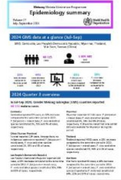
The Mekong Malaria Elimination (MME) programme is an initiative aimed at supporting Greater Mekong Subregion (GMS) countries – Cambodia, Lao People's Democratic Republic, Myanmar, Thailand, Viet Nam, and Yunnan (China) – in achieving the goal of malaria elimination by 2030. Data for this epidemi
...
ological summary were compiled from country reports. Between July and September 2024, 48 115 malaria cases were reported. During that period, GMS countries recorded 44% fewer cases, with P. falciparum + mixed and P. vivax cases declining by 81% and 36%, respectively. Meanwhile, testing declined by 25% when compared to the same period in 2023.
more
The 2024 World Malaria Report shows that the malaria burden remains overwhelmingly concentrated in Africa. The continent accounted for 94% of global cases and 95% of malaria-related deaths in 2023. Although the number of malaria cases increased globally from 204 million in 2000 to 246 million in 202
...
3, the number of deaths declined from 805,000 to 569,000. Children under five are still the most affected group, accounting for 76% of malaria deaths in Africa. A few countries, particularly Nigeria and the Democratic Republic of the Congo, carry the highest burden. Since 2000, Africa has significantly reduced malaria incidence and mortality, averting over 1.7 billion cases and 12 million deaths. Nevertheless, malaria continues to pose a significant health challenge, necessitating ongoing action and investment.
more

Tuberculosis (TB) remains a significant global health challenge, with an estimated annual death rate of approximately one per 100,000 people in countries with low TB prevalence. Rapid reductions in TB cases and deaths worldwide depend on research breakthroughs, including the development of new vac
...
cines. There has recently been an increase in political commitment, as evidenced by two UN high-level meetings on TB in 2018 and 2023. The 2023 political declaration reaffirmed the goals set out in the UN Sustainable Development Goals and the WHO's End TB Strategy, and established new targets for the period 2023–2027
more

WHO consolidated guidelines on tuberculosis: Module 6: tuberculosis and comorbidities, 2nd ed
recommended
Addressing TB comorbidities and risk factors is central to the World Health Organization (WHO) End TB Strategy. These guidelines consolidate the latest WHO recommendations on TB and key comorbidities. The guidelines are a living document and will include dedicated sections for each key TB comorbidit
...
y or health-related risk factor. The first edition focused on HIV-associated TB, updating the WHO policy on collaborative TB/HIV activities. This second edition expands on the previous edition and consolidates new and existing recommendations on interventions to address undernutrition in people with TB, to provide food assistance to households of people with TB in food-insecure settings, and to screen for TB among those who are undernourished or food insecure.
more

PHSM are vital in reducing the risk and scale of infectious disease transmission and lowering hospitalization and deaths. Examples include contact tracing, quarantine and isolation, mask use, ventilation, school or workplace measures, mobility restrictions and travel requirements.
While these mea
...
sures are essential, decision-making on PHSM becomes particularly complex during rapidly evolving health emergencies, with incomplete information and under significant public and political pressure, especially when the pathogen is novel or poorly understood. In such contexts, guidance needs to be agile and responsive, developed and adapted based on emerging evidence and shifting epidemiological patterns. Decision-makers are frequently confronted with difficult trade-offs, having to balance measures that are:
─ effective but socially disruptive;
─ cost-effective but logistically burdensome;
─ beneficial for public health but economically disruptive; or
─ practical but inequitable or unethical
more

Current HIV/AIDS Reports (2022) 19:358–374. https://doi.org/10.1007/s11904-022-00615-z.
MINDSPACE is an acronym developed by the UK's behavioural insights team to summarise nine key influences on human behaviour: Messenger, Incentives, Norms, Default, Salience, Priming, Affect, Commitment, and E
...
go. These effects have been used in various settings to design interventions that encourage positive behaviours. Currently, over 200 institutionalised behavioural insight teams exist internationally, which may draw upon the MINDSPACE framework to inform policy and improve public services.
more
