Filter
1275
Text search:
inclusive
employment
Featured
88
309
Language
Document type
754
248
82
82
61
19
15
6
3
2
1
1
Countries
61
38
35
34
34
31
29
29
27
26
22
22
22
20
19
18
18
17
16
15
13
13
13
12
12
12
11
11
10
10
10
10
8
7
7
7
7
6
6
6
6
6
5
5
5
5
5
5
5
5
5
4
4
4
4
4
4
4
4
4
4
3
3
3
2
2
2
2
2
2
2
2
2
2
2
2
2
2
2
1
1
1
1
1
1
1
1
1
1
1
1
1
1
1
1
1
1
1
1
1
1
1
1
Authors & Publishers
Publication Years
Category
499
76
74
36
15
11
Toolboxes
303
116
97
62
58
48
46
38
23
21
20
18
15
10
8
8
6
4
4
4
2
2
1
1

The ILO has joined forces with Gallup to carry out a groundbreaking global survey covering 50 countries that sheds further light on the causes of the persistence of HIV-related stigma and discrimination in the world of work.
Policy brief. In this policy brief, we give an update on those parts of the guidelines which are relevant for trans and gender diverse people.

The Private Sector Engagement Strategy on HIV, STIs and TB is a is a guide that is both comprehensive
and focused, and it is to be used by businesses and corporations to actively participate in the HIV, STIs
and TB and Noncommunicable diseases (NCDs) response. The goal of this strategy is to devel
...

In the present study, the Office of the United Nations High Commissioner for Human Rights sets forth the standards on equality and non discrimination of persons with disabilities under article 5 of the Convention on the Rights of Persons with Disabilities. It aims at providing guidance for implement
...
Available in: English, French, Chinese, Spanish, Russian, Arabic, Thai, Korean, Tajik, Vietnamese, Uzbek
http://www.who.int/disabilities/cbr/guidelines/en/
Building on previous guidelines, the People In Aid Code seeks to offer agencies an effective framework for human resources management, helping them assess and raise their performance.
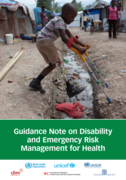
This guidance note is intended primarily for health actors working in emergency and disaster risk management (hereafter 'emergency risk management') at the local, national or international level, and in governmental or nongovernmental agencies. People with disabilities, those
...
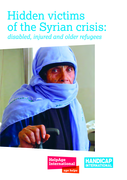
New research published today shows that older, disabled and injured Syrian refugees are paying a double toll as a result of the conflict. The report, released by Handicap International and HelpAge International, provides new data showing how much these vulnerable refugees are struggling to meet thei
...
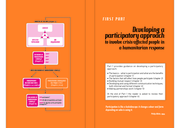
The Participation Handbook for humanitarian field workers contains detailed practical advice on the participation of affected people in humanitarian action. It has three sections:
Developing a participatory approach (main issues, key factors, building mutual respect, communication methods and
...

The Compendium brings together for the first time key consensus-based policy recommendations and guidance to improve the delivery of proven interventions to women and children. The user-friendly format incorporates icons and tabs to present key health-related policies that support the delivery of es
...
Available in: English, French, Chinese, Spanish, Russian, Arabic, Thai, Korean, Tajik, Vietnamese, Uzbek
http://www.who.int/disabilities/cbr/guidelines/en/
Available in: English, French, Chinese, Spanish, Russian, Arabic, Thai, Korean, Tajik, Vietnamese, Uzbek
http://www.who.int/disabilities/cbr/guidelines/en/
Available in: English, French, Chinese, Spanish, Russian, Arabic, Thai, Korean, Tajik, Vietnamese, Uzbek
http://www.who.int/disabilities/cbr/guidelines/en/
Available in: English, French, Chinese, Spanish, Russian, Arabic, Thai, Korean, Tajik, Vietnamese, Uzbek
http://www.who.int/disabilities/cbr/guidelines/en/
Equity and Quality in Health: a People's Right