
Filter
1786
Text search:
cardiovascular
disease
Featured
179
357
Language
Document type
718
461
307
88
71
68
31
12
8
7
6
5
2
1
1
Countries
155
101
47
47
41
39
32
29
27
27
23
20
20
19
17
17
16
16
16
15
15
15
14
14
14
13
13
13
12
11
11
11
10
10
9
9
9
8
8
7
7
7
7
7
7
6
5
5
5
5
5
4
4
4
4
3
3
3
3
3
3
3
3
3
3
3
3
2
2
2
2
2
2
2
2
2
2
2
2
2
2
2
2
2
2
1
1
1
1
1
1
1
1
1
1
1
1
1
1
1
1
1
1
1
1
1
1
1
1
1
Authors & Publishers
Publication Years
Category
701
272
188
59
45
40
7
1
Toolboxes
292
203
173
115
53
46
43
32
29
29
28
24
20
18
17
7
7
7
6
5
4
3
3
3
2
This guide can be used to train ANM staff in the field to succeed in their role in the hypertension program. It teaches how to screen patients correctly, register and follow-up with patients, retrieve defaulters, record patient visits, and to report data
High blood pressure, or hypertension, is one of the most serious risks factors for death from heart diseases and strokes, responsible for 13% of all deaths globally. In South Africa more than 1 in 3 adults live with high blood pressure and it is responsible for 1 in every 2 strokes and 2 in every 5
...
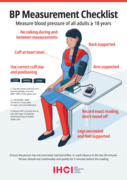
These are one pagers for the NCD staff to refer as check points during measuring blood pressure for 18 year & above or 30 years & above patients based on the state's requirement
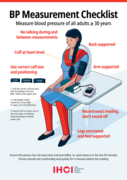
These are one pagers for the NCD staff to refer as check points during measuring blood pressure for 18 year & above or 30 years & above patients based on the state's requirement.

Die Webseite des Bundeszentrums für Ernährung (BZfE) bietet ein Unterrichtsmodul für die Sekundarstufe ab Klasse 8 an, das den Nutri-Score thematisiert. Dieses Material soll Schülerinnen und Schüler befähigen, den Nutri-Score beim Einkauf differenziert und reflektiert zu nutzen. Es umfasst Leh
...
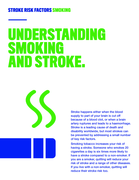
Stroke happens either when the blood supply to part of your brain is cut off because of a blood clot, or when a brain
artery ruptures and leads to a haemorrhage. Stroke is a leading cause of death and disability worldwide, but most strokes can
be prevented by addressing a small number of key risk
...

This global status report on prevention and control of NCDs (2014), is framed around the nine voluntary global targets. The report provides data on the current situation, identifying bottlenecks as well as opportunities and priority actions for attaining the targets. The 2010 baseline estimates on N
...

This fourth annual report monitors global progress towards the 2023 target for global elimination of industrially produced trans-fatty acids (TFA), highlighting achievements during the past year (October 2021 – September 2022). Countries are responding to the World Health Organization (WHO) call t
...
The "Global NCD action plan" provides a road map and a menu of policy options for countries to take in order to attain the 9 voluntary global targets, including that of a 25% relative reduction in premature mortality from cardiovascular diseases, ca
...
This booklet presents data on NCD mortality and prevalence of NCD risk factors, by country, for the Region of the Americas. The focus is on the 5 x 5 NCD agenda which includes the main NCDs (cardiovascular diseases, cancer, diabetes, and chronic res
...
Disease Control Priorities –3rdEdition, Volume 2.
This book focuses on maternal conditions, childhood illness, and malnutrition. Specifically, the chapters address acute illness and undernutrition in children, principally under age 5. It also cov
...
Disease Control Priorities, 3rdEdition: Volume 4.
Mental, neurological, and substance use disorders are common, highly disabling, and associated with significant premature mortality. The impact of these disorders on the social and economic well-be
...
Heart failure with a reduced ejection fraction (HFrEF) is a condition frequently encountered by healthcare professionals and, in order to achieve the best outcomes for patients, needs to be managed optimally. This guideline document is based on the European Society of Cardiology Guidelines for the t
...
Cancer, diabetes, heart disease and stroke, chronic respiratory disease
Hypertension, or high blood pressure, is a condition which generally has no symptoms and if left untreated, can lead to heart attacks, heart failure, stroke, kidney failure and blindness. Risk factors include older age, overweight or obesity, lack of physical activity, high salt/sodium intake, and h
...

Non-Communicable Diseases (NCDs), including mental disorders, currently pose one of the biggest threats to health and development globally, particularly in low and middle income countries2. It is predicted that unless proven interventions are rapidly implemented in countries, in the short to medium
...
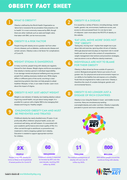
Obesity is a complex disease, with many root causes throughout society. That’s why we all need to work together to find solutions. Tackling the roots of obesity benefits everybody and will give us all the chance to lead happier, healthier and long
...

The article outlines the prioritized research agenda for the prevention and control of chronic respiratory diseases (CRDs) as part of the World Health Organization's (WHO) action plan on noncommunicable diseases (NCDs) from 2008 to 2013. It highlights the significant global impact of CRDs, including
...
CARDIOVASCULAR AFRICA JOURNAL OF AFRICA
Volume 27, No 4, July/August 2016

Diabetes is a serious, chronic disease that occurs either when the pancreas does not produce enough insulin (a hormone that regulates blood sugar, or glucose), or when the body cannot effectively use the insulin it produces. Diabetes is an important
...
