
Filter
3575
Text search:
child
growth
Featured
Recommendations
288
New Publications
1156
Language
Document type
No document type
2308
Studies & Reports
581
Guidelines
294
Manuals
133
Strategic & Response Plan
121
Training Material
62
Fact sheets
31
Situation Updates
19
Brochures
9
Infographics
9
Resource Platforms
7
Online Courses
1
Countries / Regions
India
208
Global
156
Kenya
149
Ethiopia
105
Nepal
104
Nigeria
91
Malawi
90
Uganda
88
Tanzania
87
South Africa
87
Sierra Leone
75
Zambia
75
Rwanda
73
Myanmar / Burma
66
Liberia
64
Bangladesh
63
Ghana
58
Namibia
52
Africa
40
Philippines
39
Western and Central Europe
37
Zimbabwe
34
Cambodia
33
Indonesia
33
Lesotho
33
Syria
32
Latin America and the Carribbean
29
Ukraine
28
Mozambique
25
Botswana
25
Asia
25
Eastern Europe
22
Congo, Democratic Republic of
20
South Sudan
20
Senegal
18
South–East Asia Region
17
Eswatini/ Swaziland
15
Guinea
13
Haiti
13
Pakistan
12
East and Southern Africa
12
Burkina Faso
10
Afghanistan
10
Cameroon
9
China
9
Benin
9
Yemen
9
Venezuela
9
Lebanon
8
Brazil
8
Paraguay
8
Russia
8
Jordan
7
Sudan
7
West and Central Africa
7
Middle East and North Africa
7
Eastern Europe and Central Asia
7
Germany
6
Western Pacific Region
6
Albania
6
Laos
6
Tajikistan
6
Vietnam
6
Egypt
5
Papua New Guinea
5
Central African Republic
5
Mali
4
Somalia
4
Iraq
4
Turkey
4
Thailand
4
Colombia
4
Timor Leste/ East Timor
4
Gambia
3
Argentina
3
Peru
3
Sri Lanka
3
Southern Africa
3
Côte d’Ivoire / Ivory Coast
2
Honduras
2
Madagascar
2
Mexico
2
Palestine
2
Lithuania
2
Iran
2
Georgia
2
North America
2
Jamaica
2
Guinea-Bissau
1
USA
1
Saudi Arabia
1
Niger
1
Chad
1
Malaysia
1
Dominican Republic
1
North Macedonia
1
Serbia
1
Hungary
1
Burundi
1
Ecuador
1
El Salvador
1
Bolivia
1
Libya
1
Guatemala
1
Nicaragua
1
Chile
1
Other region
1
Fiji
1
Bhutan
1
Djibouti
1
Armenia
1
Qatar
1
Moldova
1
Kyrgyzstan
1
Japan
1
Maldives
1
Mauritius
1
United Kingdom
1
Portugal
1
Spain
1
Israel
1
Latvia
1
Authors & Publishers
Publication Years
Category
Countries
1757
Women & Child Health
304
Clinical Guidelines
204
Public Health
179
Key Resources
140
Capacity Building
75
Pharmacy & Technologies
7
Annual Report MEDBOX
2
Toolboxes
Mental Health
228
HIV
214
Disability
158
Planetary Health
134
COVID-19
122
TB
111
Caregiver
103
Global Health Education
89
Conflict
78
Health Financing Toolbox
71
NTDs
54
Refugee
53
AMR
53
NCDs
51
Malaria
44
Ebola & Marburg
41
Natural Hazards
33
Zika
29
Pharmacy
27
Rapid Response
20
Cholera
19
Social Ethics
18
2.0 Rapid Response
11
Polio
5
Specific Hazards
3
South Sudan
2

The National Strategic Plan for Malaria Elimination 2021–2025 outlines Bangladesh’s roadmap to achieve zero indigenous malaria cases by 2030, with an interim goal to reduce transmission to near-zero levels by 2025. The strategy builds upon earlier successes in malaria control and shifts focus to
...

A historic funding crisis is threatening to unravel decades of progress unless countries can make radical shifts to HIV programming and funding. The report highlights the impact that the sudden, large-scale funding cuts from international donors are having on countries most affected by HIV. Yet it a
...

A historic funding crisis is threatening to unravel decades of progress unless countries can make radical shifts to HIV programming and funding. The report highlights the impact that the sudden, large-scale funding cuts from international donors are having on countries most affected by HIV. Yet it a
...

The Ghana National Malaria Strategic Plan 2021–2025 aims to reduce malaria mortality by 90% and malaria cases by 50% (using 2019 as baseline) and to achieve pre-elimination in at least six districts by 2025. The plan focuses on scaling up prevention measures like distributing insecticide-treated n
...

The National Malaria Elimination Strategic Plan (NMESP) 2024–2028 of Ghana outlines the country’s roadmap to shift from malaria control to elimination. Despite major progress—like reducing malaria deaths from nearly 2,800 in 2012 to 151 in 2022—malaria remains a major public health challenge
...

This document highlights the latest WHO recommendations designed to optimize health outcomes, streamline delivery and address persistent barriers to prevention and care. It especially focuses on people often left behind in service delivery, including adolescents and young people, key populations and
...

WHO guidelines for clinical management of arboviral diseases: dengue, chikungunya, Zika and yellow fever
recommended
The new WHO guidelines provide clinical management recommendations for four of the most widespread arboviruses affecting humans: dengue, chikungunya, Zika, and yellow fever.
An integrated approach is vital, as these four diseases often present with similar symptoms, especially in the early stages
...

The Compendium of Solid Waste Management in Humanitarian Contexts is a comprehensive, structured and userfriendly manual and planning guide that provides a systematic overview of existing Solid Waste Management (SWM) technologies and approaches appropriate for use in humanitarian contexts.

Non-Communicable Diseases (NCDs) have emerged as conditions of great public health concern in Kenya accounting for 39% of deaths annually. The Ministry of Health through the Department of Non-Communicable Diseases has adopted the vision of achieving a nation free from preventable burden of NCDs. Fur
...
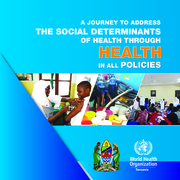
Health in All Policies (HiAP) promotes health and equity. It is based on the recognition that our greatest health challenges for example, non-communicable diseases, health inequities and inequalities, climate change, and spiraling health care costs are highly complex and often linked through the soc
...

For education to be competency-based and effective, appropriate training methodologies have to be used to support the learner to have the appropriate knowledge and to translate this knowledge into skills and competencies. Such education and training should lead to a change in attitudes, beliefs a
...

Drawing on the World Health Organization’s package of NCD best buys, the report demonstrates how these evidence-based measures can help countries reduce premature deaths, strengthen health systems, and advance progress towards the Sustainable Development Goals. It provides policymakers, donors, ad
...

PHSM are vital in reducing the risk and scale of infectious disease transmission and lowering hospitalization and deaths. Examples include contact tracing, quarantine and isolation, mask use, ventilation, school or workplace measures, mobility restrictions and travel requirements.
While these mea
...

This plan, approved by the Organization’s 62nd Directing Council, was shaped by extensive consultations with countries and stakeholders, and commits to transformative health outcomes over the next six years, tackling noncommunicable diseases (NCDs), mental health, health security, fragmented healt
...

Epidemics and pandemics are some of the biggest threats to a safe and healthy world. But with effective preparedness and response measures, we can reduce their impacts and even stop them in their tracks.
Through the Programmatic Partnership with the European Union, 24 local Red Cross and Red Cres
...

This resource was written to support persons who seek to initiate a support group for suicide loss survivors. Suicide bereavement support groups offer a wide range of benefits that can help individuals to navigate the difficult time following a loss. First and foremost, a support group provides a ch
...

Building true health security in a global age. Findings and recommendations of the Global Council. In landmark findings based on two years of research and convenings around the world, the new report shows that high levels of inequality are linked to outbreaks becoming pandemics and that inequality i
...

The findings of the report are both urgent and devastating. At the current rate of progress, by 2040 we would still have 1.9 million new HIV infections and 990,000 AIDS-related deaths in children. But if funding for HIV prevention and treatment continues to fall as current trends suggest, the world
...

World malaria report 2025
recommended
Addressing the threat of antimalarial drug resistance. This year’s report spotlights the growing threat of antimalarial drug resistance. Partial resistance to artemisinin derivatives – the backbone of malaria treatments after failures of chloroquine and sulfadoxine-pyrimethamine – has now b
...
The window to 2030, the SDG target year, is closing. Without accelerated and sustained progress, hard-won UHC gains risk being lost. Using revised and improved UHC indicators the report presents the latest available UHC data and concludes with a call to shared action.
