Filter
3502
Filtered Results: 3502
Text search:
continuity
planning
Featured
Recommendations
308
New Publications
984
Language
Document type
No document type
1904
Studies & Reports
586
Guidelines
439
Manuals
217
Strategic & Response Plan
207
Training Material
57
Fact sheets
37
Situation Updates
35
Infographics
7
Resource Platforms
5
Brochures
4
Online Courses
3
App
1
Countries / Regions
Global
155
India
153
Kenya
99
Nepal
74
Ethiopia
70
Myanmar / Burma
70
Western and Central Europe
69
South Africa
69
Nigeria
67
Syria
64
Sierra Leone
63
Tanzania
63
Liberia
62
Uganda
61
Bangladesh
59
Latin America and the Carribbean
55
Rwanda
48
Africa
47
Zambia
45
Malawi
43
Philippines
41
Ukraine
40
Ghana
40
Namibia
39
Congo, Democratic Republic of
37
Cambodia
33
South–East Asia Region
33
South Sudan
32
Lesotho
27
Indonesia
26
Guinea
25
Asia
25
East and Southern Africa
23
Senegal
22
Mozambique
21
Haiti
21
Zimbabwe
20
Eastern Europe
20
Yemen
18
West and Central Africa
17
Afghanistan
16
Central African Republic
15
Botswana
15
Pakistan
15
Burkina Faso
13
Middle East and North Africa
13
Venezuela
12
Russia
12
Jordan
11
Brazil
11
Benin
10
Cameroon
10
Lebanon
10
Colombia
9
USA
9
Sudan
9
Mali
9
Somalia
9
Thailand
8
Laos
8
Peru
7
Germany
7
Western Pacific Region
7
Vietnam
7
Moldova
7
Madagascar
7
Iran
6
Niger
6
Eastern Europe and Central Asia
6
Côte d’Ivoire / Ivory Coast
6
Iraq
6
Eswatini/ Swaziland
6
China
5
Albania
5
Chad
5
Timor Leste/ East Timor
4
Turkey
4
Burundi
4
North Macedonia
3
Gambia
3
Togo
3
Vanuatu
3
Guinea-Bissau
3
Croatia
3
North America
3
Mauritius
3
Bosnia and Herzegovina
3
Southern Africa
3
Argentina
3
Papua New Guinea
3
Sri Lanka
3
Egypt
3
Greece
3
Palestine
3
Georgia
3
Ecuador
3
Kazakhstan
2
Chile
2
Malaysia
2
Bulgaria
2
Dominican Republic
2
Hungary
2
Turkmenistan
2
Japan
2
Spain
2
Bolivia
2
Romania
2
Poland
2
Honduras
2
Angola
2
Bhutan
2
Tajikistan
1
North Korea
1
Mexico
1
El Salvador
1
Serbia
1
Canada
1
Singapore
1
Estonia
1
Kyrgyzstan
1
Morocco
1
Mauritania
1
Ireland
1
Saudi Arabia
1
Paraguay
1
Jamaica
1
Maldives
1
Tunisia
1
Portugal
1
Azerbaijan
1
Belarus
1
Israel
1
Latvia
1
Belize
1
Costa Rica
1
Panama
1
Nicaragua
1
Slovakia
1
Libya
1
Solomon Islands
1
Guatemala
1
Authors & Publishers
Publication Years
Category
Countries
1379
Key Resources
246
Women & Child Health
237
Public Health
208
Clinical Guidelines
208
Capacity Building
76
Pharmacy & Technologies
18
Annual Report MEDBOX
1
Toolboxes
COVID-19
342
HIV
263
Mental Health
239
Conflict
145
Caregiver
144
Disability
134
TB
131
Planetary Health
104
Ebola & Marburg
80
Rapid Response
69
Natural Hazards
68
Refugee
60
NTDs
55
AMR
55
2.0 Rapid Response
51
Global Health Education
51
NCDs
46
Pharmacy
38
Health Financing Toolbox
38
Malaria
37
Specific Hazards
25
Polio
24
Social Ethics
18
Zika
16
Cholera
12
Typhoon
6
South Sudan
1

The framework recommends expanded coverage of malaria diagnostic and treatment services, intensified vector control to drive down transmission, strengthened malaria surveillance, and increased transborder collaboration, especially in terms of efforts to control the sale and use of artemisinin monoth...

A historic funding crisis is threatening to unravel decades of progress unless countries can make radical shifts to HIV programming and funding. The report highlights the impact that the sudden, large-scale funding cuts from international donors are having on countries most affected by HIV. Yet it a...
This toolkit suggests several approaches to addressing technology
access disparities. At its core is a comprehensive checklist that helps
teams systematically evaluate their current practices and identify
opportunities for improvement. This structured self-assessment
tool spans both team-level a...

This document highlights the latest WHO recommendations designed to optimize health outcomes, streamline delivery and address persistent barriers to prevention and care. It especially focuses on people often left behind in service delivery, including adolescents and young people, key populations and...

Noncommunicable diseases (NCDs) (e.g., cardiovascular diseases, cancers, diabetes, and chronic respiratory diseases) and mental health conditions (e.g., Alzheimer’s disease and related dementias, depression, anxiety, autism spectrum disorders) are the world’s leading cause of preventable illness...

This publication provides an overview of evidence and guidance on the growing challenge of workplace heat stress in the context of climate change. It highlights the health and productivity risks faced by billions of workers, especially in manual labor sectors. The report details the physiological, s...

The annual bulletin of the Mekong Malaria Elimination (MME) programme is a yearly report that reviews ongoing efforts to combat multidrug resistance and eliminate malaria in the 6 countries of the Greater Mekong subregion (GMS): Cambodia, China (Yunnan province), Lao People's Democratic Republic, My...
To guide the provision of quality palliative care services across the African region, the African Palliative Care Association (APCA) has developed a framework of core palliative care competencies that can be used by service providers, educators and other stakeholders to guide programmes development.

For education to be competency-based and effective, appropriate training methodologies have to be used to support the learner to have the appropriate knowledge and to translate this knowledge into skills and competencies. Such education and training should lead to a change in attitudes, beliefs a...

WHO guideline on balanced national controlled medicines policies to ensure medical access and safety
Access to medicines is essential for attainment of universal health coverage, which is central to achievement of the health-related Sustainable Development Goals. Controlled medicines include those such as opioids, benzodiazepines, barbiturates, amphetamines and others with identified or emergent cl...
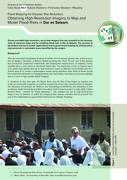
With an estimated population of about 5 million and an annual growth rate of 8 per cent, Dar es Salaam, Tanzania, is Africa’s fastest growing city.1 Over 70 per cent of the people live in informal, unplanned settlements with inadequate infrastructure. In addition, heavy rainfalls twice a year ...

This resource was written to support persons who seek to initiate a support group for suicide loss survivors. Suicide bereavement support groups offer a wide range of benefits that can help individuals to navigate the difficult time following a loss. First and foremost, a support group provides a ch...

Country tables & figures

Global tuberculosis report 2025
recommended
The WHO Global tuberculosis report 2025 provides a comprehensive and up-to-date assessment of the TB epidemic and of progress in prevention, diagnosis and treatment of the disease, at global, regional and country levels. This is done in the context of global TB commitments, strategies and targets.
...

These guidelines update earlier WHO recommendations to maximize the HIV prevention impact of safe VMMC services and aim to guide the transition to the sustained provision of interventions with a focus on the health and well-being of both adolescent boys and men.
The progressive development of peoples is an object of deep interest and concern to the Church. This is particularly true in the case of those peoples who are trying to escape the ravages of hunger, poverty, endemic disease and ignorance; of those who are seeking a larger share in the benefits of ci...

The magnitude and complexity of these mental health conditions caused by prolonged and extensive trauma requires a diagnosis fitting the unique context of the Syrian conflict. Over half a million people have been killed since the beginning of the conflict in 2011, and more than 6.4 million are inter...