
Filter
3424
Text search:
National
Medicines
Policy
Featured
Recommendations
329
New Publications
975
Language
Document type
No document type
1792
Studies & Reports
645
Guidelines
471
Manuals
195
Strategic & Response Plan
181
Fact sheets
48
Training Material
45
Situation Updates
26
Brochures
6
Resource Platforms
6
Infographics
5
Online Courses
4
Countries / Regions
Global
169
India
132
Kenya
122
Uganda
93
South Africa
91
Ethiopia
83
Nigeria
71
Nepal
69
Western and Central Europe
68
Sierra Leone
67
Ghana
63
Liberia
62
Malawi
61
Africa
61
Myanmar / Burma
59
Zambia
55
Tanzania
54
Bangladesh
50
Latin America and the Carribbean
50
Ukraine
49
Namibia
46
Rwanda
40
Eastern Europe
33
Zimbabwe
29
South–East Asia Region
27
Asia
27
Philippines
23
Indonesia
21
Lesotho
21
Congo, Democratic Republic of
20
Syria
20
Cambodia
20
Mozambique
17
Botswana
15
East and Southern Africa
15
Guinea
14
Haiti
14
Senegal
13
Pakistan
13
West and Central Africa
13
Burkina Faso
12
Eswatini/ Swaziland
12
Yemen
12
Middle East and North Africa
12
Venezuela
11
Russia
11
Cameroon
10
South Sudan
10
Eastern Europe and Central Asia
10
Thailand
9
Sudan
9
Afghanistan
8
Brazil
8
Moldova
8
Somalia
7
Benin
7
Madagascar
7
Western Pacific Region
7
North America
7
Lebanon
6
Peru
6
Vietnam
6
Jordan
5
China
5
North Macedonia
5
Paraguay
5
Poland
5
Albania
5
Laos
5
Georgia
5
Iraq
4
Germany
4
Central African Republic
4
Hungary
4
Libya
4
Sri Lanka
4
Tajikistan
4
Morocco
3
Saudi Arabia
3
Egypt
3
Colombia
3
El Salvador
3
Bolivia
3
Mexico
3
Fiji
3
Bhutan
3
Palestine
3
Southern Africa
3
Timor Leste/ East Timor
3
Romania
3
Iran
3
Kyrgyzstan
3
Jamaica
3
Mauritius
3
Mali
2
Côte d’Ivoire / Ivory Coast
2
USA
2
Gambia
2
Papua New Guinea
2
Argentina
2
Serbia
2
Ecuador
2
Chile
2
Armenia
2
Canada
2
Qatar
2
Bulgaria
2
Gabon
2
Japan
2
Tunisia
2
United Kingdom
2
Belarus
2
Niger
1
Turkey
1
Chad
1
Dominican Republic
1
Switzerland
1
Burundi
1
Honduras
1
Greece
1
Guatemala
1
Nicaragua
1
Other region
1
Djibouti
1
Mongolia
1
Lithuania
1
Slovakia
1
Kazakhstan
1
Turkmenistan
1
Denmark
1
Maldives
1
Norway
1
Portugal
1
Israel
1
Latvia
1
Belize
1
Costa Rica
1
Panama
1
Authors & Publishers
Publication Years
Category
Countries
1416
Clinical Guidelines
295
Public Health
212
Women & Child Health
151
Key Resources
126
Capacity Building
39
Pharmacy & Technologies
38
Annual Report MEDBOX
1
Toolboxes
HIV
318
TB
246
AMR
210
COVID-19
194
Mental Health
179
Pharmacy
140
NCDs
88
Caregiver
87
Planetary Health
73
Disability
72
Malaria
71
NTDs
70
Conflict
66
Global Health Education
60
Ebola & Marburg
53
Health Financing Toolbox
50
Rapid Response
41
Refugee
40
Natural Hazards
20
2.0 Rapid Response
19
Polio
11
Zika
10
Specific Hazards
9
Cholera
5
Social Ethics
5

World malaria report 2024
recommended
New data from the WHO reveal that an estimated 2.2 billion cases of malaria and 12.7 million deaths have been averted since 2000, but the disease remains a serious global health threat, particularly in the WHO African Region. According to WHO’s latest World malaria report, there were an estimated
...
The role of evidence in the journey towards universal health coverage is paramount. Financial risk protection monitoring, the major focus of this report, informs where the WHO African Region stands in reducing the financial hardship people face due to health expenses. This report details the status
...
Over the past decade, countries in the African region experienced slow progress in mobilizing resources for health while facing continued challenges. In their revised estimates published in 2017, Stenberg et al., developed two costs scenarios, termed progress and ambitious, aimed at strengthening co
...

This comprehensive HPFM report thoroughly explores Kenya’s health financing landscape. It provides an in-depth analysis of the current state of affairs and sheds light on required strategic changes in health financing. The report points out the need to improve public financial management within th
...
There has never been a more critical moment to invest in WHO, and strengthen the unique role it plays in global health. Now is the time to sustainably finance WHO and invest in a healthy return for all.
Trop. Med. Infect. Dis. 2022, 7, 152. https://doi.org/10.3390/tropicalmed7080152

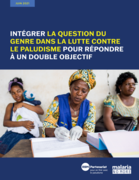
Cette note d'information souligne l'importance d'intégrer une approche sensible au genre dans les efforts de lutte contre le paludisme dans le monde entier. Il montre que la prise en compte des vulnérabilités et des besoins spécifiques à chaque sexe - en particulier ceux des femmes et des enfan
...

The WHO guidelines for malaria bring together the Organization’s most up-to-date recommendations for malaria in one user-friendly and easy-to-navigate online platform.
The WHO guidelines for malaria bring together the Organization’s most up-to-date recommendations for malaria in one user-frie
...

Preferred product characteristics and clinical development considerations

According to the WHO, there were an estimated 251 million malaria cases (95% of global cases) and 579,414 malaria deaths (97% of global deaths) in African Union Member States in 2023. 76% of these deaths were children under the age of five.
A historic funding crisis is threatening to unravel decades of progress unless countries can make radical shifts to HIV programming and funding. The report highlights the impact that the sudden, large-scale funding cuts from international donors are having on countries most affected by HIV. Yet it a
...
This document highlights the latest WHO recommendations designed to optimize health outcomes, streamline delivery and address persistent barriers to prevention and care. It especially focuses on people often left behind in service delivery, including adolescents and young people, key populations and
...

WHO guidelines for clinical management of arboviral diseases: dengue, chikungunya, Zika and yellow fever
recommended
The new WHO guidelines provide clinical management recommendations for four of the most widespread arboviruses affecting humans: dengue, chikungunya, Zika, and yellow fever.
An integrated approach is vital, as these four diseases often present with similar symptoms, especially in the early stages
...

Growing emergencies and displacements across the world demand increasingly complex interventions and responses. The World Health Organization (WHO) has developed Malaria control in emergencies: a field manual to provide technical guidance to help partners respond effectively to malaria in emergency
...

For education to be competency-based and effective, appropriate training methodologies have to be used to support the learner to have the appropriate knowledge and to translate this knowledge into skills and competencies. Such education and training should lead to a change in attitudes, beliefs a
...

The health impacts of climate change are no longer a distant threat. They are being felt here and now and becoming more extreme.
To address these threats, the WHO Asia-Pacific Centre for Environment and Health in the Western Pacific Region (ACE) was established in 2019 through a partnership with
...

This brief report summarizes recent information on HIV drug resistance (HIVDR) in the era of integrase-strand transfer inhibitors (INSTI) for HIV prevention and treatment.

Adolescents and young adults aged 10-24 remain underserved in the global response against HIV. Combination prevention, treatment and care programmes use a mix of evidence-based interventions to meet the current HIV prevention needs of adolescents and young adults. However, there needs to be a focus
...
