
Filter
1680
Text search:
operational
manual
Featured
206
524
Language
Document type
908
315
188
149
61
37
11
5
3
2
1
Countries
119
68
47
47
47
37
34
34
31
31
30
29
28
27
25
20
20
19
17
17
17
16
15
14
13
13
11
11
10
10
9
9
9
9
9
9
8
7
6
6
5
5
5
5
5
4
4
4
4
4
4
4
3
3
3
3
3
3
2
2
2
2
2
2
2
2
2
2
2
2
2
2
2
2
2
2
2
2
1
1
1
1
1
1
1
1
1
1
1
1
1
1
1
1
1
1
1
1
1
1
1
1
1
1
1
1
1
1
1
1
1
Authors & Publishers
Publication Years
Category
661
217
131
115
102
46
33
Toolboxes
123
97
73
70
61
60
56
51
49
44
43
43
41
40
39
38
22
21
17
14
11
10
9
4
2
2
1
2nd edition. The Event-based Surveillance Framework is intended to be used by authorities and agencies responsible for surveillance and response. This framework serves as an outline to guide stakeholders interested in implementing event-based surveillance (EBS) using a multisectoral, One Health appr
...
Manual book of field hospital management in case of natural disaster in Indonesia
Access : 29.4.2017
Curriculum of Capacity Building for Technical Officers in Field Operational Hospital Skills in Indonesia
HEARTS provides a set of locally adaptable tools for strengthening the
management of CVD in primary health care.
HEARTS is designed to enhance implementation of WHO PEN by providing:
• operational guidance on further integrating CVD management
...
Introducción
Capítulo A.14
Edición: Matías Irarrázaval & Andres Martin
Revisión: Fernanda Prieto-Tagle & Neus Elias

The Democratic Republic of Timor-Leste has the highest TB incidence rate in the South East Asian Region - 498 per 100,000, which is the seventh highest in the world. In Timor-Leste TB is the eighth most common cause of death.
The salient observations are as follows:
In 2018, 487 (12.5%) of the
...
El Manuel Esfera
recommended
Оценка потребностей и ресурсов в области охраны психического здоровья и психосоциальной поддержки
recommended
Данный документ предназначен в первую очередь для работников здравоохранения. Поскольку социальные детерминанты нарушений психического здоровья и психосоциальÐ
...
PARTICIPANT GUIDE.
This Participant Guide has been designed to assist health facilities and community based non-clinicians to develop skills to provide linkage to care, adherence and retention in care services for chronic conditions
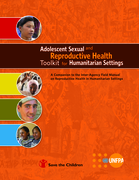
This Toolkit is intended to guide humanitarian programme managers and healthcare providers to ensure that sexual and reproductive health interventions put into place both during and after a crisis are responsive to the unique needs of adolescents.
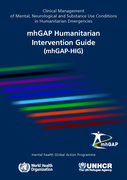
The new guide provides practical, first-line management recommendations for mental, neurological and substance use conditions. Contents include modules on assessing and managing conditions such as acute stress, grief, moderate-severe depressive disorder, post-traumatic stress disorder, epilepsy, and
...

This paper aims to understand the agency that caregivers who participated in a CBR empowerment component programme exercised, in order to promote the rights of their children with disabilities to a basic education.
Клиническое Руководство

In resource restriced countries
